
The Business Ownership Coach | Investor Financing Podcast often explores business models that pair strong demand with practical execution. Co-living fits that description well. It is a shared housing model built around renting individual rooms rather than leasing an entire home to one household, and when the property is chosen carefully, it can produce significantly more monthly income than a traditional single-family rental.
For investors evaluating co-living, the real question is not whether shared housing exists. It clearly does. The better question is what makes a house work well for this model. The answer comes down to layout, parking, location, bathroom count, neighborhood fit, and a clear understanding of the resident profile.
This guide explains how to evaluate a co-living house, who this model tends to serve, what features improve performance, and what mistakes can reduce cash flow or create management problems.
What Is Co-Living in Real Estate?

Photo by Alexandre Martins on Unsplash
In simple terms, co-living is shared housing with rent paid by the room. Residents typically have private bedrooms and share common spaces such as the kitchen, living room, laundry area, and sometimes bathrooms.
The reason investors are paying attention to it is straightforward. A home that might only command one market rent as a traditional lease can often produce a higher total income when multiple rooms are rented individually.
From a search intent perspective, this is where the Business Ownership Coach | Investor Financing Podcast approach is useful. It frames co-living not as a gimmick, but as an operations-driven housing strategy tied to affordability and cash flow.
Why Co-Living Is Getting More Attention
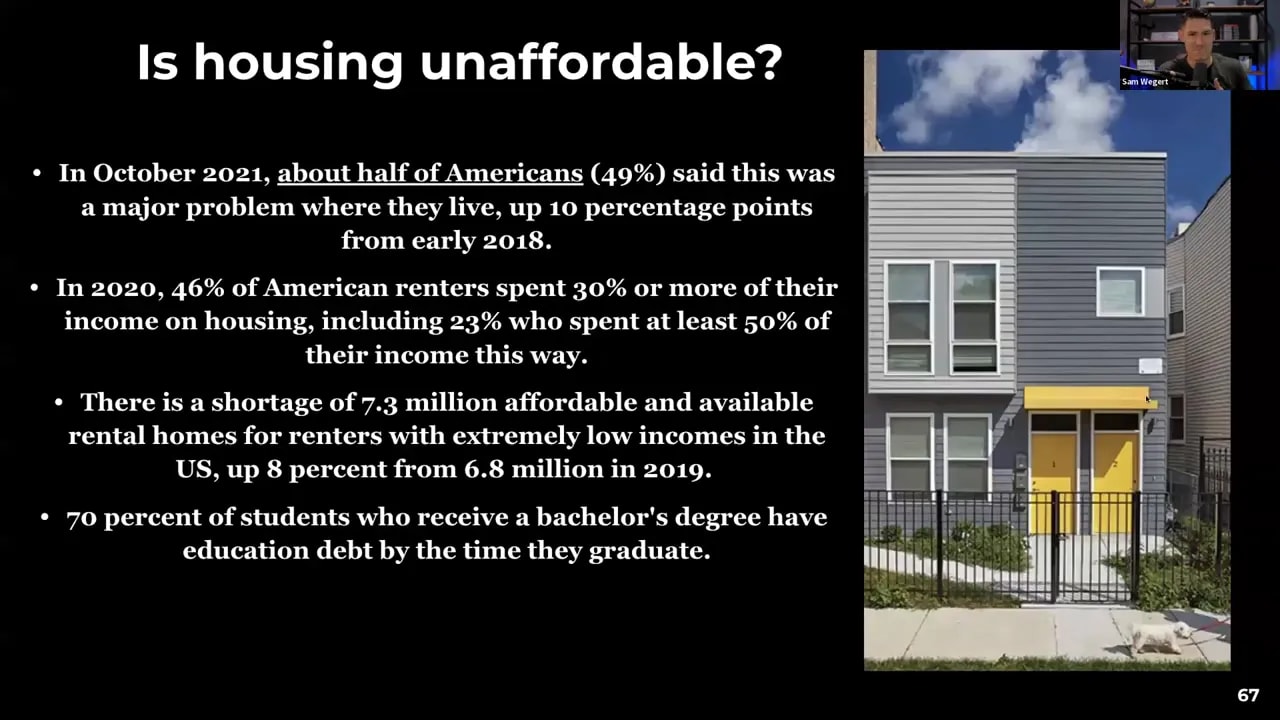
Housing affordability has become a growing issue in both major metros and smaller cities. Many working adults earn enough to pay for housing, but not enough to comfortably afford an entire apartment or single-family rental on their own.
That creates a clear market for room-by-room housing. Co-living can lower the monthly cost per resident while still allowing the property owner to increase gross income.
There is also broader policy interest in shared housing. Public housing guidance has recognized co-living as a possible tool for affordability, including room-based leasing structures in some cases. That does not mean every operator should pursue that route, but it does show the model is being treated as a legitimate housing option rather than an outlier.
Who Typically Lives in Co-Living Homes?

A successful co-living property is usually designed for workforce housing, not luxury housing. The common resident profile described in the Business Ownership Coach | Investor Financing Podcast framework includes working adults earning roughly $20,000 to $40,000 per year, sometimes more depending on the market.
These residents may include people working in:
- Airports
- Call centers
- Auto repair or trades
- Hospitals
- Warehouses and distribution centers
- Universities and service roles
The key insight is that many co-living residents are employed and responsible, but priced out of solo housing. That makes affordability, transportation access, and basic livability more important than upscale finishes.
The Best Co-Living Property Features

Photo by Michael Proctor on Unsplash
If you want better room-by-room performance, focus on properties with the following characteristics.
1. Ample parking
Parking is often one of the first boxes to check. In many markets, several residents will have vehicles, even if not everyone does. A practical rule shared in the Business Ownership Coach | Investor Financing Podcast discussion is that parking needs may run around two-thirds of the number of residents.
For example, if a house has nine rentable rooms, six parking spots may be a useful target. Street parking, expanded driveways, or added gravel parking can all improve feasibility depending on local rules.
2. No HOA when possible
Homeowners associations can create restrictions that complicate shared housing operations. If the goal is to reduce friction, properties without an HOA are often easier to work with.
3. Split-level or naturally separated layouts
Layouts that naturally create separation between living areas can improve privacy and reduce resident conflict. Split-level homes often work well because they distribute people more effectively than one large open floor plan.
4. Boxy floor plans instead of open concept
One of the most practical co-living insights is that homes with more walls are often better than homes with wide open spaces. A “boxy” layout can make it easier to create or preserve private bedrooms without major reconstruction.
This is also one reason some properties overlooked by traditional homebuyers may be attractive to a co-living investor. A floor plan that feels dated for entertaining can be functional for room-by-room renting.
5. More bathrooms
Bathroom count has a direct impact on livability. A useful benchmark is about one bathroom for every three bedrooms. The closer a property gets to that ratio, the easier day-to-day operations are likely to be.
Too few bathrooms can hurt retention, create friction, and limit how many rooms can be rented comfortably.
6. Built in 1970 or later, unless meaningfully updated
Older houses can work, but they often come with more code, plumbing, and electrical issues. A practical screening rule is to focus on homes built in the 1970s or newer unless an older property has already been substantially renovated.
7. Close to major employers and transit
Location matters, but not always in the same way it does for retail or luxury housing. The ideal co-living property is within commuting distance of employers that hire workforce-level staff. Public transportation access is also a major advantage, especially for residents without reliable vehicles.
Examples of strong demand drivers include:
- Airports
- Amazon and Walmart distribution centers
- Hospitals
- Universities
8. No pool, or at least no reliance on one
For workforce-focused co-living, a pool is usually more of a liability than an asset. The model is based on affordability and functionality, not luxury amenities.
9. “Nice enough” beats luxury
A common mistake is assuming co-living should target luxury buyers or upscale renters. In reality, this model often works best when the house is simply clean, functional, safe, and appropriate for the resident base.
Expensive finishes do not necessarily improve the economics. The property should be appealing, but it does not need to be high-end.
10. The house should fit the neighborhood
Neighborhood fit matters. A co-living home tends to align better in areas with a practical, working-class character than in highly restrictive neighborhoods where the property use may feel out of place.
This is not about choosing poor locations. It is about choosing locations where the housing style, parking patterns, and resident profile fit naturally with the surrounding area.
What Kind of Numbers Can Co-Living Produce?

The central appeal of co-living is that gross monthly rent can exceed standard market rent for the same property. Examples discussed in the Business Ownership Coach | Investor Financing Podcast showed homes that would likely rent conventionally for much less, but generated substantially higher monthly income when leased by the room.
That does not mean every property will perform the same way. Results depend on room count, demand, renovations, operating costs, and local regulations. But the concept is clear: a well-configured house can increase revenue by monetizing multiple private rooms instead of one household lease.
How to Screen a Potential Co-Living Deal
Use this quick checklist before going deeper on a property:
- Can the layout support multiple private bedrooms?
- Is there enough parking for likely residents?
- Are there enough bathrooms?
- Is it near workforce employers?
- Does public transportation help support demand?
- Is the home functional without luxury upgrades?
- Does the neighborhood fit the model?
- Will zoning, HOA rules, or local restrictions create problems?
If several of these answers are weak, the property may be better suited to a different rental strategy.
Common Co-Living Mistakes to Avoid
Many investors get excited about room-by-room revenue and overlook practical issues. The most common mistakes include:
- Buying for luxury instead of affordability
- Ignoring parking limitations
- Underestimating bathroom needs
- Choosing a neighborhood that resists the model
- Taking on heavy rehab without a clear plan
- Assuming every large house is a good co-living house
A mansion with too few bedrooms or a prestige location is not automatically better. In many cases, a modest, practical, well-located home is the stronger investment.
Does Community Matter in Co-Living?

Photo by Michael Proctor on Unsplash
Yes. While the economics matter, the strongest co-living operations also consider resident experience. Shared housing can work better when the environment encourages respect, structure, and connection.
Some operators add educational or community-building elements to improve stability and retention. Even without formal programming, a well-managed house can provide more than shelter. It can offer a more connected living arrangement than isolated apartment living, provided the home is set up correctly and managed consistently.
Is Co-Living Right for Every Investor?

No. The Business Ownership Coach | Investor Financing Podcast perspective on this strategy is practical rather than universal. Co-living may be a fit if you want stronger cash flow from residential property and are willing to think carefully about operations, layout, and tenant fit.
It may be less attractive if you prefer:
- Very passive rental management
- Luxury positioning
- Neighborhoods with strict conformity expectations
- Properties that require major repositioning beyond your skill set
Investors interested in financing strategy or broader business acquisition planning can also explore an SBA discovery call if they are evaluating how this kind of real estate model fits into larger ownership goals.
Final Takeaway
The best co-living houses are not necessarily the prettiest or most expensive. They are the ones that match demand, support private-room leasing, and work operationally from day one.

If you remember only a few principles from the Business Ownership Coach | Investor Financing Podcast, remember these:
- Prioritize function over flash
- Look for boxy layouts and enough bathrooms
- Make parking a serious underwriting factor
- Stay close to employers and transit
- Choose homes that fit the neighborhood and resident profile
Done well, co-living can address affordability for residents while improving cash flow for owners. That combination is exactly why this model continues to attract attention.
Additional Resources
For more business growth and ownership insights related to funding, acquisitions, and operations, consider subscribing to The Business Ownership Newsletter.