
Buying a franchise is not about choosing the brand you already recognize. It is about finding a business model that fits your capital, lifestyle, market, operating strengths, and long-term wealth goals. A Business Ownership Coach helps turn a broad interest in entrepreneurship into a disciplined acquisition plan.
Whether you are leaving a W-2 role, building a semi-absentee portfolio, diversifying beyond real estate, or seeking a hands-on operating business, the right franchise research process starts with the buyer, not the brand.
What Does a Business Ownership Coach Do?

Photo by Vitaly Gariev on Unsplash
A Business Ownership Coach helps prospective owners evaluate franchise and business opportunities with a practical lens. The objective is to create a clear business thesis, sometimes called a buyer profile or buy box, before spending time on individual franchise presentations.
This process should identify the type of business you can realistically own and operate. It includes:
- Your desired role, such as owner-operator or semi-absentee owner
- Your available liquidity, credit profile, and financing options
- Your income and cash flow goals
- Your management, sales, and operational strengths
- Your tolerance for employees, retail locations, vehicles, equipment, and recurring customer service
- Your target market and local business opportunities
A good Business Ownership Coach does not force a favorite franchise onto every buyer. The goal is to match the buyer to a model that makes sense, then help that buyer perform real due diligence.
Start With a Business Thesis, Not a Franchise Brand

Photo by Md Ishak Rahman on Unsplash
Many first-time buyers begin with a brand they enjoy as a customer. That is understandable, but it is not enough. Liking a restaurant, smoothie shop, fitness studio, or retail concept does not mean you will enjoy owning its operational model.
Instead, build a business thesis that answers the questions below:
- Do you want a location-based business or a home-service model?
- Are you comfortable managing a larger W-2 employee base?
- Would you rather manage technicians, subcontractors, or customer-facing staff?
- Do you want recurring revenue, project revenue, or a mix of both?
- How much time can you dedicate during the startup phase?
- What investment range can you support without creating unnecessary financial pressure?
For example, a buyer may initially believe they want a consumer retail franchise. After reviewing staffing needs, lease exposure, operating hours, and labor requirements, they may find that a home-service business with subcontractors better supports their lifestyle and ownership goals.
The point is to remain open-minded. A Business Ownership Coach should help you compare multiple models rather than narrowing too early based on familiarity.
Assess Fundability Before Going Deep Into Franchise Research

Funding is not an afterthought. It determines the range of opportunities you can pursue and how much working capital you need to preserve after closing.
Early in the process, assess your realistic funding strategy. This may include available cash, retirement funds that may be eligible for a rollover structure, equity in real estate, a qualified business partner, or SBA financing. Liquidity matters, but it is only one part of the picture. Credit, experience, collateral, the business model, and the total project cost can all affect financing options.
For franchise startups, SBA financing may fund a significant portion of eligible project costs. In many cases, lenders look for an equity injection, and startup transactions commonly involve a meaningful borrower contribution. The exact loan structure depends on the lender, borrower, franchise, and project.
Before signing a franchise agreement, make sure the financing path is understood and the necessary entity, projections, and lender documentation can be prepared. For tailored guidance on the SBA side of your plan, schedule an SBA discovery call.
Compare Several Franchise Models Before Picking Your Top Choices

Photo by Md Ishak Rahman on Unsplash
A disciplined franchise search typically begins with a broad comparison of available opportunities in your market. That can include home services, retail, health and wellness, fitness, business services, and other operational models.
The first review should be high level. The purpose is not to commit. It is to understand the basic economics, staffing model, customer acquisition approach, territory structure, and ownership role for each option.
From there, narrow the list to two or three opportunities worth deeper investigation. A Business Ownership Coach can keep this step objective by helping you compare each business against the same scorecard:
- Owner role: What does the owner actually do day to day?
- Labor model: Employees, technicians, subcontractors, or a combination?
- Revenue engine: How are customers acquired and retained?
- Territory: Is there room to build locally and does the territory fit your goals?
- Startup complexity: What must happen before revenue begins?
- Capital needs: What are the franchise fee, startup costs, and working capital requirements?
Do not confuse a short presentation with due diligence. It is simply the screening step that identifies which brands deserve your time.
How to Perform Franchise Due Diligence

Once you identify promising franchises, the deeper discovery process begins. Franchise development representatives generally explain how their model operates, including training, marketing, territory, startup requirements, and the overall path toward becoming an owner.
Your responsibility is to verify how the business works in practice. The strongest due diligence combines three things: document review, financial modeling, and validation conversations with existing franchisees.
Start by reviewing the Franchise Disclosure Document, or FDD. This disclosure document contains 23 items and can be lengthy, so read it carefully and write down questions. Two areas commonly deserve especially close attention:
- Item 7: The estimated initial investment range
- Item 19: Financial performance representations, if the franchisor provides them
Do not stop there. Review the full document, understand the territory and operating obligations, and have a franchise attorney review the franchise agreement before signing. A Business Ownership Coach can provide organization and perspective, but legal advice should come from qualified franchise counsel.
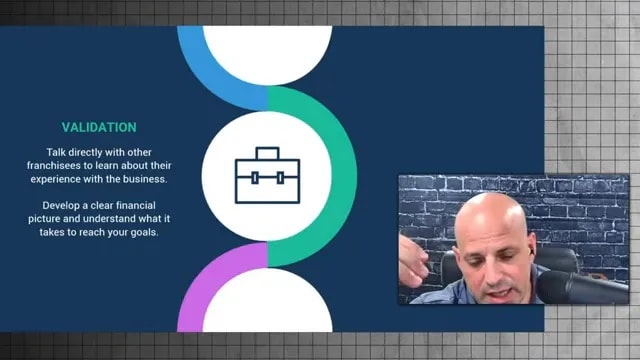
Ask Better Questions During Franchisee Validation Calls
Validation calls with current franchise owners are where assumptions get tested. Speak with operators in different markets when possible, and ask direct, respectful questions about the good, the bad, and the operational reality.
Useful validation questions include:
- What did your first year actually require from you?
- What were the biggest startup surprises?
- How long did it take to build a dependable customer pipeline?
- What does staffing or subcontractor management look like?
- Which expenses were higher than expected?
- How involved is the franchisor after opening?
- What would you do differently if you started again?
Use these calls to build your own operating assumptions. For a service business, that may mean understanding average ticket size, how many jobs a technician can complete, lead flow, payroll, recurring costs, and the speed at which revenue can ramp.
Build Financial Projections That Reflect the Real Business

Photo by Md Ishak Rahman on Unsplash
Financial projections are not just a lender requirement. They are one of the best tools for determining whether the opportunity works for you.
For SBA-financed franchise startups, a lender may require three years of projections, with the first two years broken down monthly. Your model should clearly show sources and uses, startup costs, working capital, revenue assumptions, labor, marketing, recurring expenses, debt service, and estimated bottom-line results.
Do not use a projection as a sales document. Use it as an operating plan. Tie assumptions to what you learned from franchisees and the franchisor. If the business must complete a certain number of service calls each day to meet revenue goals, understand exactly how those calls will be generated and delivered.
Discovery Day Is a Decision Point, Not a Casual Tour

Discovery Day is generally reserved for buyers who have completed significant research and believe the franchise could be a fit. It is an opportunity to meet leadership, ask final questions, and evaluate whether there is mutual alignment.
By this stage, you should already understand the business model, review the FDD, complete franchisee validation, clarify your financing strategy, and know what remains unresolved. A franchise award is not a reason to rush. It is the final stage for confirming your decision before signing the franchise agreement and paying required fees.
Common Franchise Buying Mistakes to Avoid

- Choosing based on personal preference: Being a customer is very different from being an operator.
- Researching only one or two brands: Compare several viable models before narrowing your choices.
- Ignoring working capital: Opening costs are not the same as the cash needed to operate through ramp-up.
- Skipping validation: Existing owners can provide operating context that marketing materials cannot.
- Signing without legal review: Franchise agreements are major long-term commitments.
- Assuming ownership is passive: Every business requires oversight, accountability, and active decision-making.
Take the Next Step Toward Franchise Ownership
Photo by Md Ishak Rahman on Unsplash
The right business can create cash flow, diversification, and a meaningful long-term asset. But ownership works best when the model, funding, and lifestyle fit are aligned from the beginning.
If you are evaluating your next move, a Business Ownership Coach can help you establish your buy box, identify franchise models worth evaluating, and stay organized through due diligence. Start with a franchise strategy call, explore the Business Ownership Academy, or join the business ownership newsletter for ongoing insights.
As you build, remember that systems matter. Many owners also benefit from learning how a virtual assistant can support business operations as the company grows.