
The Business Ownership Coach | Investor Financing Podcast is all about helping people make smarter moves around buying, financing, and growing businesses. One of the biggest themes I keep seeing is this: buying an existing business can absolutely be a faster path to wealth than starting from scratch, but only if you do it responsibly.
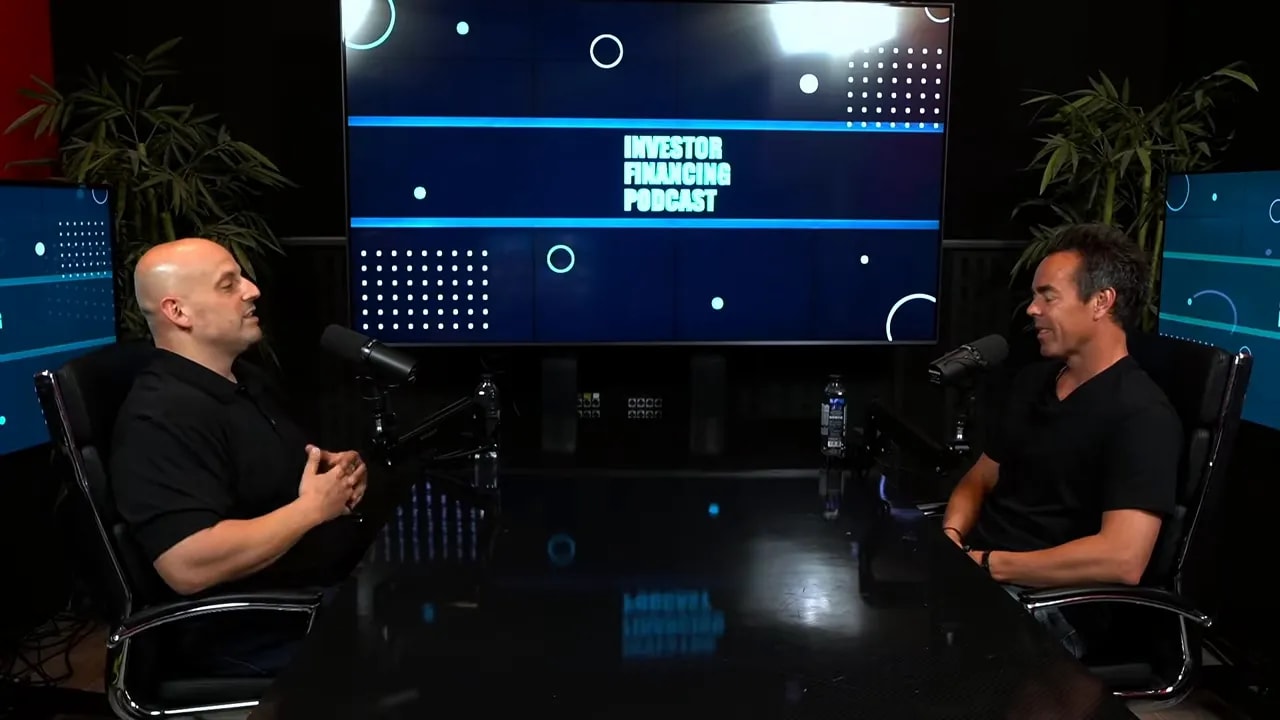
I sat down with Trent Lee, a business broker who has completed more than 600 transactions, and what stood out most was how different the real world is from what social media often sells. The internet makes it sound like you can buy a cash-flowing company with no money down, manage it from another state, and just collect checks. In reality, that model blows up far more often than people admit.
If you want to win in acquisition entrepreneurship, especially with SBA financing, you need to understand valuation, debt, deal structure, seller expectations, and most importantly, whether you are actually the right buyer.
Why buying businesses is getting more popular
There’s a reason business acquisition is becoming mainstream. Demographics are doing a lot of the work. A huge number of business owners are reaching retirement age, and many of them have built solid Main Street businesses that need a transition plan.
That trend is not slowing down. If anything, it is creating a long runway of opportunity for buyers who are prepared.
Years ago, entrepreneurship was heavily associated with startups. Raise money, build an app, take big risks, and hope for the best. Today, more people are realizing that buying a profitable business with customers, employees, systems, and history can be far less risky than building something from zero.
That said, “less risky” does not mean “easy.” It just means the game rewards competence over hype.
Why most listed businesses never sell

One of the most eye-opening parts of this conversation was how many listed businesses never actually close. A big reason is poor pricing from the start.
Some brokers take overpriced listings just to get the engagement, even when the business does not support that valuation based on cash flow, debt service coverage, or market multiples. Those businesses are dead on arrival.
The other issue is owner dependence. A seller may have built a good lifestyle business, but not a transferable business. If the company revolves around the owner’s relationships, technical skill, or daily involvement, a buyer is not really buying a business. They are buying a job with uncertainty attached to it.
A good broker has to set expectations early. That means talking honestly about:
- Real market value
- Whether seller financing will be needed
- How the deal should be structured
- What the buyer pool will realistically look like
That kind of transparency matters because a seller’s retirement number does not determine what the market will pay.
The SBA lens changes everything
This is where the Business Ownership Coach | Investor Financing Podcast message really hits home. If a business is going to be sold with SBA financing, then underwriting logic matters from day one.
Trent talked about learning business appraisal and SBA underwriting so he could evaluate listings the same way a lender would. That is exactly the right mindset. Before a business goes to market, someone should already be stress-testing:
- DSCR or debt service coverage
- Buyer salary needs
- Cash flow adjustments and add-backs
- Reasonable leverage
- Whether the structure actually works for financing
Too many deals fall apart because sellers, buyers, and even brokers focus only on price. But price without structure is meaningless. A business can be “worth” a certain amount on paper and still be unfinanceable in the real market.
If you are trying to prepare to buy your first business with financing, a practical next step is to review this SBA financing course or book an SBA discovery call if you want help assessing what is realistic.
Your buy box is not enough. Your buyer box matters too.
This might be the most important framework from the entire conversation.
Everybody talks about their buy box. They want recurring revenue, healthy margins, a retiring seller, maybe a home service business, maybe something B2B. Fine. That’s useful.
But Trent made a great point: your buyer box matters just as much.
In other words, are you a fit for the business?
That means asking hard questions:
- Do you understand the industry?
- Can you get the required licenses?
- Will employees respect your leadership?
- Will a lender believe you can operate the business?
- Do you have transferable experience?
A lot of people say they are “industry agnostic.” I get why that sounds sophisticated, but in practice it often means they have not really thought through operations. A profitable restoration company, engineering firm, or HVAC business might look great from 30,000 feet. But if you cannot credibly step in, hire correctly, or manage the key risks, you are not the right buyer.
And banks are paying much more attention to that now.
The danger of no-money-down business buying

I’ve been saying this for a while and it came through loud and clear here too: the “buy a business with no money down” message is one of the biggest disservices in the market.
Yes, creative structures exist. Yes, seller notes and standby financing can help. But overleveraging yourself from day one is not smart just because it is technically possible.
If you buy a business in a state you do not live in, in an industry you do not understand, with little equity in the deal, one mistake can wipe you out. There is no margin for error.
That is also why lenders have been tightening up. The market saw too many aggressive deals, especially involving searchers and first-time buyers with limited operating experience. Banks want to see real equity, post-close liquidity, and a buyer who has a believable path to operating success.
That is not banks being difficult. That is banks reacting to reality.
What makes a business truly sellable

If you are a seller, one of the best things you can do is start preparing three to five years before you want to exit.
That prep window gives you time to clean up the financials, reduce owner dependence, install management, and make the business transferable.
A perfect example came up in the conversation: a family business with five brothers all working full time, no meaningful employee bench, and all of them wanting out. It had been around for decades and generated a good lifestyle, but there was no clean handoff for a buyer. Replace one owner? Maybe. Replace five owner-operators all at once? That is a different story.
At that point, a seller may be looking at:
- Liquidation value
- A very small down payment
- Heavy earnout structure
- Significant risk tied to post-close performance
That is a tough place to be if the business is your retirement.
The number one way owners destroy valuation
This is huge, especially for anyone who thinks they are being clever by minimizing taxes.
Many owners underreport income or run too many personal expenses through the business. They save some tax in the short term, but they destroy enterprise value on the backend.
Here’s the math Trent laid out in simple terms. If an owner hides $100,000 and saves $28,000 in taxes, that might feel like a win. But if the business would have sold at a 3.5x multiple, that same move may have reduced valuation by $350,000.
That is a brutal trade.
If you want top dollar, your tax returns need to tell the story clearly. If they do not, you may still get a deal done, but probably with seller financing, earnouts, or a discounted valuation because SBA financing becomes harder or impossible.
A smart model: investor capital plus operator talent

One strategy I really like, and we discussed in depth, is the operator partnership model.
Here’s the basic idea:
- An investor or capital partner puts up the down payment.
- A strong operator is identified first.
- The operator takes over as the owner-operator and personal guarantor.
- The operator gets salary plus profit share.
- The investor gets paid back aggressively before long-term equity sharing kicks in.
That model solves a real problem. There are talented operators who could run a business well but do not have enough capital to buy one. There are also investors with capital who do not want to be in the weeds every day.
Match those two correctly and you can build something powerful.
But again, the key word is correctly. This is not passive from day one. You still need systems, oversight, KPIs, and enough industry understanding to know when something is going wrong.
Why some franchise buyers end up upside down
Franchises can be great in the right context, but they are not automatically safer.
A lot of struggling resale situations come from heavy startup costs. Someone spends hundreds of thousands on buildout, signage, fees, and leasehold improvements, then discovers the business only produces modest cash flow. The resale value is based on earnings, not on how much money was sunk into the space.
That is how someone can invest $400,000 and still have a business that is worth far less than their loan balance.
That is one reason I tend to like lower-overhead businesses, especially home service and B2B models, for first-time owners. Less buildout. Faster ramp. Lower fixed-cost burden.
The biggest opportunity over the next 10 years

The best opportunity is not chasing the fanciest deal. It is buying good businesses at responsible debt levels, learning to operate them well, building systems and processes, and then gradually reducing your day-to-day involvement.
Then, if you want to scale, you do it again.
That is the long game. Not overnight. Not with hype. Not with reckless leverage.
The Business Ownership Coach | Investor Financing Podcast exists to help people think this way because this is how wealth actually gets built. Buy right. Finance right. Operate right. Then expand.
Why successful entrepreneurs rarely stay retired
One last point really stuck with me. Many successful entrepreneurs do not keep working because they have to. They keep working because they want purpose.
After financial success, the game changes. It becomes less about survival and more about impact, contribution, and the satisfaction of helping people make better moves.
That is a big reason I love this space. The right business acquisition can change a person’s entire trajectory. It can double income, create equity, build freedom, and open up a future that did not exist before.
That is meaningful work.
Additional Resources

Photo by Maranda Vandergriff on Unsplash
- Trent Lee’s business brokerage website
- Connect with Trent Lee on LinkedIn
- Trent Lee’s YouTube channel
- Book a call with Beau
- Join the business ownership community
- Subscribe to the newsletter
- Get help with a virtual assistant
If you are serious about acquiring a business, the path is simple even if it is not easy: get educated, get realistic, and do not confuse excitement with readiness. That is how you avoid bad deals and find the ones that actually change your life.