
If you are thinking about buying a business, a franchise, or a so-called semi-absentee operation, the biggest mistake is assuming ownership will be easy once the deal closes. The smarter approach is to understand the work, the risk, and the ramp-up period before you commit capital.
This Business Ownership Coach | Investor Financing Podcast guide covers what buyers often get wrong, why early performance can disappoint, how semi-absentee ownership is commonly misunderstood, and why starting smaller can reduce expensive mistakes.
Why buying a business is harder than it looks
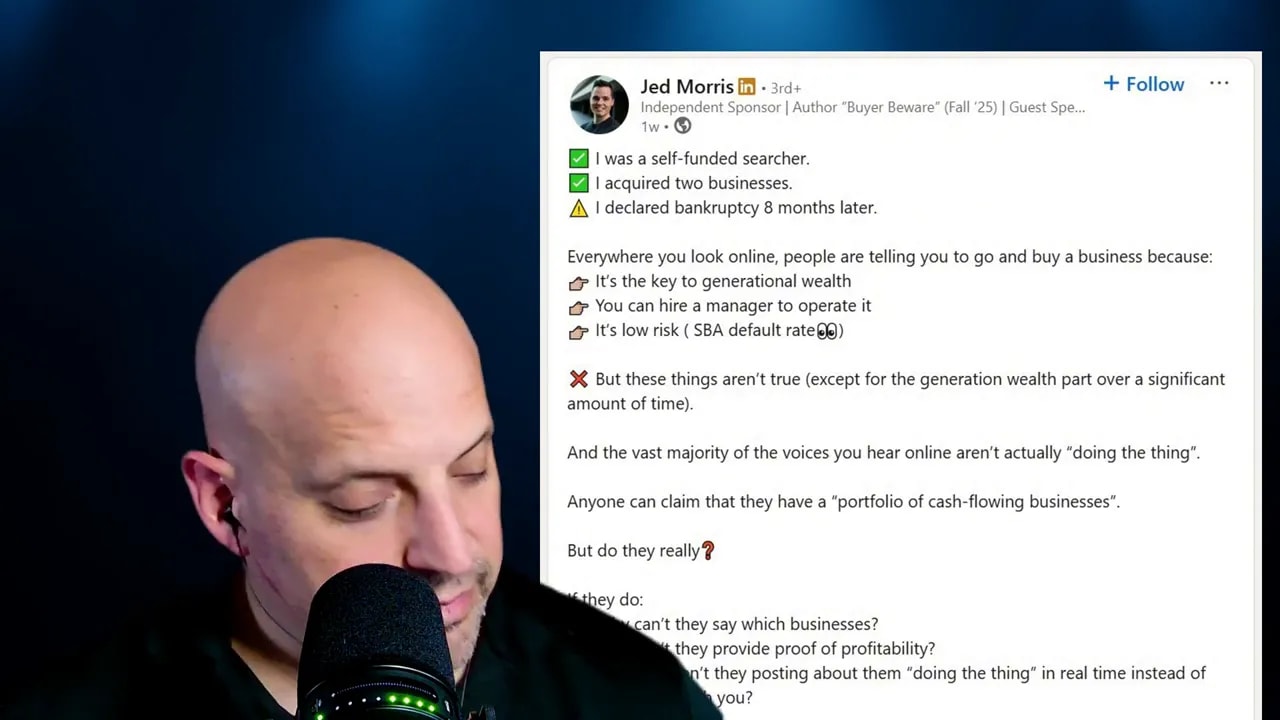
A lot of online content makes business acquisition sound simple. Buy a cash-flowing company, put a manager in place, keep your day job, and build wealth. That can happen over time, but the shortcut version leaves out the hard part.
Business ownership usually gets more demanding before it gets easier. In the early stage, new owners often deal with:
- Revenue drops after transition
- Staff turnover
- Training and operational gaps
- Manager oversight
- Cash flow pressure
- Learning curves in an unfamiliar industry
That is the harsh truth. A business can look stable on paper and still struggle after a handoff. Ownership changes things. Employees react differently, customers notice differences, and systems that seemed solid during diligence may not hold up in real life.
The Business Ownership Coach | Investor Financing Podcast perspective here is simple: ownership is not passive at the beginning, especially if you have limited funds and cannot afford a deep bench of experienced operators.
The biggest myth: semi-absentee means easy
Semi-absentee is one of the most abused terms in business buying and franchising.
Yes, some businesses can eventually become semi-absentee. But “eventually” is the keyword. For many owners, the first one to two years require real involvement. That means recruiting, training, monitoring systems, solving operational issues, and making sure leadership is in place.
If you are keeping a W-2 job while launching or acquiring a business, expect to work two jobs for a while. That is especially true in:
- Home services
- B2B service businesses
- Operations that require licensing
- Businesses with field teams or complex hiring
Some retail and wellness concepts may be lighter operationally, and a few food or beverage concepts can be easier to systematize, but none of that means hands-off from day one.
The Business Ownership Coach | Investor Financing Podcast message is not that semi-absentee ownership is impossible. It is that buyers should treat it as an end state, not a starting condition.
What can go wrong after an acquisition

Photo by Amy Hirschi on Unsplash
When a new owner underestimates the lift, problems compound fast. A bad transition can create a chain reaction:
- Sales soften because relationships were tied to the prior owner
- Margins shrink because labor or operating costs rise
- Managers underperform because they were never fully trained or supported
- Debt becomes stressful because cash flow is weaker than projected
- Decision fatigue sets in because the buyer is learning on the fly
This is one reason defaults and failures happen. Not every financed acquisition works out, and not every “boring business” is low risk just because someone online says it is.
That does not mean buying a business is a bad idea. It means the purchase should be matched to your skill set, time availability, and capital base.
Should you buy one business or multiple at once?

Photo by Cytonn Photography on Unsplash
For many first-time buyers, starting with one business is the safer move.
Buying multiple businesses, locations, or territories at the same time can sound efficient, but it also multiplies complexity. You may be dealing with separate teams, separate customer bases, separate operational problems, and more working capital needs right away.
Starting smaller often limits risk. Once you have proof of concept, stronger systems, and better visibility into cash flow, it may make sense to expand.
This is one of the most practical takeaways from the Business Ownership Coach | Investor Financing Podcast approach. Growth is great, but sequencing matters. It is usually better to earn the right to scale than to force scale too early.
How hands-on should a new owner expect to be?

If you are self-funded or using SBA financing, assume you will be heavily involved at the beginning.
That may include:
- Hiring or replacing a general manager
- Learning the systems and workflows
- Tracking daily performance metrics
- Reviewing payroll, expenses, and margins
- Handling gaps in service, staffing, or compliance
Buyers with significant liquidity can often hire better operators and absorb mistakes. Buyers with tighter capital usually have less room for error, so they need to contribute more time and attention.
That is why expectations matter so much. Business ownership can build wealth, but not by magic. It usually rewards the owner who is willing to do the early heavy lifting.
A practical framework before you buy
Before acquiring a business or franchise, pressure test the opportunity with this checklist:
1. Time commitment
Can you realistically handle a demanding first year? If you have a full-time job, family obligations, or limited flexibility, be honest about how much operational support you can provide.
2. Operator plan
If the business depends on a manager, who is that person? Are they already in place? Can they actually lead? If not, how long will it take to recruit and train one?
3. Cash reserves
Do not focus only on the down payment. You need room for surprises, slower revenue, and working capital pressure.
4. Industry fit
Do you understand the business model enough to make decisions under stress? You do not need to know everything on day one, but you should know what drives revenue, margins, and staffing.
5. Scale timing
Are you trying to go too big too soon? Starting with one unit, one location, or one territory may give you better odds than stretching into multiple operations immediately.
Is coaching or paid education worth it?

Photo by Cytonn Photography on Unsplash
Sometimes yes, but it depends on who you are learning from and what outcome you need.
There is value in education that shortens the learning curve. But buyers should still do basic research before spending heavily. Learn the landscape first, understand the business model, and verify the credentials of anyone selling advice.
A reasonable way to think about it:
- Start with low-cost learning and research
- Clarify the exact skill gap you need help with
- Only pay for coaching if the path to return on investment is clear
The Business Ownership Coach | Investor Financing Podcast angle here is measured, not cynical. Coaching is not inherently bad. Blindly paying for hype is.
How financing affects risk
Financing can help you acquire a business sooner, but leverage amplifies mistakes. If performance dips after closing and debt service remains fixed, pressure rises quickly.
That is why buyers should think beyond approval and ask tougher questions:
- What happens if revenue falls after transition?
- How much runway do I have?
- Do I have enough reserves to stabilize operations?
- Can I support the business if it takes longer than expected to improve?
If you are exploring acquisition funding, an SBA discovery call can help clarify what lenders may look for and whether the deal structure fits your situation.
What kind of buyer is most likely to succeed?

Photo by Cytonn Photography on Unsplash
The strongest buyer is not necessarily the one with the flashiest plan. It is usually the one who understands that nothing about ownership is automatic.
Good candidates tend to share a few traits:
- They expect a learning curve
- They are willing to be hands-on early
- They do not confuse financing with safety
- They verify claims instead of relying on online hype
- They are comfortable starting smaller and scaling later
That mindset is a recurring theme in the Business Ownership Coach | Investor Financing Podcast conversation around business buying. Long-term wealth can come from owning businesses, but only if the operator respects the process.
A simple wealth-building view: tax strategy, business ownership, and real estate
One long-term framework mentioned in the Business Ownership Coach | Investor Financing Podcast is the combination of:
- Tax strategy
- Operating businesses
- Real estate ownership
The important caveat is that none of these are easy in isolation. Together, they can be powerful over time. But buyers get in trouble when they treat the framework like a shortcut instead of a long-term plan.
The better approach is to build in layers. Stabilize one business. Understand your numbers. Put systems in place. Then expand when the fundamentals are working.
Common mistakes to avoid
- Believing cash flow will stay the same after closing
- Assuming semi-absentee means passive from day one
- Buying multiple units or businesses too early
- Ignoring the need for hands-on leadership
- Underestimating the value of reserves
- Taking advice from people whose credentials are unclear
Bottom line
Buying a business can absolutely be a path to long-term wealth, but it is not a shortcut to easy income. Most owners need to be deeply involved at the start, especially when capital is limited or the operator bench is thin.
The clearest takeaway from this Business Ownership Coach | Investor Financing Podcast discussion is to go in with realistic expectations. Start smaller if needed. Validate the model. Build systems. Then scale once the business proves itself.
If you want ongoing guidance, you can explore the Business Ownership Academy, join the business ownership newsletter, or book a discovery call for deal and funding conversations. For owners focused on support systems and delegation, these virtual assistant resources may also help lighten the operational load over time.
Additional Resources

Use these resources if you are evaluating financing, ownership strategy, or operational support before buying a business:
- SBA Discovery Call
- Book a Call
- Business Ownership Academy
- Newsletter
- Virtual Assistant Help