
A Business Ownership Coach helps entrepreneurs focus their time, capital, and energy on the activities that actually grow a business. One of the best ways to do that in 2026 is to combine virtual assistants, practical AI tools, and clear operating systems.
The objective is not to replace good judgment with technology. It is to remove repetitive work from the owner’s plate so the owner can concentrate on revenue, relationships, financing, acquisitions, hiring, and strategic decisions. When virtual assistants and AI are set up correctly, a smaller business can operate with more consistency without immediately adding expensive in-house overhead.
Why Virtual Assistants and AI Matter for Business Owners

Most owners do not have a motivation problem. They have a bandwidth problem. They spend too much time answering routine messages, organizing files, creating basic marketing assets, updating systems, and following up on tasks that someone else could handle.
A Business Ownership Coach should look at every role through one question: Does this task require the owner’s experience, authority, or relationships? If the answer is no, it is likely a candidate for delegation, automation, or both.
Virtual assistants can provide ongoing human support for administration, content production, research, scheduling, customer follow-up, and specialized work. AI can speed up drafting, sorting, summarizing, repurposing, and creating first-pass materials. Together, they create leverage.
- Virtual assistants bring judgment, context, execution, and quality control.
- AI tools help complete repeatable, text-heavy, or production-heavy work faster.
- The business owner provides direction, standards, approvals, and accountability.
Start With a Delegation Audit Before You Hire

Do not hire a VA because it sounds like a smart move. Hire because you have a defined workload and a clear result you need. Start by tracking your work for one week. List the tasks that repeatedly pull you away from sales, deal review, client conversations, or leadership.
Sort each task into one of four buckets:
- Keep: High-value decisions, negotiations, lending strategy, client trust, and final approvals.
- Delegate: Calendar coordination, inbox triage, document organization, data entry, research, and follow-up.
- Automate: Repeated prompts, content summaries, draft captions, basic workflow checklists, and first-pass formatting.
- Eliminate: Tasks that do not move a client, deal, or business goal forward.
This process gives a Business Ownership Coach a practical way to identify the first role to hire. For many businesses, an executive or administrative VA is the best initial hire because it gives the owner back time quickly. For a content-driven business, an editor or content operations assistant may produce the greatest return.
Build a Core Team, Then Use Specialists as Needed
A common mistake is trying to find one person who can manage everything. A better approach is to build a small core team for recurring work, then bring in specialists for projects that require a portfolio or narrow skill set.
A scalable team structure may include:
- Executive admin VA: Scheduling, inbox management, client coordination, CRM updates, and recurring follow-up.
- Content editor: Editing long-form material, short clips, graphics, and reusable brand assets.
- Operations VA: File management, research, checklists, tracking, and internal documentation.
- Specialist contractors: Logo design, advanced editing, web work, paid-media assets, or one-time creative projects.
Agencies can be useful when you want a more established process and help replacing or managing team members. Direct hiring platforms can work well when you know exactly what skill you need and can evaluate portfolios and references. Either way, begin with a paid test project and written expectations.
Use Simple Tools to Run a Remote Team
A remote team does not need a complicated software stack. In fact, too many tools create confusion, missed handoffs, and duplicated work. The basics are usually enough: communication, shared files, and a place to document the process.
For day-to-day collaboration, tools such as Slack, Google Drive, Dropbox, Zoom, and messaging apps can keep a distributed team connected. The key is not the platform. The key is establishing rules for where information belongs.
Use a simple operating rhythm:
- Put each task in writing with a clear outcome and deadline.
- Store files in a consistent folder structure.
- Keep approvals and feedback in one communication channel.
- Record repeatable instructions as checklists or short process documents.
- Review completed work before expanding responsibility.
A Business Ownership Coach should insist on clarity. “Handle social media” is vague. “Turn this approved interview into five short clips, five captions, and one quote graphic by Thursday” is assignable and measurable.
Train Your Virtual Assistants to Use AI, Not Just Tasks

The biggest leverage comes when your assistant can use AI within a documented process. Instead of having the owner run every prompt, create approved prompts and workflows that the team can use repeatedly.
For example, after a podcast, webinar, client education session, or recorded interview, a VA can use a prompt library to create:
- Five key takeaways
- Short social captions
- Quote selections for graphics
- Ideas for short-form clips
- A first draft of an email or newsletter summary
- Topic ideas based on the core discussion
AI output should be treated as a first draft, not a final deliverable. Your VA should verify facts, align the material to your brand, replace generic language, check spelling, and make sure the finished asset actually helps a prospect or client.
That is the difference between random AI use and an operating system. The AI increases production speed, while the human team protects quality and context.
Know When to Delegate and When to Automate

Use AI when the task is repeatable, structured, and low-risk. Use a VA when the task needs judgment, communication, context, or coordination. Use both when you want fast output that still needs a professional review.
| Use AI First | Use a VA First | Use Both Together |
|---|---|---|
| Summaries, outlines, draft captions, topic ideas | Scheduling, inbox handling, client coordination, research validation | Content repurposing, lead follow-up drafts, marketing production |
| First-pass scripts and formatting | File organization and deadline management | Creating variations of approved messaging and graphics |
Do not automate high-stakes communications, sensitive financial details, final loan guidance, or client-facing claims without human review. In business ownership, accuracy and trust matter more than shaving a few minutes off a task.
Common Mistakes That Limit the Value of a VA Team
Hiring is only the beginning. The businesses that get the best results from virtual teams build simple systems around them. Avoid these common issues:
- Delegating without a process: If the task lives only in your head, the assistant has to guess.
- Giving unclear feedback: Show examples of what good work looks like and explain what needs to change.
- Skipping quality control: Review early deliverables closely before allowing work to go live.
- Trying to delegate everything at once: Start with one recurring responsibility, stabilize it, then add more.
- Expecting AI to know your business: AI needs prompts, examples, approved messaging, and human oversight.
- Measuring activity instead of outcomes: Track completed deliverables, response time, appointment quality, and business impact.
A strong Business Ownership Coach understands that delegation is a leadership skill. You are not simply sending tasks away. You are building repeatable capacity inside the business.
Turn Time Savings Into Growth Activity

The purpose of delegation is not to create more empty space on the calendar. It is to redirect your time into the activities that create revenue and enterprise value. Use the recovered hours for qualified appointments, deal underwriting, lender relationships, client education, recruiting, strategic partnerships, or acquisition analysis.
If financing is part of your next move, schedule an SBA lending discovery call to discuss the financing side of purchasing or expanding a business. For additional support, explore the Business Ownership Academy and join the business ownership newsletter.
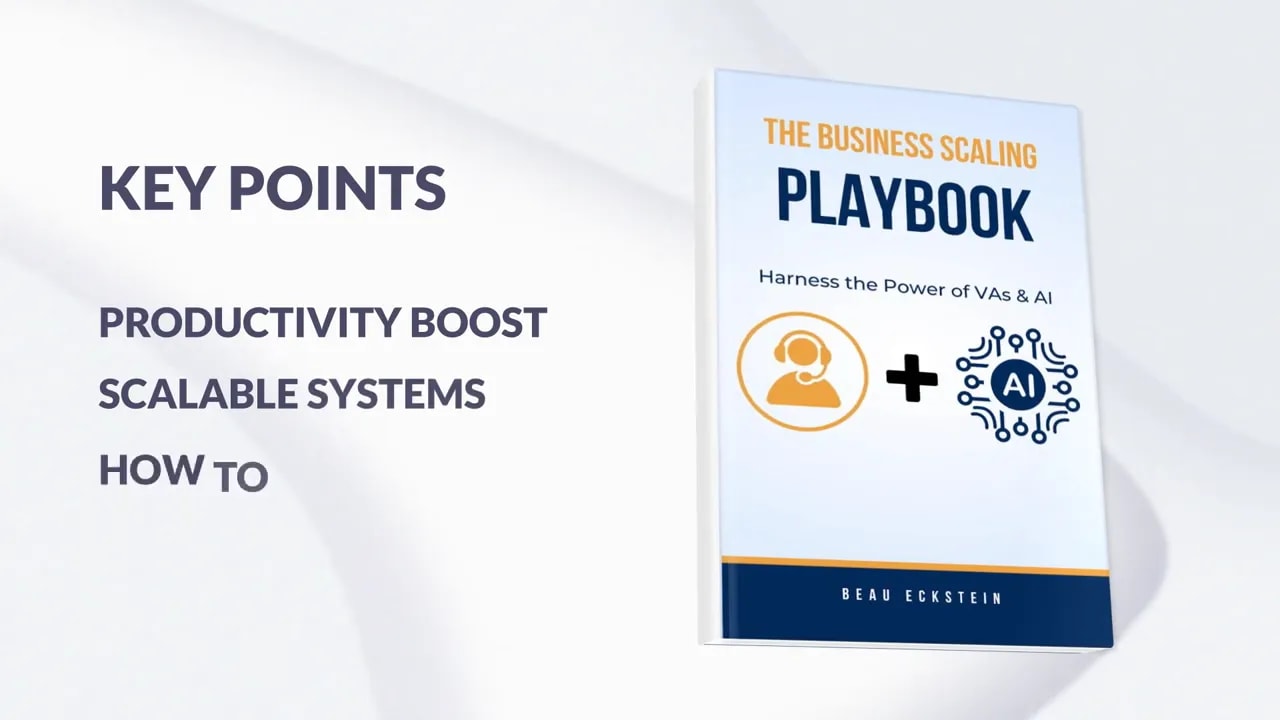
If you are ready to create capacity but are unsure where to begin, review the virtual assistant scaling resource. A focused first hire, documented tasks, and an AI-enabled workflow can give you far more leverage than trying to do every job yourself.
Final Takeaway: Scale Systems Before You Scale Overhead

The right Business Ownership Coach approach is straightforward: keep your highest-value responsibilities, delegate the work that does not require you, and use AI to make a capable team more productive. Start small, document what works, protect quality, and add capacity as the system proves itself.
Business growth is rarely about working harder forever. It is about creating a team and process that can deliver more without making the owner the bottleneck.