
A Business Ownership Coach can help entrepreneurs evaluate whether a medical staffing business is the right fit based on capital, lifestyle goals, and growth potential. If you are looking for a scalable service business with strong demand, medical staffing stands out because it serves a critical need in healthcare while offering multiple revenue paths.
This model is not a franchise. It is a business opportunity that may allow you to keep full equity, avoid royalty fees, and build a business from home with a lean team. For the right operator, that can be very attractive.
What Is a Medical Staffing Business?
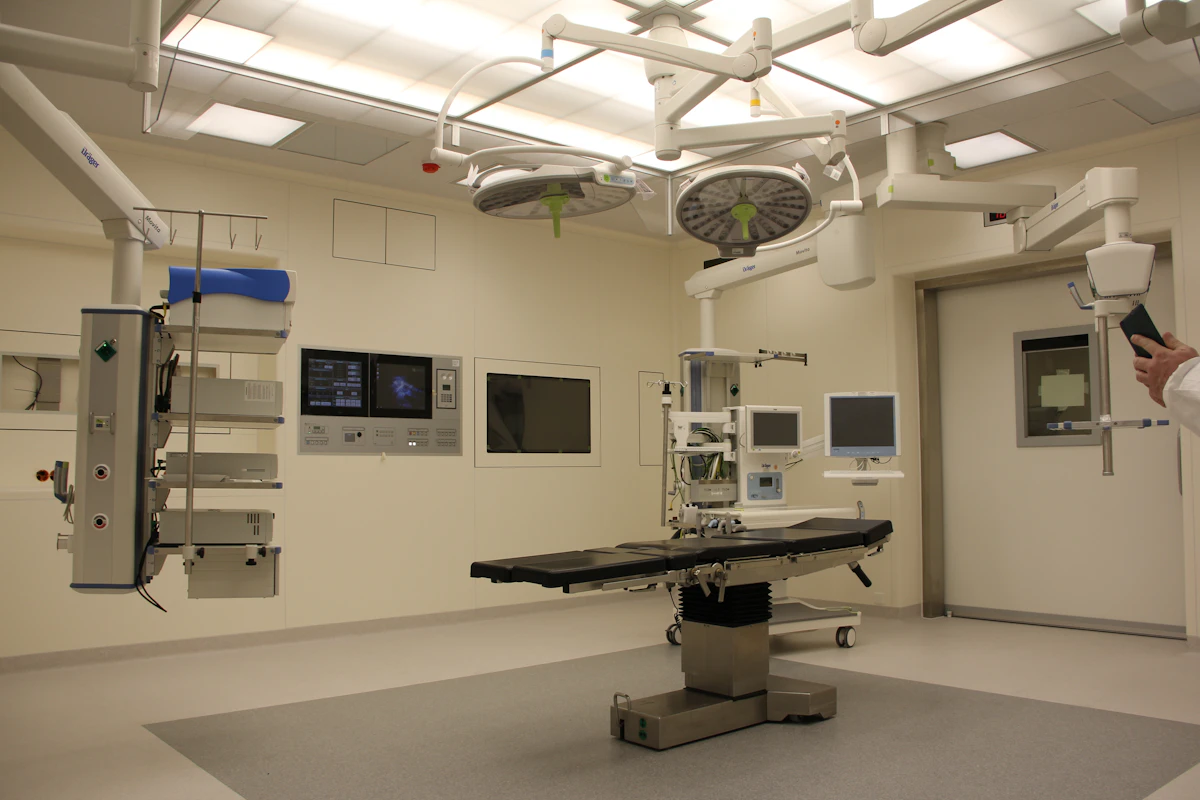
A medical staffing business connects healthcare facilities with qualified professionals they need to hire. That can include permanent placements, temporary staffing, and travel staffing.
Healthcare employers such as hospitals, senior facilities, and doctor offices often face ongoing labor shortages. A staffing company helps solve that gap by sourcing candidates, matching them to open roles, and managing the placement process.
From a Business Ownership Coach perspective, this business model gets attention because it combines a large market, operational flexibility, and recurring revenue potential.
Why Demand for Medical Staffing Continues to Grow

The underlying demand drivers are strong:
-
The healthcare staffing market is projected to reach $62.8 billion by 2030.
-
Travel nurse staffing previously grew from $5.6 billion to $13.6 billion.
-
By 2030, every baby boomer will be over 65, increasing demand for care.
-
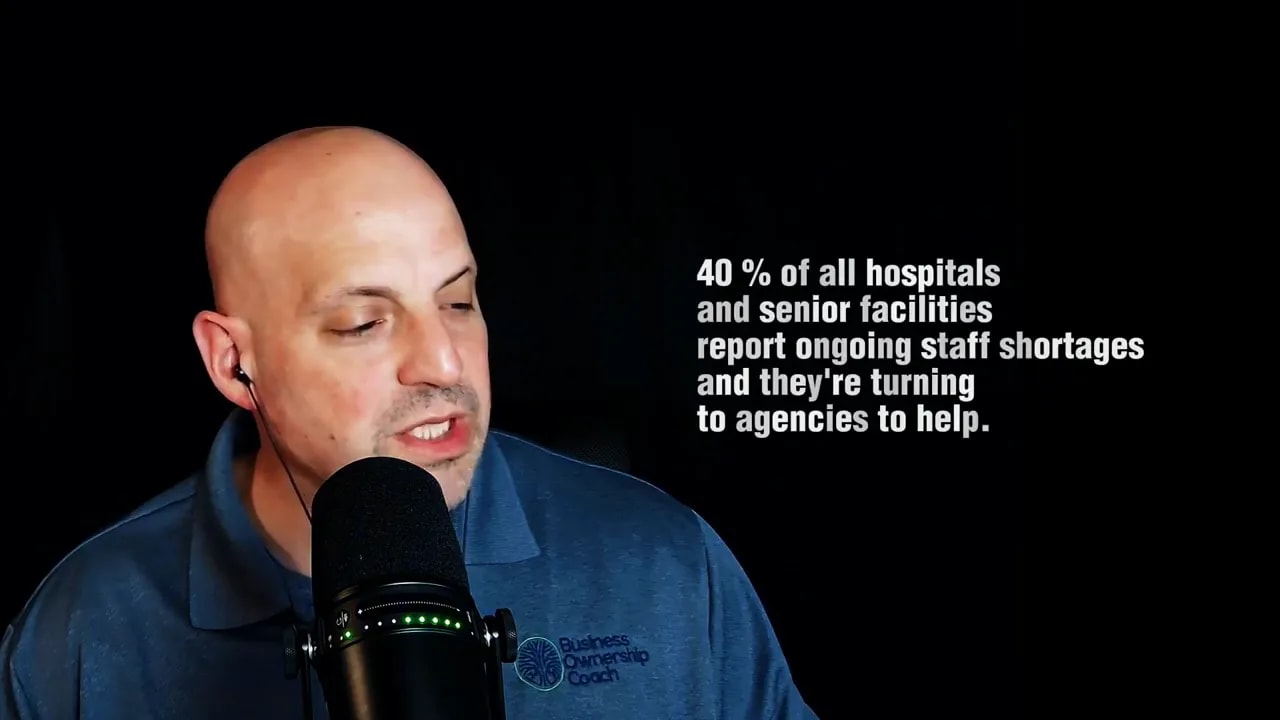
Hospitals and senior facilities continue reporting staff shortages.
-
High turnover in healthcare creates repeated hiring needs.
That matters because this is not demand you need to create from scratch. The need already exists. A Business Ownership Coach typically looks for markets where the pain point is obvious and ongoing. Medical staffing checks that box.
Why This Model Appeals to Entrepreneurs

Photo by Vitaly Gariev on Unsplash
There are several reasons this business model gets serious consideration:
-
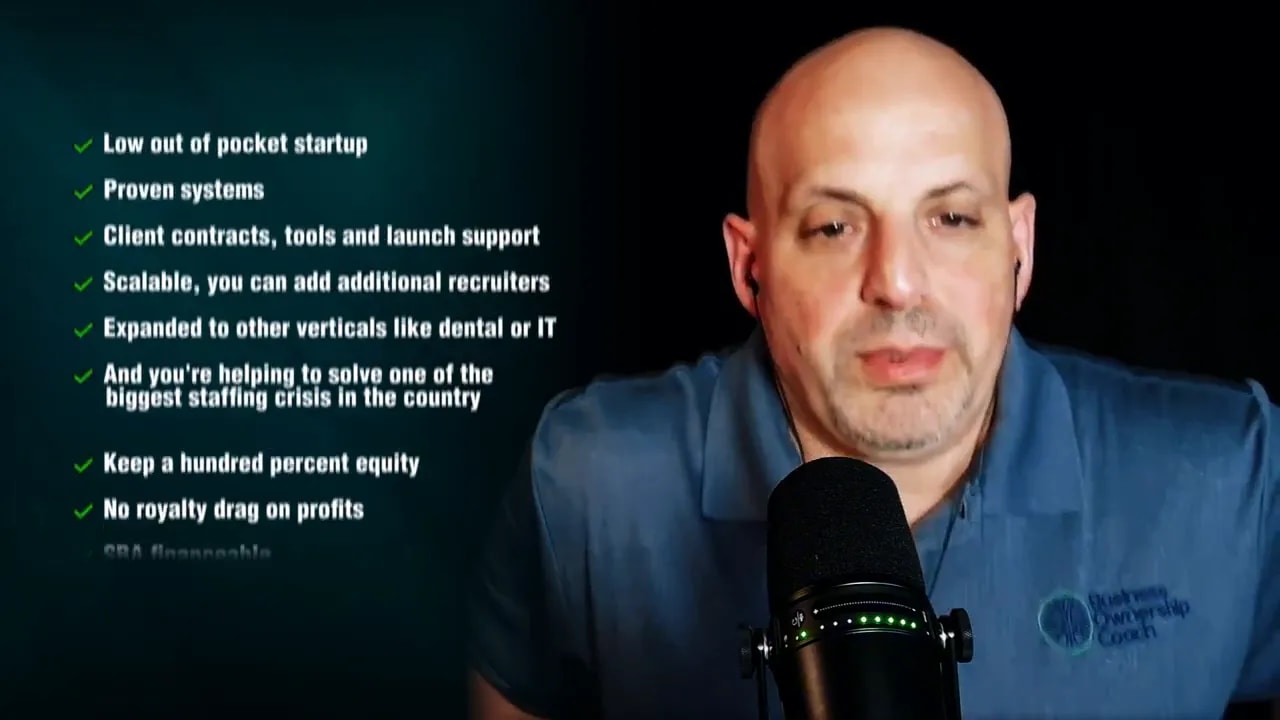
Full equity ownership. You may keep 100 percent of the equity rather than paying ongoing royalties.
-
Lower startup overhead. No brick and mortar location is required.
-
SBA financing may be available. That can reduce out-of-pocket startup costs for qualified buyers.
-
Remote-friendly. This can be operated from home and expanded with remote staff.
-
Nationwide reach. The model described is not territory specific.
-
Scalable systems. Additional recruiters and support staff can be added as the business grows.
A Business Ownership Coach often emphasizes that a strong model is only half the equation. The other half is fit. This kind of business is generally best for someone who is comfortable networking, developing relationships, and building a team.
How a Medical Staffing Business Makes Money

One of the biggest advantages of this business is that it can generate both one-time and recurring income.
Permanent placement fees

Photo by Luis Melendez on Unsplash
With permanent placement, the staffing company receives a fee based on a percentage of the candidate’s first-year salary. If you place a high-income healthcare professional, the fee can be meaningful.
This can produce strong cash flow even with a relatively small number of successful placements.
Temporary staffing spread

Photo by Luis Melendez on Unsplash
Temporary staffing adds recurring revenue. In this structure, the agency bills the healthcare facility at one rate and pays the worker at another rate, earning the spread between the two.
Assignments may last weeks, months, or in some cases much longer. That can create more predictable revenue than relying only on placement fees.
Travel staffing
Travel staffing can expand the opportunity further. It addresses facilities that need professionals willing to work in different locations, often on a temporary basis.
For a Business Ownership Coach, this blend of fee income and recurring billing is what makes the model especially interesting.
What Roles Can You Place?
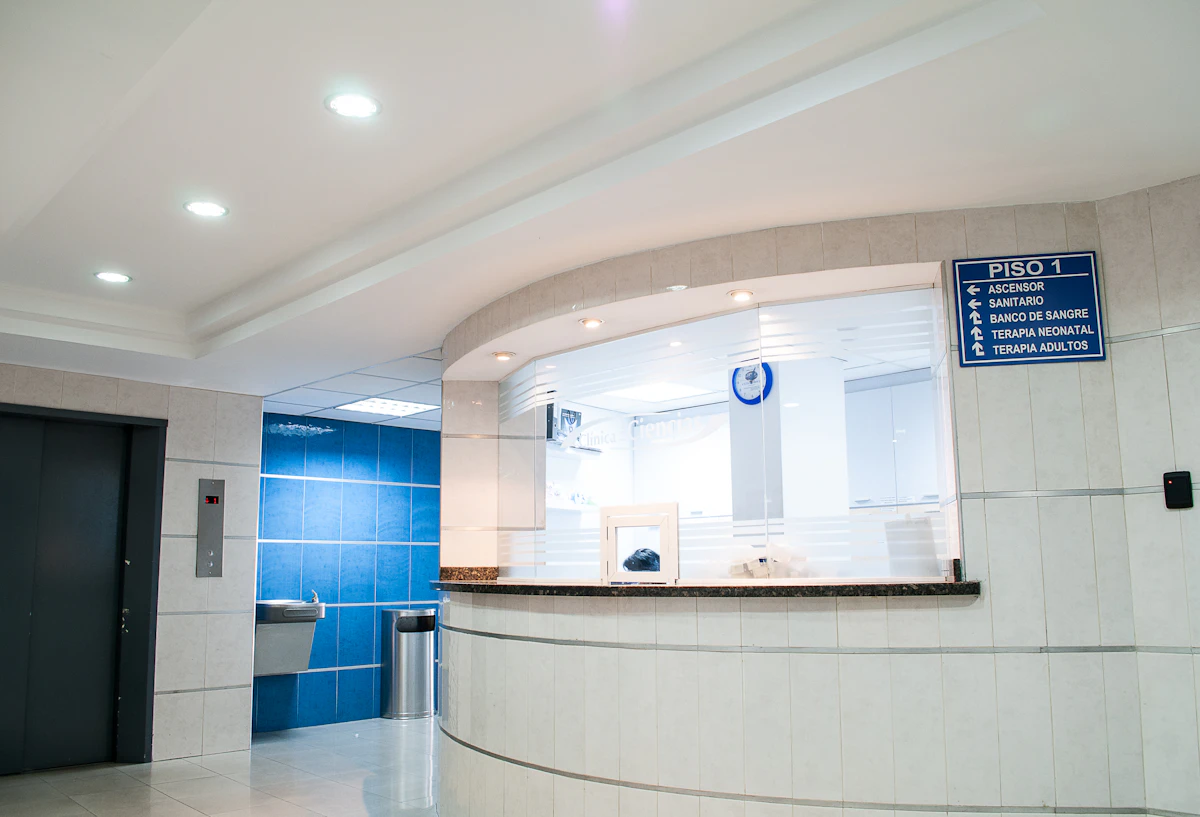
The healthcare field is broad, and that is part of the appeal. The model discussed includes the ability to place candidates across roughly 200 healthcare segments.
Examples include:
-
Healthcare administrative staff
-
Behavioral health technicians
-
Case m