
A Business Ownership Coach helps aspiring and existing entrepreneurs turn a broad goal, such as replacing a W-2 income or adding a second revenue stream, into a financeable business plan. The right opportunity is not simply the business with the highest revenue. It is the business that fits your skills, available capital, desired role, operating capacity, and long-term wealth strategy.
In 2026, SBA-backed financing can still be a powerful tool for qualified buyers pursuing a business acquisition, franchise startup, expansion, commercial real estate purchase, or construction project. But financing is only one piece of the equation. The business must make sense, the cash flow needs to support the debt, and the ownership structure has to be built correctly from day one.
Start With a Buyer Box, Not a Random Business Listing
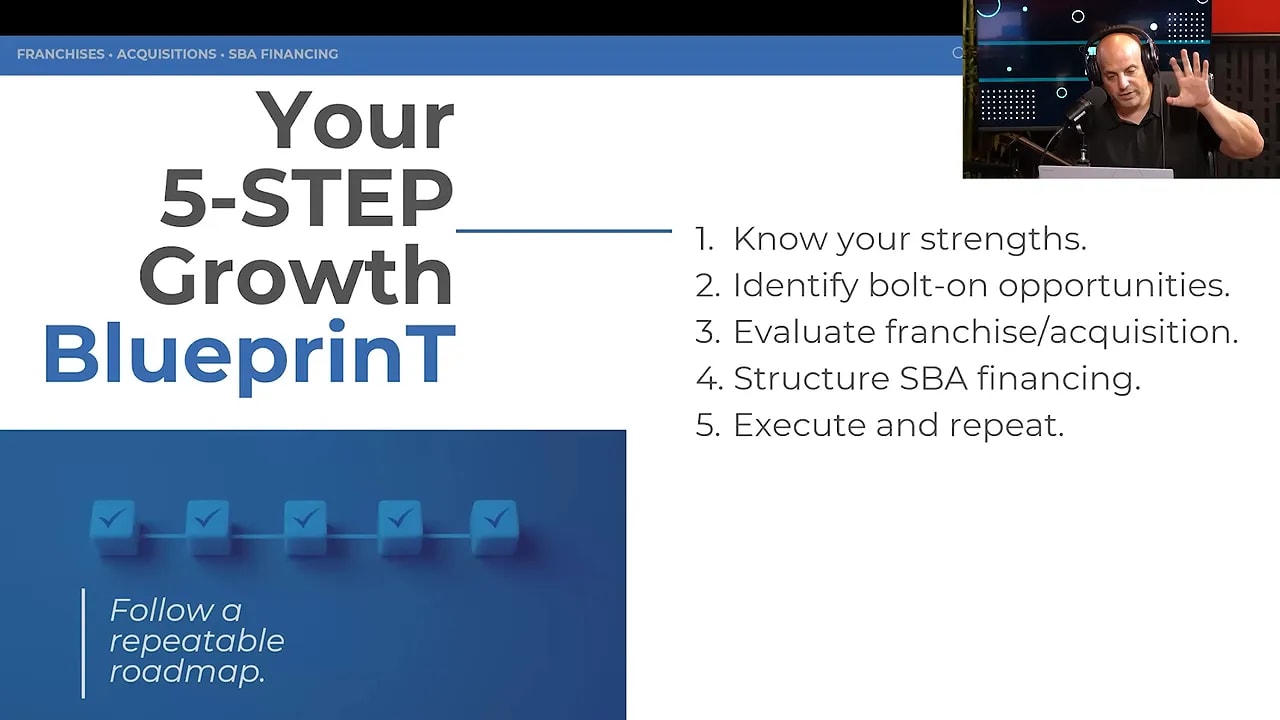
A good Business Ownership Coach begins by helping you define your buyer box. This is a practical filter for determining what kind of business you should pursue before you spend months chasing listings or speaking with franchise brands.
Your buyer box should address five areas:
- Capital: How much cash can you reasonably contribute while preserving personal reserves?
- Experience: What leadership, sales, operational, technical, or management experience can transfer into the business?
- Income goal: How much income must the business eventually produce for your household?
- Owner role: Do you want to operate daily, lead a manager, or build toward a semi-absentee role?
- Business model: Are you better suited to B2B services, home services, retail, hospitality, a franchise, or an independent acquisition?
This matters because people often fall in love with a concept before doing the math. A business may sound exciting but require more capital, longer ramp-up time, or more hands-on involvement than you want. The right investment should fit your actual life, not just your ambition.
If you are unsure what fits, complete the Business Ownership Blueprint assessment to begin narrowing the business models that align with your goals and ownership profile.

How SBA Financing Fits Into Business Ownership
SBA financing is not money issued directly by the SBA. Banks, credit unions, and certain non-bank lenders make the loans, while the government guarantee helps reduce lender risk. A Business Ownership Coach can help you determine which loan structure fits the transaction and which lender is most likely to execute.
Two programs are especially relevant to business buyers:
- SBA 7(a): Often used for business acquisitions, franchise startups, working capital, equipment, tenant improvements, and some owner-occupied real estate transactions. It is a flexible financing tool for operating businesses.
- SBA 504: Primarily designed for owner-occupied commercial real estate, major equipment, and construction. It is commonly structured with a bank loan and a second loan through a Certified Development Company.
The financing conversation should begin with cash flow. For an acquisition, lenders want to see whether the company can pay its operating expenses, the new loan payment, and a reasonable owner benefit. A lower purchase price with healthy cash flow is usually more attractive than a flashy business with weak or declining performance.
For established businesses expanding within the same industry, financing structures can sometimes be more favorable than a first-time acquisition. An existing operator with proven cash flow, management ability, and a clear expansion plan may have options that a first-time buyer does not.
Because SBA requirements and lender credit standards can change, do not rely on broad internet advice. Before making an offer, schedule an SBA discovery call to evaluate the deal structure, borrower profile, liquidity, and documentation needed for a lender review.
Choose the Right Path: Startup, Franchise Resale, or Independent Acquisition
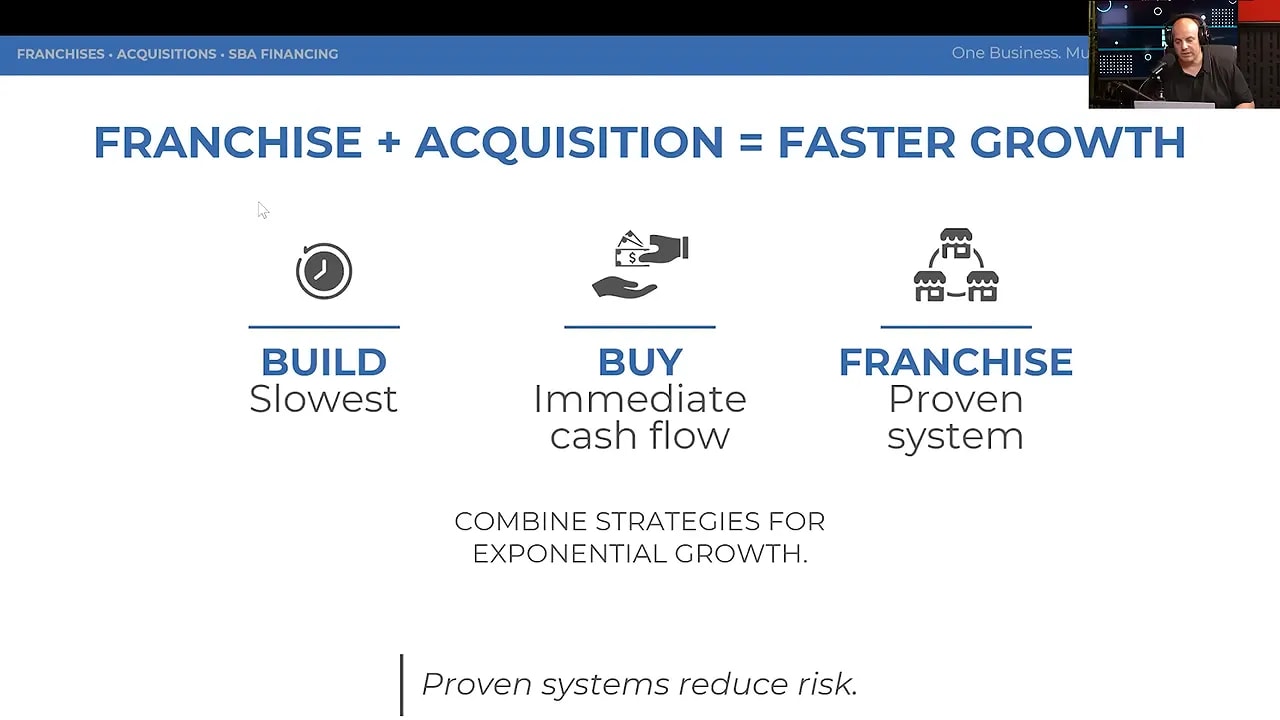
There is no universally best way to become an owner. A strong Business Ownership Coach helps you compare the tradeoffs instead of pushing one model.
Independent business acquisitions can provide immediate customers, employees, revenue, and operating history. The challenge is that performance may depend heavily on the departing owner. If the seller is the lead technician, salesperson, and relationship manager, you may be buying a job rather than a scalable company.
Franchise startups may offer training, operating procedures, brand support, and a tested model. That infrastructure can reduce the amount you need to create from scratch. However, startups need time to build revenue, and franchise fees and royalties must be weighed against the value of the system.
Franchise resales can offer an existing location, local customer base, and operational history. Yet a resale is not automatically a better deal. A weak or declining location may not cash flow enough to support SBA debt. In those cases, seller financing, a lower price, or a turnaround strategy may be necessary.
A Business Ownership Coach should push you to investigate the details: owner responsibilities, customer concentration, employee retention, lead flow, pricing, working capital, competition, and the true reason the seller is exiting.

Use Complementary Revenue Streams to Grow More Intelligently
Many owners build wealth by adding related businesses rather than jumping into an unrelated industry. This is often called a bolt-on strategy. The idea is simple: use existing customers, local market knowledge, staff capabilities, and management infrastructure to create another revenue channel.
Examples of complementary ownership strategies include:
- A plumbing company adding restoration services.
- An HVAC operator acquiring a nearby competitor or related home-service company.
- A CPA firm adding bookkeeping or payroll services.
- A cleaning company adding painting or another property-maintenance service.
The best bolt-on business does not have to share the same legal entity or customer list, but it should offer a clear operational advantage. A business that uses similar labor, vehicles, marketing channels, or referral sources can be easier to manage than a completely unfamiliar concept.
For service businesses, growth frequently becomes a capacity equation. More qualified leads, stronger estimates, trained technicians, vehicles, and scheduling systems can increase revenue. But do not confuse adding revenue with adding profit. Every new crew, location, or service line needs a plan for labor, supervision, margins, and cash flow.

Understand What Lenders Actually Evaluate
A lender is evaluating both the business and the borrower. Strong credit matters, but a high salary alone does not determine whether you can qualify. An acquisition with reliable cash flow may support a buyer who is transitioning out of employment, provided the overall profile and structure are sound.
Common lender considerations include:
- Personal credit quality and responsible revolving-debt usage.
- Relevant or transferable management experience.
- Cash injection, liquidity after closing, and personal financial strength.
- The business’s historical financial statements and current year performance.
- Whether projected cash flow supports the requested debt.
- Seller financing terms, when applicable.
- A realistic plan for working capital, staffing, and the ownership transition.
Do not assume a 10% down payment means you only need 10% of the purchase price in the bank. You may also need reserves, closing costs, and working capital. Equity may come from savings, eligible gifts, certain retirement strategies, home equity, or an investor partner, depending on the structure and lender requirements.
Investor capital can help fill an equity gap, but it does not eliminate the need for an investable operator. Protect investor capital, define ownership rights in writing, and make sure the deal does not create unrealistic debt or distribution obligations.
One evaluation item buyers rarely plan for: when the deal is not fully secured and the business depends on you, the lender will usually require life insurance on the SBA loan, collaterally assigned to the bank. It is a closing condition, not a formality, so start the policy when the commitment letter arrives.
Big Mistakes First-Time Business Buyers Make
The most expensive mistake is treating ownership as passive from day one. Even a well-run business needs leadership through a transition. Customers can leave, employees may need reassurance, and the seller’s relationships may not automatically transfer.
Other common mistakes include:
- Buying based on revenue: Revenue does not pay debt. Cash flow does.
- Overpaying for an owner-dependent company: A business needs systems, not just a talented seller.
- Skipping due diligence: Review tax returns, profit and loss statements, balance sheets, customer data, payroll, leases, and operational risks.
- Underfunding working capital: Closing the transaction is not the finish line. It is the starting line.
- Assuming a manager will solve everything: Owners must first establish systems, accountability, hiring standards, and performance expectations.
- Choosing a franchise without validation: Speak with existing owners and carefully review the Franchise Disclosure Document.
A disciplined Business Ownership Coach helps you ask better questions before you sign a letter of intent. That can save far more money than trying to negotiate a slightly lower interest rate after you have already selected the wrong deal.

Photo by Hunters Race on Unsplash
Build a Long-Term Ownership Plan, Not a One-Deal Plan
The goal is not simply to buy a business. The goal is to build a durable ownership platform that can create income, enterprise value, and optionality for your family.
Start with one business you understand. Build the systems. Improve the lead flow. Develop management. Track unit economics. Once the first business is stable, you can assess whether to acquire another location, add a complementary service, purchase the building you occupy, or diversify into other assets.
Commercial real estate can be a strategic next step for established operators. For qualifying owner-occupied properties, the operating company may be able to replace rent with ownership while leasing unused space to tenants. That can create another long-term asset alongside the operating business.
The right Business Ownership Coach focuses on helping you become a capable buyer first, then a capable operator, and ultimately an owner who can build a team and create systems that do not rely on one person.
Next Step: Build Your Financeable Business Ownership Strategy
Whether you are considering a franchise startup, an established business acquisition, a resale, an expansion, or owner-occupied commercial real estate, begin with the numbers and the fit. Get clear on your buyer box, verify the cash flow, plan the capital stack, and understand the work required after closing.
A Business Ownership Coach can help bring those moving pieces together so you are not pursuing opportunities blindly. The best time to build momentum is before the right deal appears, not after it is already under contract.