
A Business Ownership Coach can help W2 employees evaluate whether franchise ownership is a practical path to extra income, tax advantages, and long term business equity without quitting a stable job too early. If you want to keep your paycheck while building something that could become a real asset, the right franchise model can create leverage. The key is choosing a business that matches your time, capital, delegation skills, and risk tolerance.
This guide covers how a Business Ownership Coach would assess franchise fit in 2026, what ownership models make sense for working professionals, how funding and tax planning typically fit into the conversation, and what mistakes to avoid before signing anything.
Why a Business Ownership Coach Often Recommends Franchising for W2 Employees

Photo by Cherrydeck on Unsplash
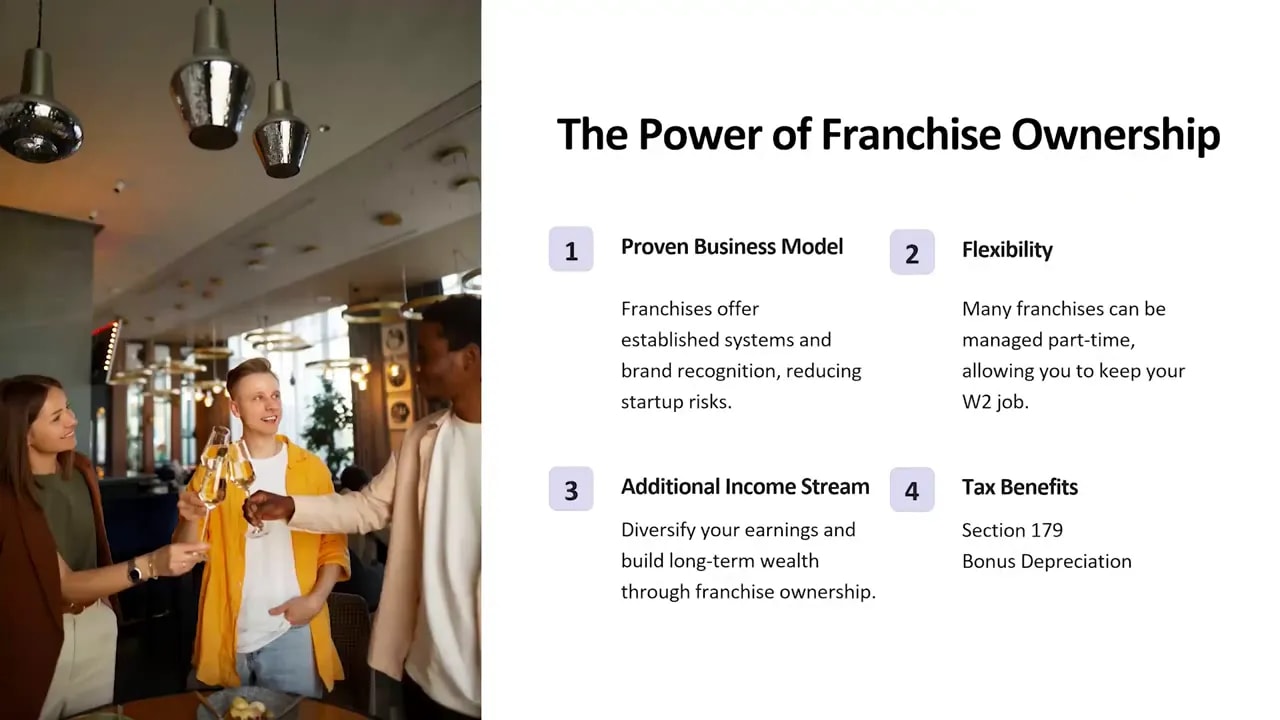
For many employees, the biggest challenge is not earning income. It is building an asset outside of earned wages. A Business Ownership Coach looks at franchising as one possible bridge between employment and entrepreneurship because it can offer:
- Proven systems with established branding, operations, and marketing support
- A second income stream that may reduce dependence on one employer
- Potential tax benefits available to business owners, depending on structure and eligible expenses
- A sellable asset if the business grows revenue and profitability over time
- Operational frameworks that may be easier to delegate than a startup built from scratch
That does not mean every franchise is a good fit. It means the model deserves a serious look if your goal is to build cash flow and equity while keeping your current role.
What a Business Ownership Coach Looks for First

Photo by Redd Francisco on Unsplash
Before discussing brands, a Business Ownership Coach should start with fit. Most franchise problems begin when people chase a concept before they understand their own constraints.
The first filters usually include:
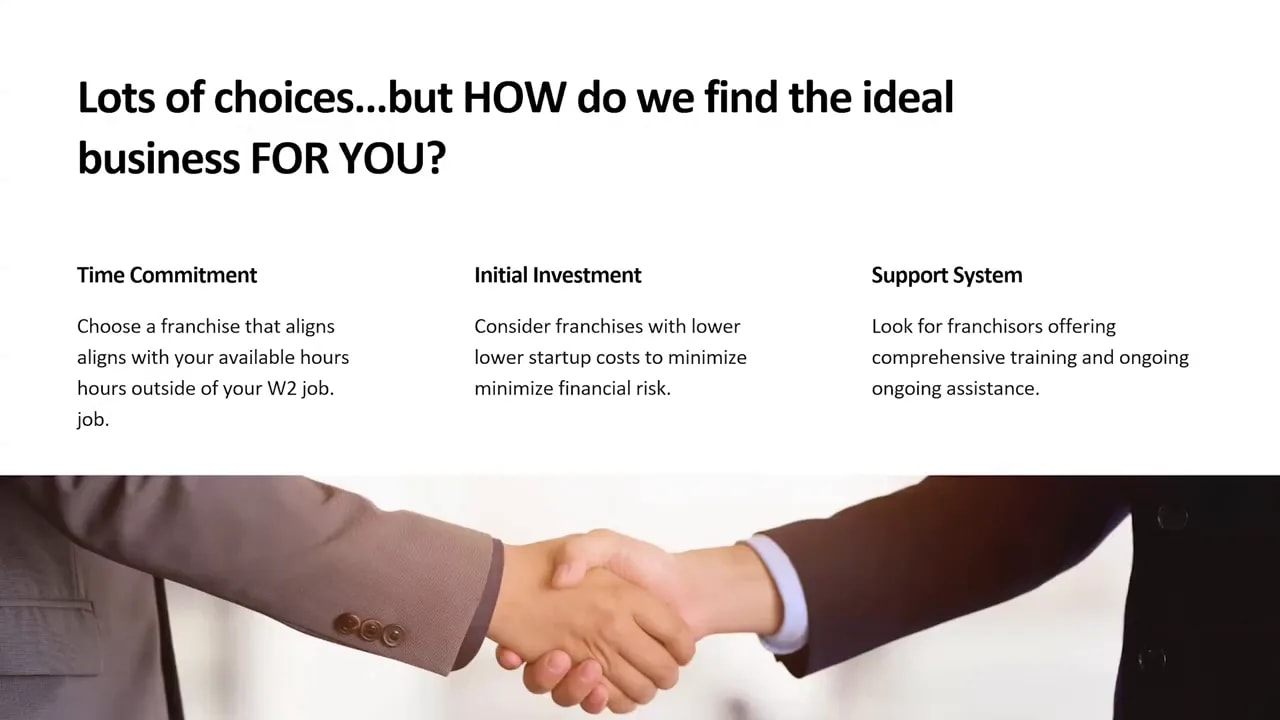
- Time commitment. How many hours per week can you realistically give?
- Initial investment. What cash, liquidity, or financing capacity do you have?
- Support systems. Do you need strong lead generation, training, and operating processes?
- Location. Some service businesses depend heavily on territory and local demand.
- Management ability. Are you good at hiring, delegating, and tracking performance?
- Personal strengths. Some owners are better at sales, others at process and oversight.
If you skip this step, you can end up buying a business that looks good on paper but does not fit your life.
Best Franchise Ownership Models for Working Professionals

Photo by Redd Francisco on Unsplash
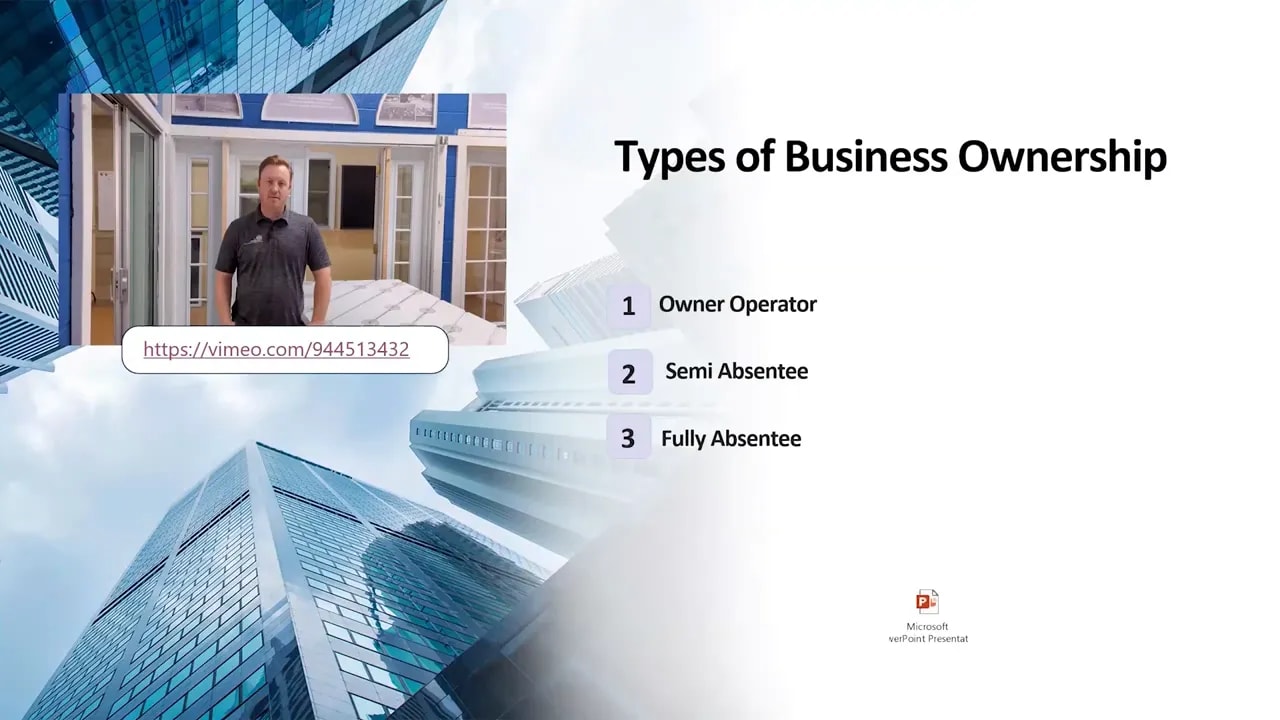
A Business Ownership Coach will usually sort franchise opportunities by ownership style before industry.
Owner-Operator
This is the most hands-on approach. You are actively involved day to day and may be in the business constantly. This can work if you plan to transition out of your W2 role soon, but it is usually harder to maintain while keeping a demanding corporate schedule.
Semi-Absentee
This is often the sweet spot for employed professionals. You are still running the business, but through managers, systems, scheduling, and oversight. In practical terms, that can mean 15 to 25 hours a week, sometimes more during launch.
This model requires delegation. If you cannot let go of tasks, semi-absentee ownership can become a second full-time job.
Fully Absentee
This sounds great, but it is often misunderstood. A Business Ownership Coach should tell you the truth here: nothing is truly hands-off. Even in a manager-run business, you still have responsibility for hiring, numbers, cash flow, and strategic decisions.
Franchise Categories That Often Fit a W2 Schedule

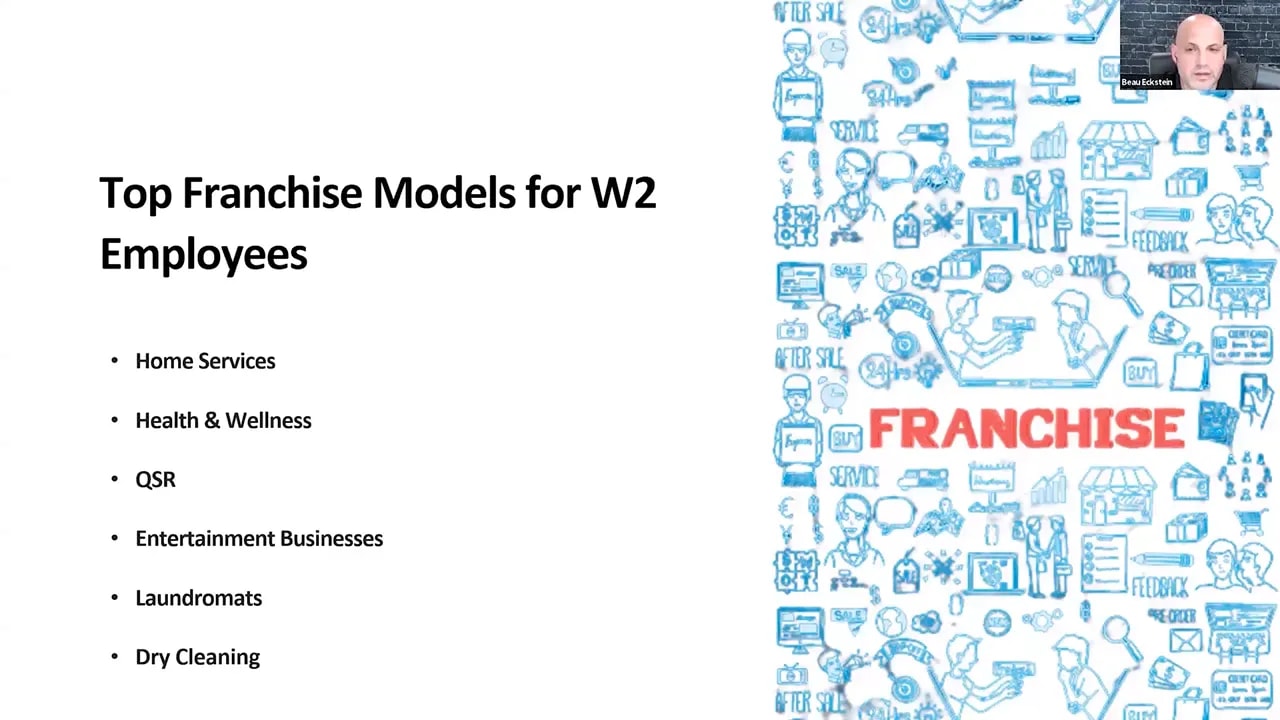
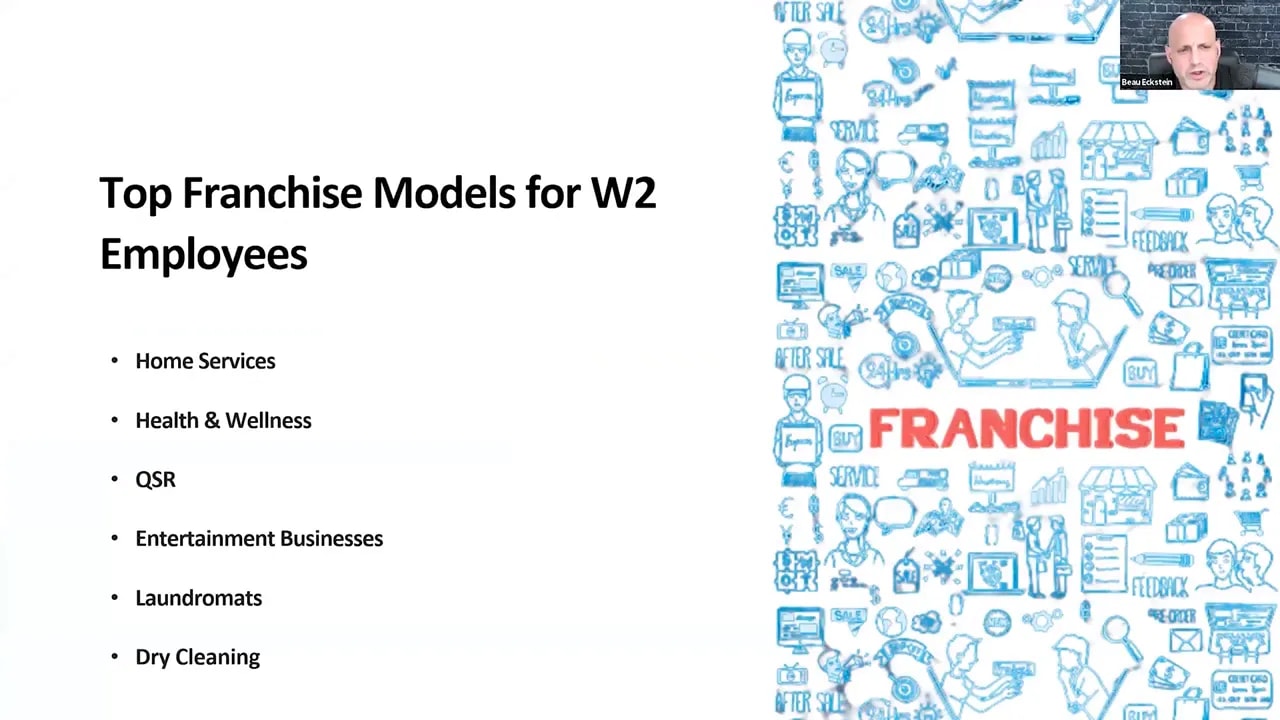
A Business Ownership Coach often steers working professionals toward operationally manageable categories with recurring demand. Common examples include:
- Home services
- Health and wellness
- Laundromats
- Dry cleaning
- Entertainment businesses
That does not mean every brand in these categories is ideal. It means these categories are often part of the conversation because they may offer repeat demand, systems, and delegation potential.
A Business Ownership Coach should also compare established franchises with emerging ones. An established system may have more operating history and infrastructure. An emerging system may have fewer locations but could still be worth evaluating if the leadership, support, and economics are strong.
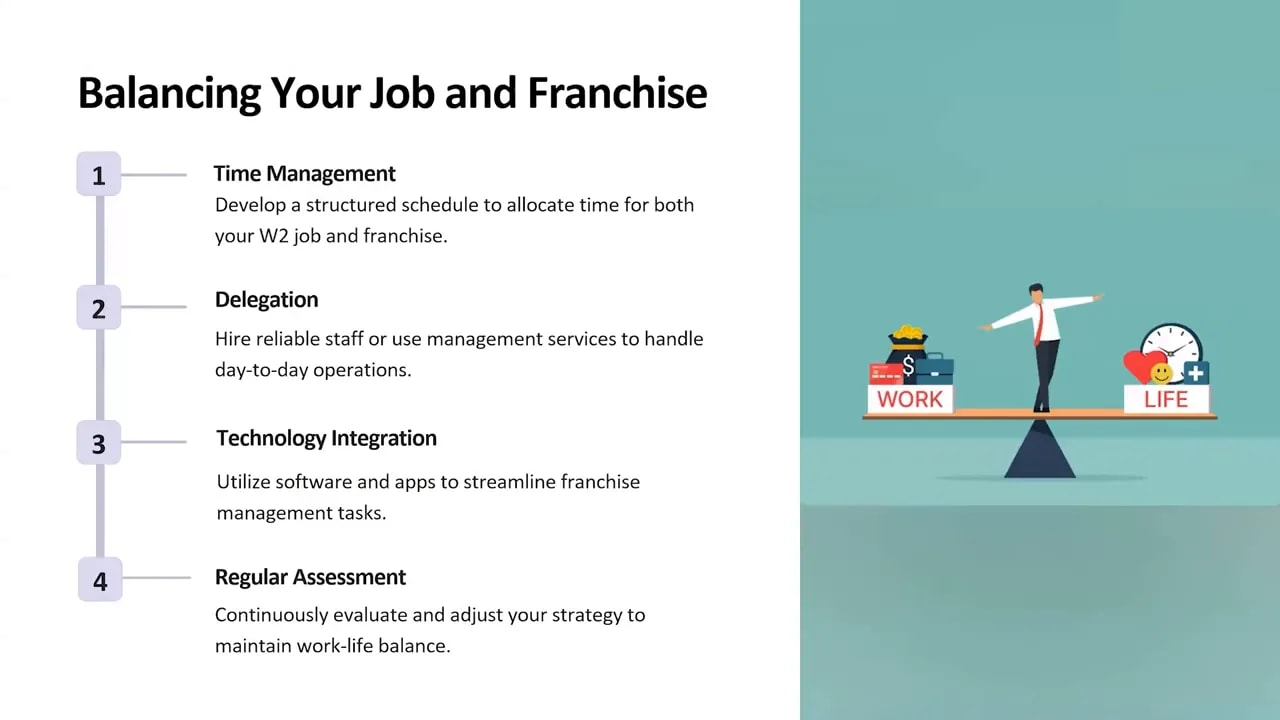
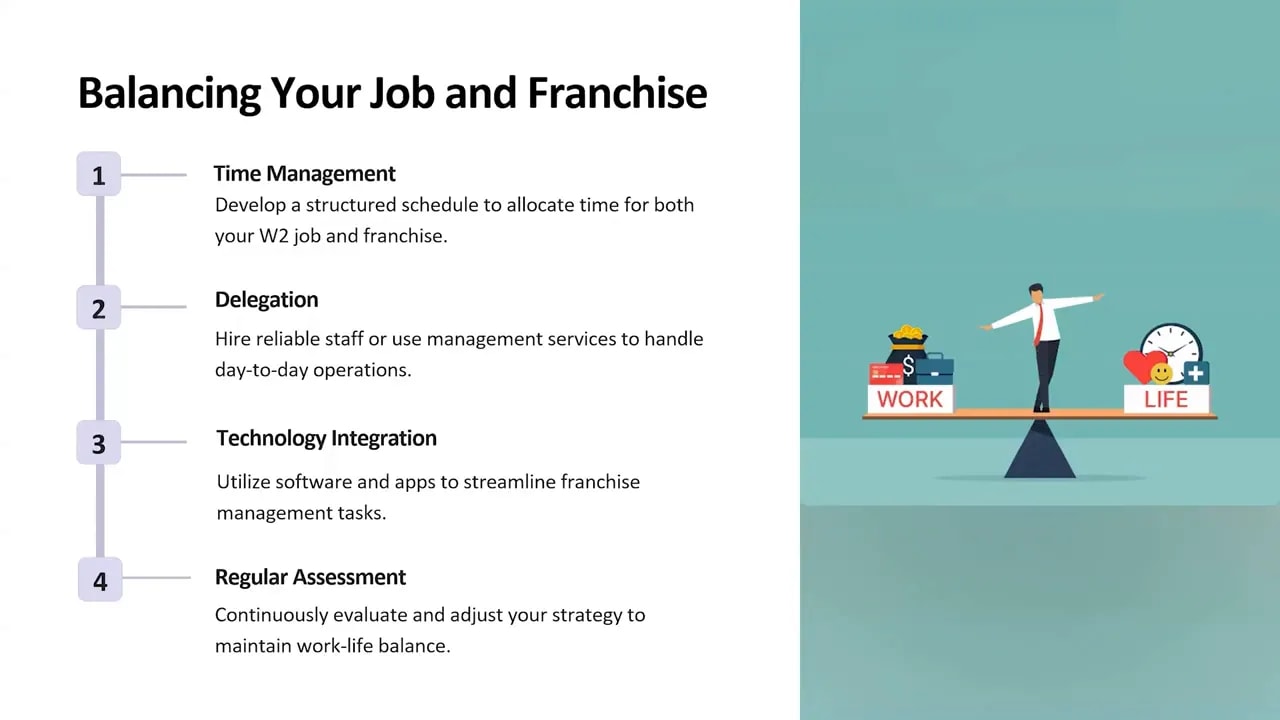
How to Balance a Franchise With Your Day Job

This is where a Business Ownership Coach earns their value. The wrong operating rhythm can burn you out fast.
Focus on these four disciplines:
- Time management. Block time weekly for recruiting, reviewing numbers, and meeting managers.
- Delegation. Build the habit of assigning work instead of taking it back.
- Technology. Use reporting and communication tools to monitor the business efficiently.
- Regular assessment. Review whether the franchise is still aligned with your capacity and long term goals.
If you already work 80 hours a week, do not kid yourself. A franchise may still be possible, but it needs stronger management coverage and tighter systems from day one.
Funding Options a Business Ownership Coach May Discuss

Funding matters because undercapitalization is one of the most common reasons businesses struggle early.
A Business Ownership Coach may help you explore financing paths such as SBA-related options, especially for acquisitions or franchise launches where debt service needs to match realistic cash flow expectations. If you want to discuss lending structure and next steps, a practical starting point is this SBA discovery call.
In general, your funding plan should account for:
- Franchise fees
- Equipment or setup costs
- Working capital
- Payroll ramp-up
- Marketing and launch costs
- Cash reserves for slower-than-expected early months
Good financing does not fix a bad business. It simply gives a good business enough runway.
Tax Planning Matters, but Do Not Let the Tax Tail Wag the Dog

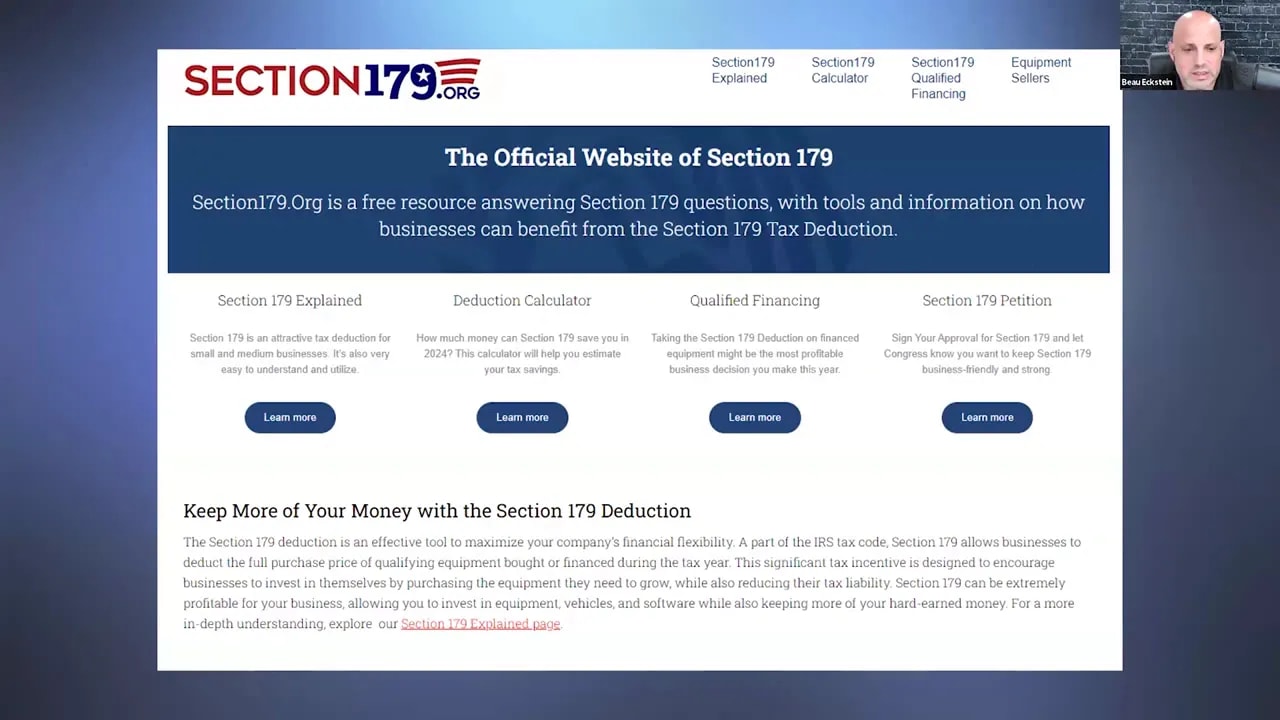
A Business Ownership Coach may point you toward business tax concepts such as Section 179 and bonus depreciation because these can materially affect the economics of certain purchases. But the right move depends on your full tax picture, entity structure, and the nature of the assets involved.
Use this as a guiding principle for 2026: understand the tax opportunity, but verify every decision with a qualified CPA or tax attorney.
If you want a starting point for learning the concept itself, section179.org is a commonly referenced educational resource with a calculator. The bigger point is not the deduction alone. The bigger point is that business ownership can open planning options that employees often do not have access to in the same way.
What Makes a Franchise a Better Long Term Asset

A Business Ownership Coach should not only ask how much money a franchise can make now. The better question is whether it can become a sellable asset later.
Qualities worth looking for include:
- Recurring revenue
- Recession resilience or demand stability
- Strong unit economics
- Reliable support systems
- Scalability through territory expansion or additional units
- Operational simplicity that makes the business transferable
If a business depends entirely on your daily presence, it is usually harder to scale and harder to sell. If it runs through processes and people, value is easier to build.
Common Mistakes W2 Buyers Make

- Choosing based on hype instead of fit
- Assuming absentee means no involvement
- Ignoring working capital needs
- Underestimating hiring and delegation
- Focusing only on tax benefits
- Picking a business with weak lead generation support
- Failing to evaluate whether the business can become a sellable asset
A Business Ownership Coach should keep you disciplined here. A franchise is still a business. Systems help, but they do not remove execution risk.
How to Decide if You Are Ready

You may be ready to explore franchise ownership if most of these are true:
- You want income beyond your salary
- You can commit weekly time to oversight
- You are willing to delegate and manage people
- You have capital or financing access
- You want to build an asset, not just create a side hustle
- You understand that business ownership includes responsibility even in semi-absentee models
If that sounds like you, a Business Ownership Coach can help narrow the field and avoid expensive mismatches.
Additional Resources

To keep researching and get practical support, these resources may help:
- Book a call for a direct conversation about franchise fit and ownership strategy.
- Business Ownership Academy for community and education around buying and building businesses.
- Business ownership newsletter for ongoing insights.
- Virtual assistant support if you need help buying back time and improving delegation capacity.
Final Takeaway

A Business Ownership Coach should help you think bigger than just replacing your paycheck. The right franchise can produce income, open planning opportunities, diversify risk, and create an asset you may be able to sell later. But the right fit matters more than the shiny brand name.
If you are keeping your W2 job, prioritize semi-absentee feasibility, strong support systems, realistic capitalization, and a model that can run through people and process. That is how you build something durable instead of something that simply adds stress.