
The Business Ownership Coach | Investor Financing Podcast often explores franchise models that are simple to understand, practical to operate, and built around real demand. One of the more interesting examples is textile recycling. It combines a low-overhead operating model with recurring collection volume and a clear environmental benefit.
If you are researching textile recycling franchises, donation bin businesses, or scalable service businesses that do not require a traditional storefront, this model is worth a close look. It is especially relevant for operators who want a business that can potentially be run with a lean team, a warehouse, a truck, and a growing network of collection bins.
What Is a Textile Recycling Franchise?
A textile recycling franchise is a business that collects used clothing, shoes, and other textiles through public drop-off bins placed in convenient locations such as shopping center parking lots. The collected items are then transported, bagged, and sold in bulk to wholesale buyers that handle reuse, resale, or recycling.
At a basic level, the model works like this:
- Donation bins are placed in high-traffic commercial areas.
- People drop off unwanted clothing and shoes.
- The bins are monitored for fill levels.
- An owner or driver picks up the contents with a box truck.
- Items are staged in a warehouse and packed into large bulk bags.
- The material is sold by weight to wholesale buyers.
That simplicity is a major reason the model attracts interest. In the Business Ownership Coach | Investor Financing Podcast context, this type of business stands out because it has fewer moving parts than many retail or food franchises.
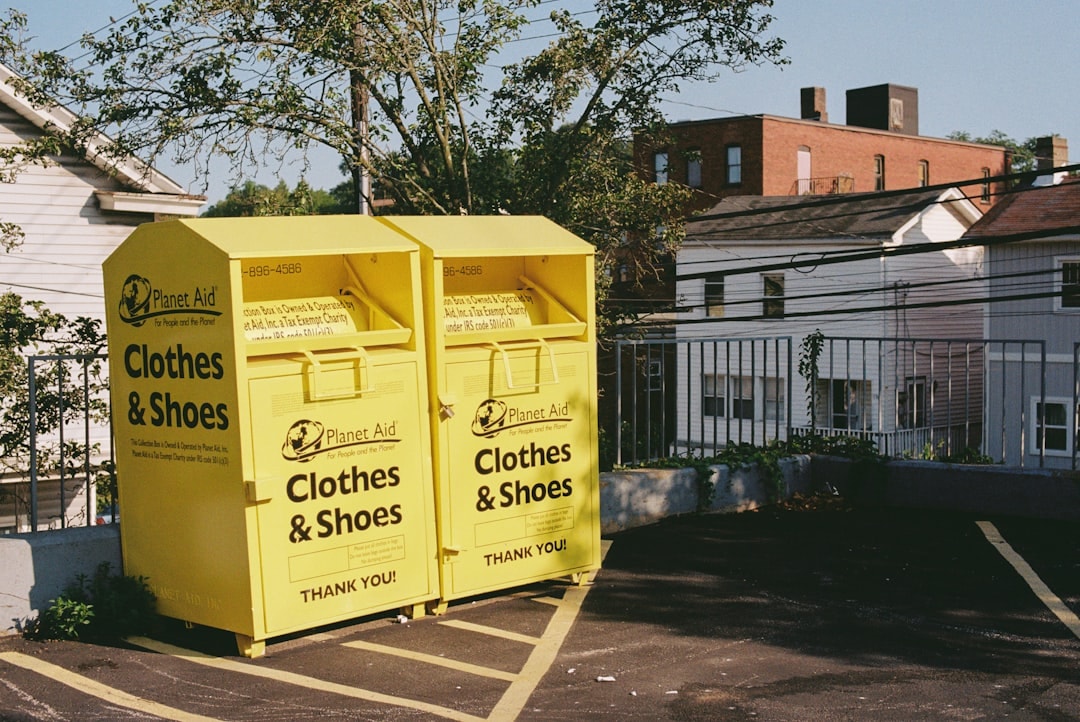
Photo by Joel Muniz on Unsplash
Why This Business Model Gets Attention
Textile recycling sits at the intersection of convenience, sustainability, and operational simplicity.
Here is why entrepreneurs often look at it seriously:
1. No traditional storefront is required
You do not need a customer-facing retail location. The “storefront” is effectively a network of bins placed where people already shop and drive.
2. It can be scaled by adding units
Growth is often tied to adding more bins in better locations. That makes expansion easier to understand than businesses with more complicated staffing or production demands.
3. It supports recurring collection activity
As long as bins are placed where people donate regularly, collections continue. That creates a route-based operating rhythm that can become predictable over time.
4. It serves an environmental need
Old clothes and shoes often end up in landfills. A collection and recycling model redirects a meaningful amount of material into secondary markets.
5. It may fit owner-operators who still have another job
Because the business centers on routes, pickup scheduling, storage, and bulk sales, it may appeal to people looking for a model that does not demand full-scale retail hours from day one.
How a Textile Recycling Franchise Makes Money

The revenue engine is straightforward. The business gathers textiles and sells them at wholesale by the pound.
That means performance depends on a few core variables:
- Number of bins
- Quality of bin locations
- How quickly each bin fills
- Operational efficiency of pickups
- The wholesale price per pound
In practical terms, each donation bin is an asset. A strong location can produce more pounds over time than a weak one. As an operator adds bins and improves route density, the business may become more efficient because truck time and pickup labor are spread across more productive stops.
This is one reason the Business Ownership Coach | Investor Financing Podcast angle is relevant here. Investors and owner-operators are not just buying a concept. They are evaluating a system of physical assets, territory placement, route economics, and resale margins.
What You Need to Operate the Business
Compared with many franchises, the operating setup is relatively lean. The basic requirements mentioned around this model include:
- Donation bins placed in approved commercial locations
- A box truck for pickups and transfers
- A warehouse space for storage and packing
- A monitoring system to know when bins are full
- Bulk bags for shipping collected textiles
The bins are not just containers. They are central to the business. They influence visibility, collection volume, and how property owners perceive the operation. Appearance matters. Well-maintained, professional-looking bins are likely to be easier to place in quality locations than bins that look neglected.
How Location Strategy Affects Results
Not all donation bin placements are equal. This business can look simple on the surface, but location quality is one of the biggest drivers of success.
Strong locations typically offer:
- High vehicle traffic
- Easy parking lot access
- Good visibility
- A customer base likely to donate used clothing
- Property owners open to collection bins
Shopping centers and large retail parking lots are especially attractive because people already visit them frequently. Convenience plays a big role in donation behavior. If dropping off a bag of clothes only adds a minute or two to an existing errand, participation tends to make more sense.
Some franchise systems may also offer help securing locations through national property relationships. That kind of support can matter because negotiating with shopping center owners on your own can be time-consuming.
Who This Business Is Best For

This model is not for everyone, but it can fit a specific type of buyer well.
It may be a good fit for someone who wants:
- A business without a storefront
- A route-based operating model
- A service business with environmental value
- A franchise with relatively simple logistics
- A model that can potentially start lean and grow over time
It may be less appealing for buyers who want a highly branded consumer experience, a sales-heavy role, or a business built around premium pricing and direct retail margins.
Startup Costs and Financing Considerations
Based on the source material, the main startup cost categories usually include:
- Franchise fee
- Donation bins
- Truck purchase or lease
- Warehouse space
- Marketing and local rollout costs
The bins can represent a major share of the investment because growth depends heavily on how many are in the field. Financing may be available in some cases through SBA lending or through franchisor-supported financing arrangements, depending on the brand and the buyer’s qualifications.
If you are exploring capital options, an SBA discovery call can help clarify whether this type of business lines up with SBA funding criteria and what a realistic capital stack might look like.
One additional angle some buyers consider is equipment-related tax treatment. Because bins and trucks are physical business assets, buyers often ask their CPA about depreciation and related planning opportunities. Specific tax outcomes depend on individual circumstances, so that is a professional advice conversation rather than a universal rule.
Operational Checklist Before You Buy
Before committing to a textile recycling franchise, work through a due diligence checklist.
- Ask how many bins are needed to create a viable route.
- Understand expected collection volume per bin by location type.
- Clarify wholesale sales channels and who buys the material.
- Review property placement support from the franchise system.
- Confirm warehouse requirements and local zoning issues.
- Estimate truck needs based on route density and hauling volume.
- Learn how bin monitoring works and whether alerts are built in.
- Study the territory to avoid oversaturation or weak placement options.
These details are what turn a simple concept into a real business plan.
Common Mistakes to Avoid
A textile recycling franchise can be attractive because it looks easy to understand. But that simplicity can cause buyers to skip important analysis.
Assuming every bin performs the same
Collection volume depends heavily on location. Two bins can produce very different results.
Underestimating logistics
You still need disciplined route planning, pickup timing, warehouse handling, and bulk shipment coordination.
Ignoring appearance and property relationships
Property owners care about how bins look in their parking lots. Professional presentation matters.
Focusing only on startup cost
Low overhead does not automatically mean high margins. Buyers still need to understand throughput, pricing per pound, and route efficiency.
Skipping financing prep
If SBA or other lending is part of the plan, prepare early. Lenders want a clear use of funds, operating plan, and borrower profile.
Why This Model Appeals to Purpose-Driven Buyers
Some businesses are easy to explain financially but harder to feel excited about. Textile recycling is different. It offers a profit motive tied to a visible environmental use case.
People regularly clean closets, replace shoes, and donate wearable items. Making that process more convenient can help redirect material away from waste streams while creating a business around collection and wholesale distribution.
That combination of practicality and mission is a big reason the Business Ownership Coach | Investor Financing Podcast audience tends to find this category compelling. It is not just about owning a franchise. It is about owning one that solves a real operational and environmental problem.
Is a Textile Recycling Franchise Worth It?
It can be worth serious consideration if you want a business with:
- Simple core mechanics
- Scalable unit growth through added bins
- A route-based structure
- No need for a retail storefront
- A clear sustainability angle
It is not automatically the right fit for every buyer. The best operators will pay close attention to location strategy, bin performance, wholesale channels, and funding structure.
If you are comparing franchise ownership options and want to learn more about financing and business acquisition strategy, the business ownership consultation page and the business ownership academy may be useful next steps. Ongoing updates are also available through the business ownership newsletter. For buyers building support capacity as they evaluate or operate a business, a virtual assistant resource can also help streamline admin work.
Final Takeaway
The Business Ownership Coach | Investor Financing Podcast perspective on textile recycling highlights why this model stands out. It is easy to grasp, operationally lean, and built around everyday consumer behavior. Used clothes and shoes are always being discarded. A business that collects them efficiently and sells them into wholesale recycling channels can create a scalable system from a very common problem.
For the right owner, that can mean a business with recurring activity, manageable infrastructure, and a mission people already understand.