
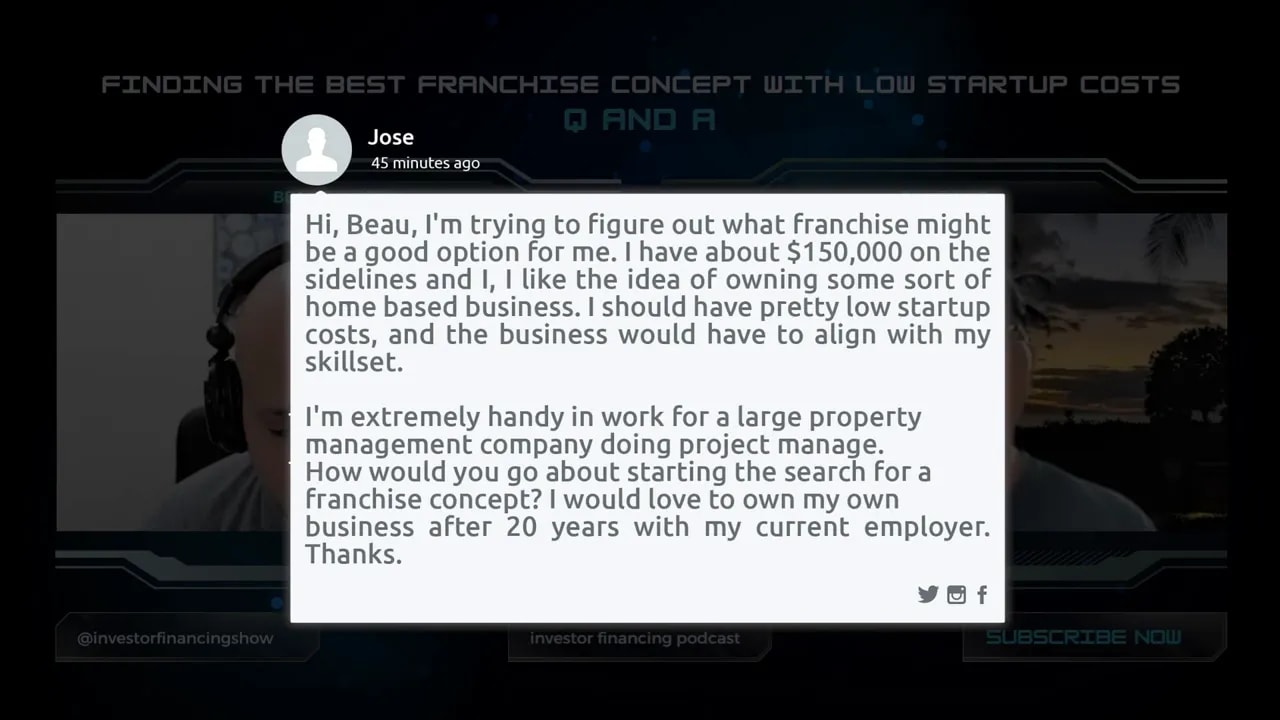
If you have about $150,000 set aside, you are handy, and you already understand how property management works, you are in a great position to explore franchise ownership. But the real challenge is finding the right concept, not just any franchise.
That is exactly where a Business Ownership Coach | Investor Financing Podcast mindset helps: matching your skills to a business model, keeping overhead low, and protecting your cash so you do not overextend in your first year.
Why franchising is getting popular again
Franchises are everywhere, and for good reason. Over the last several years, more professionals have realized that waiting to retire is not always the best plan. Many people have built strong careers, learned how to execute consistently, and now want to become business owners without starting from scratch.
Franchising offers something that self-starting does not: a proven system. Instead of building everything from the ground up, you are usually adopting established processes, marketing structures, and operational playbooks.
In other words, the franchise path can feel like: “I bring the leadership and skill. The franchise brings the blueprint.”

Start with the right business type: home-based, low overhead, high profit potential
When someone asks how to start the franchise search, the first thing I look at is business type. For many buyers, the sweet spot is a home-based model. Why?
- Lower overhead: typically fewer fixed costs and less overhead tied to rent and a large facility.
- High profit potential: home-service and similar models often have strong margins when executed well.
- Scalable operations: you can begin small and add capacity as demand grows.
If you have practical, hands-on experience, that can translate perfectly into service businesses. And if you already work in project management, you likely know how to plan jobs, coordinate resources, manage timelines, and keep quality consistent.
That alignment matters. A franchise can be a great opportunity, but the day-to-day reality still has to fit your strengths.
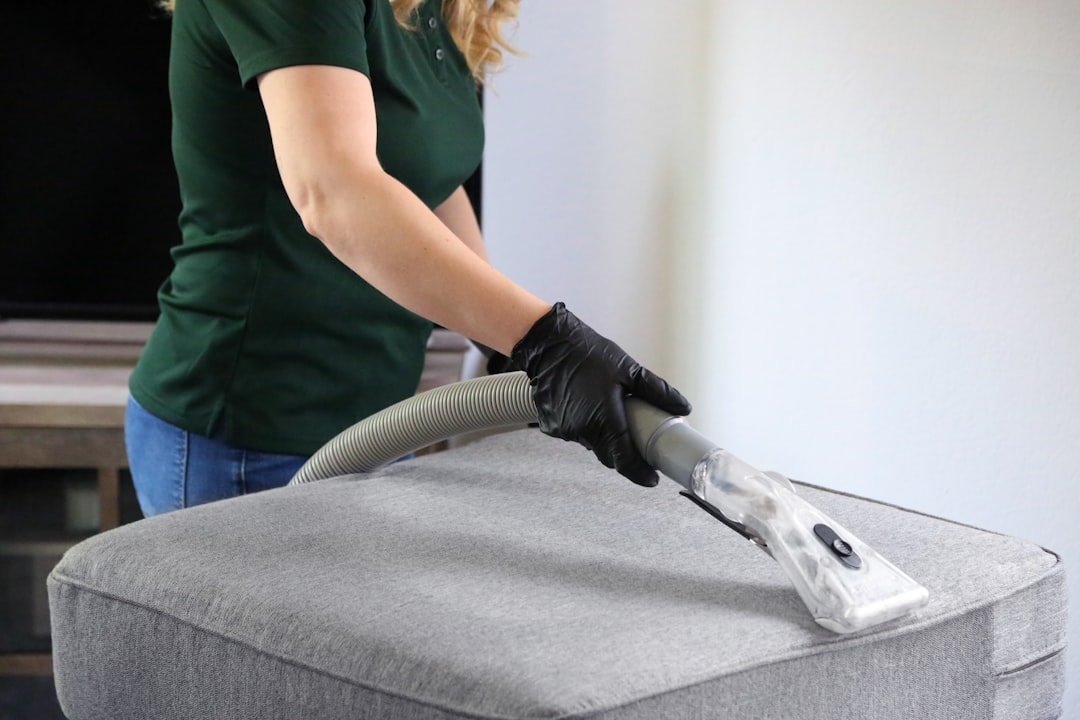
Photo by Erik Mclean on Unsplash
Use your startup capital strategically (and do not blow up your reserves)
Having $150,000 sounds like a lot, but it still can disappear quickly once you add licensing, initial inventory, working capital, insurance, marketing, and unexpected costs. That is why putting every dollar into the business can be risky.
A smarter approach is often to choose an option that aligns with your startup capital while still preserving personal financial safety. Think of it like having a “runway” while the business finds its footing.
One practical strategy discussed in this conversation is financing part of the setup instead of paying everything upfront. For example, rather than putting the full $150,000 into the business, consider putting down something like $50,000 to $60,000 and financing the van or equipment needed to start operations.
This protects your nest egg and gives you peace of mind. It also keeps you from being forced into bad decisions if the first few months are slower than expected.

Photo by Giorgio Trovato on Unsplash
Build a plan for scaling: one vehicle first, then add more
Scaling is where many people get excited, but they often skip the practical mechanics. A strong low-overhead franchise concept should have a clear path to growth.
In the home service space, scaling can be fairly straightforward:
- Start with one van and run jobs yourself or with a small team.
- Add an employee once scheduling and capacity require it.
- Expand gradually or accelerate based on demand and execution.
That approach helps you learn the market, understand customer needs, improve your process, and stabilize cash flow before expanding.
It also connects well to project management experience. If you are used to tracking work, managing timelines, coordinating tasks, and delivering results consistently, you can run your operations like a real “job site” business from day one.

Photo by Giorgio Trovato on Unsplash
Match your skills: project management and “being extremely handy” are powerful
Here is the key insight: the best franchise for you is not the franchise with the flashiest marketing. It is the franchise that fits your skill set and the way you naturally work.
If you are extremely handy and you currently work for a property management company doing project management, you already have a strong foundation. You understand:
- What property managers care about (speed, quality, communication)
- How maintenance issues unfold (and why response time matters)
- How to manage scope so you do not get crushed by unexpected work
- How to deliver results that build customer trust
That is why a home service franchise can be especially viable. These businesses typically rely on repeatable execution: diagnosing problems, completing repairs, showing up consistently, and keeping customers satisfied.
It also helps to treat your search like a fit assessment. There is a “skills test” concept: figure out where your strengths are and identify the franchise model that best matches them.

Photo by Giorgio Trovato on Unsplash
A practical starting point: look at maintenance-style franchises
When it comes to concepts that match a project management background and home-based needs, maintenance and service franchises are often a strong starting point.
One example mentioned is Kura Home Maintenance. While you should always research any opportunity thoroughly, the reason concepts like this come up is simple: they can align well with low startup cost expectations, and they create a scalable model once you add more capacity.
If you want to use this as your search direction, here is what to look for when evaluating any home service franchise:
- Startup requirements: initial fees, equipment needs, and what you must have before you open.
- Unit economics: are margins strong enough to support growth and still generate income for you?
- Operations support: training, systems, and guidance that reduce your learning curve.
- Capacity model: how quickly can one person or one van turn into a multi-employee operation?
- Local demand: where are similar services needed most and what does competition look like?
Do not just ask “Can I afford the franchise?” Ask “Can I operate it profitably in my market while protecting my reserves?”

Photo by Giorgio Trovato on Unsplash
Set up a simple franchise search process
Now let’s translate this into a repeatable process. If you want a clean way to start your franchise search, follow this sequence:
- Confirm your constraints: budget (like $150,000), desire for home-based operations, and acceptable financing comfort.
- Assess your skill fit: use your project management and “handy” experience as your baseline.
- Shortlist concept types: prioritize home service and maintenance-adjacent categories if they match your strengths.
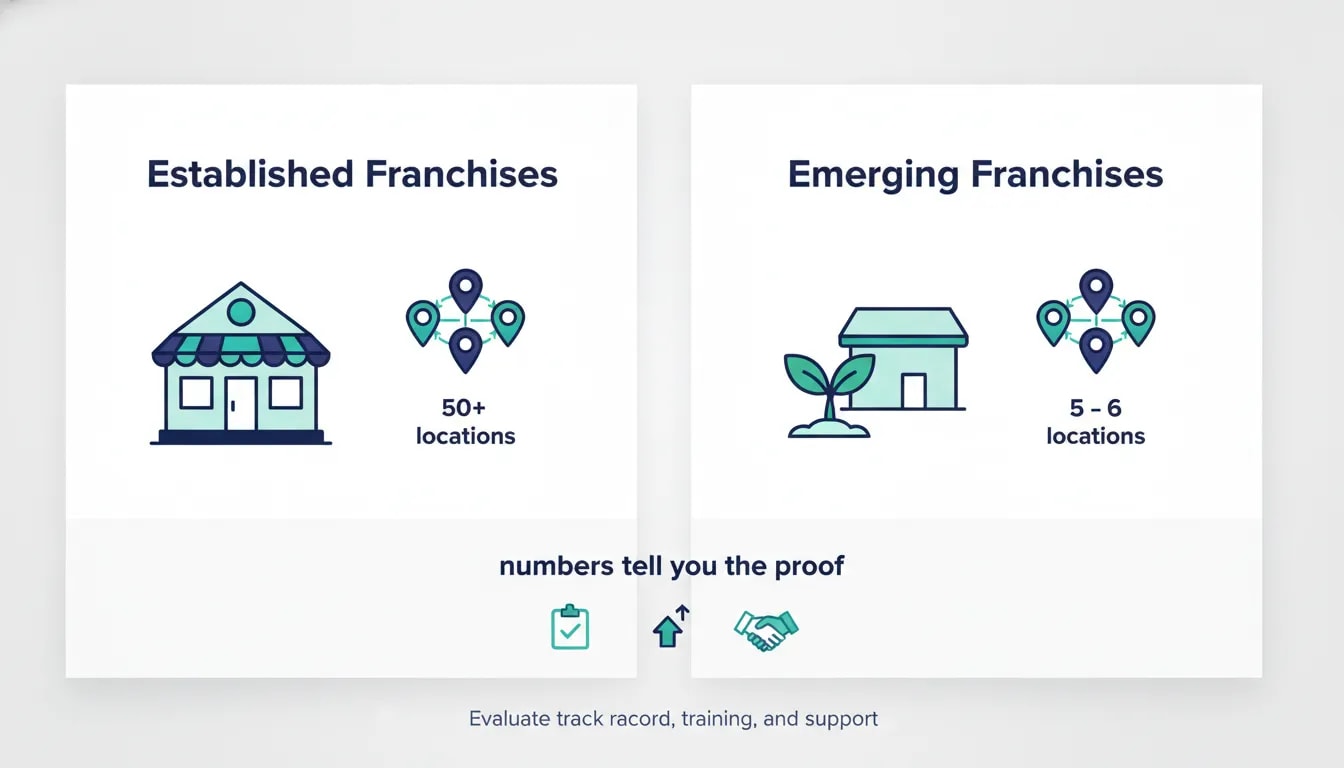
- Compare franchise maturity: established brands may have dozens of locations; emerging brands may have fewer.
- Review unit count and growth trajectory: established franchises typically have proven playbooks, while newer franchises may offer growth opportunities but may require more diligence.
- Stress test the finances: decide what you can put down and what you can finance without draining reserves.
- Validate execution: talk to operators if possible, understand staffing needs, and confirm what day-to-day work looks like.
This process keeps the search grounded. You are not guessing. You are matching your real-life situation to a business model built for your capabilities.
Established vs emerging franchises: what the numbers can tell you
When you evaluate franchises, you will see companies with different levels of maturity. Some have typically 50 locations or units. Others are emerging and may only have five or six.
Both can be legitimate. The main difference is usually how much proof you have. Established franchises often come with a deeper operational track record. Emerging franchises may offer momentum and potential, but require extra diligence on training, systems, and support.
That is why the “fit test” matters. Even a mature franchise is a bad idea if it does not match your skills or if your local market does not support the business model.

Protect your reserves and plan for peace of mind
One theme that comes through clearly is the importance of not putting everything into the business. Financing can be a tool for ownership, not a sign of weakness.
When you preserve reserves, you gain something bigger than just financial stability. You gain flexibility. You can handle slower months. You can cover maintenance or equipment costs. You can absorb mistakes without panic.
And if the business succeeds faster than expected, your reserves become fuel for hiring and growth.
Bottom line: your best franchise is the one you can operate well
With $150,000, handyman skills, and project management experience in property management, your best franchise search likely starts with home-based service opportunities that are built for low overhead and scalable operations.
Then finance strategically so you do not drain your nest egg. Start with one van if the model allows it. Add an employee when capacity needs it. And make sure the daily work fits your natural strengths.
If you want the highest odds of success, stop searching for “the best franchise overall” and instead search for the best franchise for you.