
Thousands of Americans are walking away from traditional corporate careers, seeking independence, wealth, and flexibility through franchise ownership. This shift is not just a fleeting trend; it’s a revolution reshaping the landscape of business ownership in 2025 and beyond. As a business ownership coach and franchise consultant, I’ve seen firsthand how lean, AI-powered, service-based franchise models are exploding in popularity and creating new pathways for entrepreneurs to build lasting wealth.
In this comprehensive article, we’ll explore what’s driving this mass movement away from W2 jobs, why low-cost franchise models are gaining traction, how artificial intelligence is revolutionizing franchise operations, and why more first-time franchise buyers are taking on multi-unit deals to build empires. We’ll also dive into booming sectors like health and wellness, pet care, and home services, and uncover how savvy buyers are flipping franchises for profit. Whether you’re considering franchising as a side hustle or a full-time career, this guide will provide the clarity and insight you need to make informed decisions and take control of your financial future.

Photo by Riccardo Annandale on Unsplash
Corporate Exodus: Why Americans Are Leaving High-Paying W2 Jobs for Franchises
Many professionals today are tired of the “golden handcuffs” — the illusion of security tied to high-paying corporate jobs that come with little freedom. Social media has played a pivotal role in shifting mindsets, ingraining the idea that there’s a better way to work and live. People are increasingly inspired by stories of entrepreneurs bootstrapping businesses, investing in franchises, and acquiring existing companies. Platforms like YouTube provide practical advice on using SBA (Small Business Administration) financing to enter the business world without needing hundreds of thousands of dollars upfront.
With this newfound access to knowledge and resources, thousands are choosing to break free from cubicles to build their own legacies. Whether it’s quitting a job entirely or starting a side hustle, the desire for independence is driving this wave of franchise ownership.

Side Hustle or Full-Time? The Mixed Motivations Behind Franchise Ownership
The appeal of franchising spans a spectrum of commitment levels. Some people are ready to go all in, using their savings to replace their corporate salaries. Others prefer a more cautious approach, starting with a simple, manageable business that can run alongside their W2 job.
Many franchises, especially vending and other straightforward business models, require minimal employees or gig workers, making them perfect gateway businesses. My philosophy is simple: everyone should own something—whether that’s a side hustle or a full business—to diversify income streams and gain financial security beyond the corporate paycheck.
The Rise of Low-Cost, Home-Based Franchise Models
When people think of franchising, they often imagine high-cost, brick-and-mortar businesses with massive buildouts. However, the franchise landscape is evolving. Lean, home-based, B2B (business-to-business) franchises with low startup costs and minimal overhead are gaining enormous popularity.
These models typically require an investment between $100,000 and $200,000, but thanks to SBA financing, you can enter with as little as 10% down—sometimes just $10,000 out of pocket. Despite the low entry cost, many of these businesses have the potential to generate seven-figure topline revenue. The key advantage of franchising is investing in a proven system that includes marketing, operational processes, infrastructure, and ongoing support.
Examples of Lean Service-Based Franchise Models Thriving in 2025
In 2025, recession-resilient franchises that provide essential services are thriving. These include commercial painting, janitorial cleaning, HVAC maintenance, plumbing, drain and dryer vent cleaning, and air duct cleaning. These businesses are “must-have” services that customers continue to spend on regardless of economic conditions.
Pet care franchises are also booming, supported by the multi-billion-dollar pet industry. With more people working from home, there’s increased wear and tear on properties, driving demand for home services. Typically, these franchises start with just two technicians in a truck and no expensive storefront required. Some may need small warehouses or storage facilities, but overall, the startup costs remain low, and SBA loans can finance up to 90% of the total investment.
How AI Is Disrupting Franchise Operations
Artificial intelligence is transforming how franchises operate, especially in lead generation and customer service. AI callers that sound like humans can schedule appointments, answer phones, and interact with customers 24/7. This dramatically reduces the need for administrative staff, lowering payroll costs and improving efficiency.
For example, when a customer calls to set an appointment, they may be speaking to an AI agent without realizing it. AI chatbots can respond instantly to website inquiries, providing immediate engagement that meets today’s demand for instant gratification. Franchises that adopt AI-driven marketing and automation strategies are gaining a competitive edge, especially in home services and B2B sectors where operators are often busy on the job and can’t answer every call personally.

Multi-Unit Franchise Strategy: Thinking Like a CEO
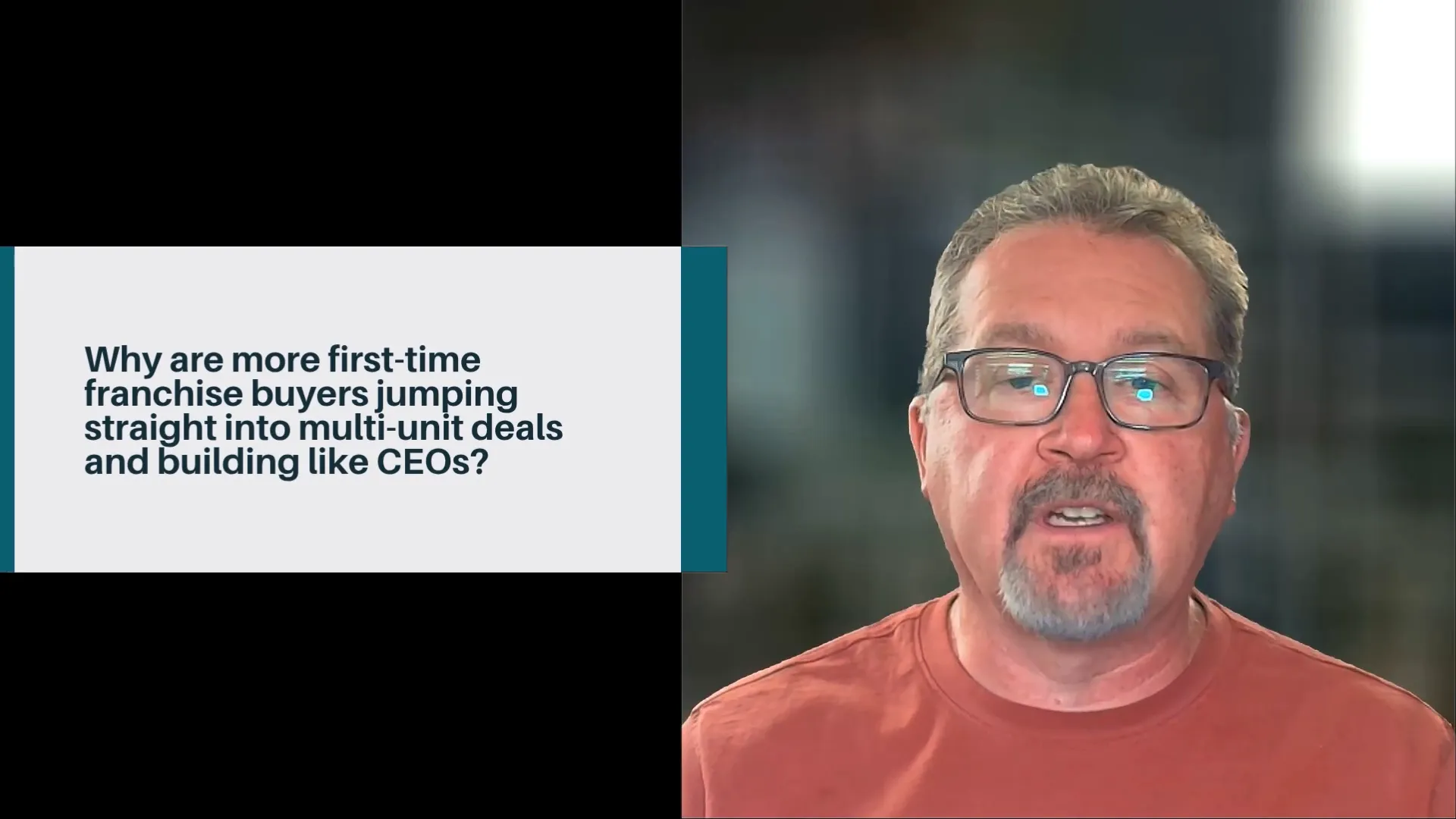
More first-time franchise buyers are skipping single-unit ownership and jumping straight into multi-unit deals. Why? Because one territory or unit may not generate enough revenue to replace a six-figure corporate salary. By owning multiple territories or units, franchisees can scale revenue and profits faster.
Breaking down unit economics is essential. For example, if one service van can generate $100,000 in revenue annually, owning five vans can potentially produce $500,000. Understanding the number of service calls, average ticket size, and operating costs allows aspiring franchise owners to calculate their income potential and growth path.
Health and Wellness Franchises: A Booming Market
The health and wellness sector is experiencing massive growth, driven by people’s increasing desire to take better care of themselves. Franchises focused on anti-aging, testosterone therapy, weight loss, Botox, and other medical treatments are seeing steady demand, especially from affluent clients who are less affected by economic downturns.
Testosterone therapy, once niche, has gone mainstream, with franchises offering efficient blood work and personalized optimization plans. These business models are “sticky” because clients typically stay on recurring treatments long-term. Similarly, weight loss and cosmetic services maintain steady clientele as people prioritize their health and appearance.


Franchise Flipping: Turning Underperforming Units into Wealth
Franchise flipping involves buying underperforming or distressed franchise units at a discount, improving operations, and then selling them for a profit. Many buyers enter franchising with enthusiasm but lack the skills or fit to operate effectively, leading to asset sales.
For savvy entrepreneurs who understand systems and operations, these resales offer opportunities to acquire infrastructure and customer bases at pennies on the dollar. While not every franchise is a “unicorn,” there are valuable turnaround prospects for those willing to put in the work.
Brick-and-Mortar Franchises: Still Relevant in 2025

Despite the rise of home-based franchises, brick-and-mortar models are far from dead. However, the types of retail franchises winning today tend to have low employee counts, simple operations, and strong margins. Smoothie franchises, for example, require minimal buildout and staff, with products priced between $7 and $12 and low cost of goods sold.
Other successful brick-and-mortar franchises include pool service routes that evolve into retail supply stores, cell phone repair shops, and senior care centers offering adult daycare services. These businesses often operate on a recurring revenue or membership basis, combining stability with growth potential.
Emerging entertainment franchises, like pickleball facilities, are also gaining traction, though they require larger capital investments and longer return on investment periods. Overall, brick-and-mortar opportunities remain viable, especially for investors with bigger pocketbooks.
Resale Opportunities: Shortcutting the Startup Grind
Buying an existing franchise resale can be an excellent way to enter business ownership with immediate cash flow. Many franchise owners approach retirement or lifestyle changes and sell their businesses if family members aren’t interested in taking over.
For SBA loan financing, buyers need to review three years of the seller’s tax returns, year-to-date profit and loss, and a balance sheet. If the business cash flows and supports the loan, lenders may finance up to 90% of the purchase price. Buyers typically pay a multiple of earnings, with transaction data available through industry “Kelly Blue Book” equivalents.
While finding perfect resales is challenging, the opportunity to step into an operational business from day one is attractive for many investors.
Women, Veterans, and Minority Entrepreneurs: Shaping the Franchise Landscape
Franchising is leveling the playing field for diverse entrepreneurs. One out of every seven franchises is owned by military veterans, who excel due to their discipline, system-oriented mindset, and ability to follow proven game plans. Many veterans choose franchising over traditional employment as they transition to civilian life.
Additionally, women and minorities are increasingly accessing opportunities, especially with SBA certifications that open doors to government contracts and special programs. Importantly, you don’t need prior industry experience to succeed in franchising; being teachable and coachable is often more critical.

Is Franchising the New Path to Middle-Class Independence?
Franchising presents an accessible and scalable way for middle-class Americans to achieve financial independence. While it’s not the only path, it combines the benefits of business ownership with the support and structure of an established brand.
Besides franchising, there are licensing opportunities and non-franchise business acquisitions to consider. The key is to define your goals, investment capital, desired business structure (brick-and-mortar vs. home-based), and whether you want to own multiple units.
Successful franchise ownership requires thorough due diligence, including reviewing Franchise Disclosure Documents (FDDs), speaking with current franchisees, and understanding retention rates and litigation risks. Taking the time to “test ride” several franchise options is like shopping for a car—you want to compare multiple choices before committing.
Final Thoughts: Taking the Leap into Franchise Ownership
Franchise ownership offers a proven pathway to wealth and freedom, especially as AI and lean service models reshape the market. Whether you’re starting a side hustle or building a multi-unit empire, the key is education, planning, and leveraging the right financing tools like SBA loans.
Remember, franchising is about finding the right fit for your skills, goals, and capital. Work with experienced advisors, conduct thorough due diligence, and focus on building a business that aligns with your vision. The corporate cubicle is no longer the only option—franchising is opening doors to a new wealth class and a future defined by independence.
If you’re ready to explore franchise opportunities, funding strategies, and how to build your business the right way, connect with me for expert guidance. Your journey to franchise freedom starts today.