
Business Ownership Coach | Investor Financing Podcast is built around one simple idea: it is not how much money you earn that matters most. It is how much money you keep. And if you are a W2 employee who wants to stay employed while building business income, small business ownership can become one of the most practical, tax-smart paths to take control of your financial future.
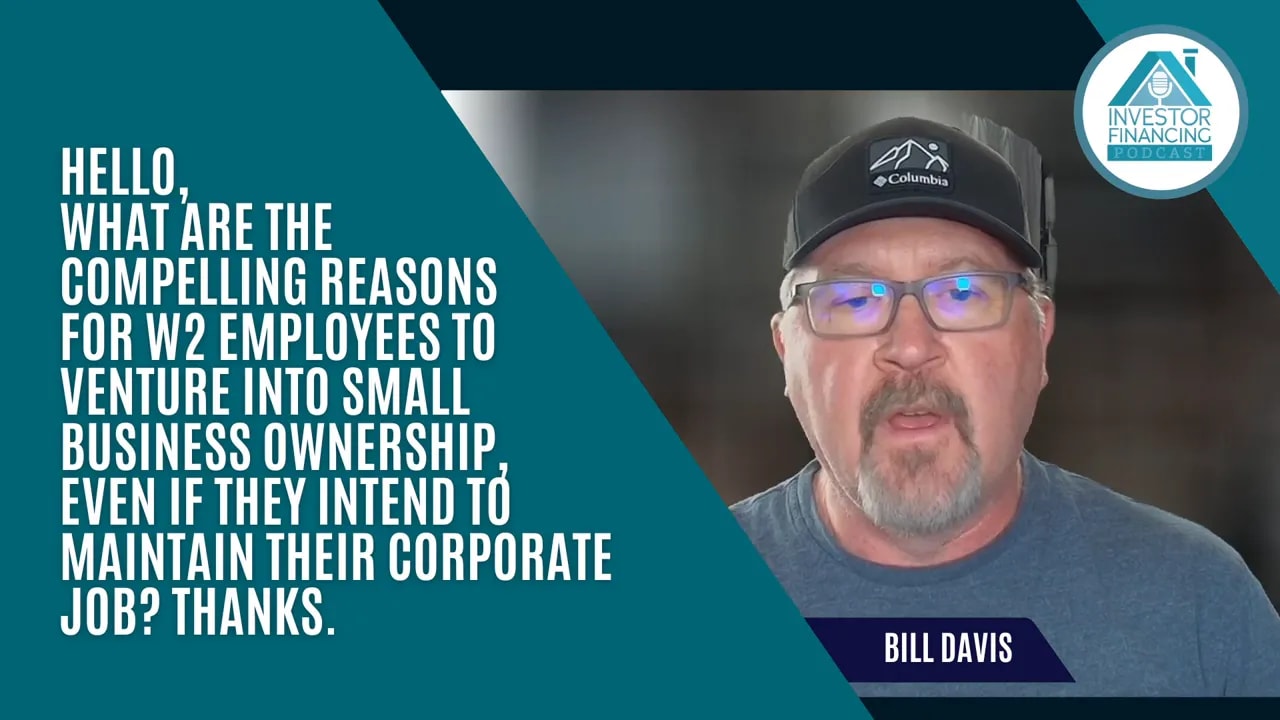
Thanks for the question from Linda. It is a common situation: you have a corporate job you like, you have steady income, and you still want to explore entrepreneurship. The good news is that you do not have to choose between being “W2” and being a business owner. You can often start small, learn the mechanics, and use legal tax strategies that small businesses can access.
Why W2 Employees Are Rethinking “Side Hustle” (and Taking Small Business Seriously)
If you look at what people are paying attention to right now, you will notice a pattern. More W2 employees are catching on to the reality that the tax code is built differently for businesses. While corporate compensation is usually taxed through a more straightforward system, business ownership opens the door to specific deductions and structures that can reduce what you owe.
But it is important to say this clearly: any strategy should be discussed with a qualified CPA. The point here is not to “hack” the system. The point is that legitimate small-business tools exist, and when you use them correctly, they can help keep more of your earnings in your own pocket.
Tax Advantages That Can Change the Math
One of the strongest motivations for small business ownership is taxes. A CPA speaking at a Business Ownership Summit highlighted a key theme: tax codes were written for small business owners. When you understand how those rules work, you can identify legal ways to pay less in taxes.
Here are a few examples mentioned in the discussion that many business owners use when they structure or run their business:
- Equipment purchases can come with powerful tax treatment.
- Section 179 and bonus depreciation may apply depending on the situation.
- Self-directed 401(k) options may allow you to direct where certain investments go, compared with older “hands-off” retirement approaches.
When people hear these terms, the natural question is: “Does it actually help?” The best framing is this: remember it is not how much you earn. It is how much you keep. If you are well paid already, even a “big chunk” of taxes redirected into legitimate deductions and strategies can be meaningful.

It’s Not Just About Money Earned. It’s About What Stays With You.
This is the shift many W2 employees need. You already know how to earn. Your paycheck proves that.
The leverage is in protecting and growing what you keep. Small business ownership often changes your financial “net” because it affects:
- Your tax profile
- Your ability to invest strategically through business-related decisions
- The way expenses are handled when they are connected to legitimate business activity
And this is why the conversation often turns practical fast. If you are thinking about business ownership, you may be looking for something semi-absentee or semi-passive, something that fits into your life instead of completely replacing it.
That does not mean you “do nothing.” It means you aim for a model that can scale without demanding constant, daily involvement. The right fit depends on the business type, your goals, and your willingness to learn.

“More Semi-Absentee, More Semi-Passive” Can Be a Real Starting Point
Some W2 employees hesitate because they picture entrepreneurship as a full-time grind. But the mindset to adopt is: start with the end in mind.
The discussion recommends finding a business opportunity that aligns with the lifestyle you want while still giving you access to the potential benefits of ownership. That is why people often explore models where they can step in strategically, then rely on structure, systems, or day-to-day operators to keep momentum.
From a coaching perspective, this matters because your “why” is not only financial. It is also time, energy, and risk tolerance. If you already have a stable job, your business needs to be built in a way that does not blow up your life while you learn.
Self-Directed Retirement: Investment Control Beyond Traditional Options
Another point raised was the idea of self-directed 401(k) planning. Traditional retirement accounts typically keep your investment options within a narrower menu. Self-directed approaches can potentially give you more control over where investments go.
For W2 employees considering business ownership, this is an important extension of the broader theme: autonomy over your financial strategy.
To keep things responsible, the exact eligibility, rules, and setup requirements can vary. That is why it is smart to talk with professionals who understand both retirement plan compliance and business tax strategy.
Business Ownership Summit: The Education That Helps You Act
The conversation also pointed to a resource called the Business Ownership Summit. The emphasis was simple: go watch the replay because there is about an hour of discussion on why owning a small business can be worth serious consideration.
When you are a W2 employee, education is not just inspiration. It is a way to make sure you:
- Understand what benefits are possible
- Know which questions to ask your CPA
- Recognize which business opportunities fit your timeline and lifestyle
- Move from “maybe later” to “take steps now”
If you want to build wealth through business ownership, the starting point is rarely a leap. It is usually understanding the landscape, then making informed decisions.

Build the Community Around Your Business Mindset
In addition to summit-level learning, the speaker discussed building a community and academy experience designed to support action, not just information.
The Business Ownership Academy is described as having an educational first focus and community-building second, with a network intended to connect entrepreneur-minded people across the nation. The goal is to:
- Inspire and educate
- Help people take the next step
- Encourage networking and collaboration
- Keep members engaged through regular events
There is also a clear “who you learn from” angle. The plan includes bringing in specialists and practitioners, including bankers and partners familiar with SBA programs (such as SBA 504 and 7(a)), plus operators who can walk through case studies of acquisitions and business opportunities.
For anyone on the W2 path, that type of knowledge sharing can be the difference between collecting random tips and building a clear, executable plan.

What to Do Next: Take Small Steps Every Day
It is easy to feel excited, then stall out. The key message was that progress comes from little steps every day, moving the needle consistently.
If you are a W2 employee trying to decide whether business ownership is right for you, your next steps can be simple:
- Talk to a CPA and ask what small business structures or deductions might be relevant to your situation.
- Identify the type of business that matches the time you realistically have, including options that are more semi-absentee.
- Learn the basics of tax planning around legitimate business purchases and accounting decisions.
- Find a community where people share practical experience, not just theories.
This is the real advantage of the side hustle mindset when it evolves into business ownership: you keep your stability while building ownership skills, learning from people who have done it, and improving your financial strategy over time.

Bottom Line: Small Business Ownership Can Help W2 Employees Keep More
The core idea coming through is straightforward: small business ownership can offer benefits that go beyond “extra income.” It can change your tax situation, improve your ability to invest and plan, and give you a framework for keeping more of what you earn.
When you combine:
- Tax-aware strategy (with CPA guidance)
- Business models that fit your lifestyle
- Education plus community support
you turn the question “Should I do a side hustle?” into a more powerful question: Could business ownership be a smart next step for my financial life?