
Business Ownership Coach | Investor Financing Podcast — I’m Beau Eckstein, and in this post I unpack a franchise model that blends purpose with profit: textile recycling. If you watched the episode on the Investor Financing Podcast, you already heard the highlights. Here I’ll take a deeper, step-by-step look at how this low-overhead, scalable franchise opportunity works, who it’s right for, what the numbers look like, and how it creates meaningful community and environmental impact.
Why this model matters — purpose and profit aligned
Textile recycling is straightforward: the jeans, shirts, shoes and gently used items that otherwise end up in landfills are diverted into a resale and recycling stream. On the surface it’s a simple idea — people donate clothing instead of throwing it away — but the business behind it turns that flow of goods into recurring revenue.
As a Business Ownership Coach | Investor Financing Podcast host and franchise consultant, I’ve been tracking low-capex business models that are scalable and mission-driven. Textile recycling checks powerful boxes: it’s largely asset-based (bins, a truck, a warehouse), it has recurring revenue per pound sold, and it solves an environmental problem while providing community benefits like charitable partnerships and local jobs.
In short: this is the kind of opportunity that works whether you’re looking to replace a corporate paycheck, build a side income, or add an eco-friendly franchise to your portfolio.
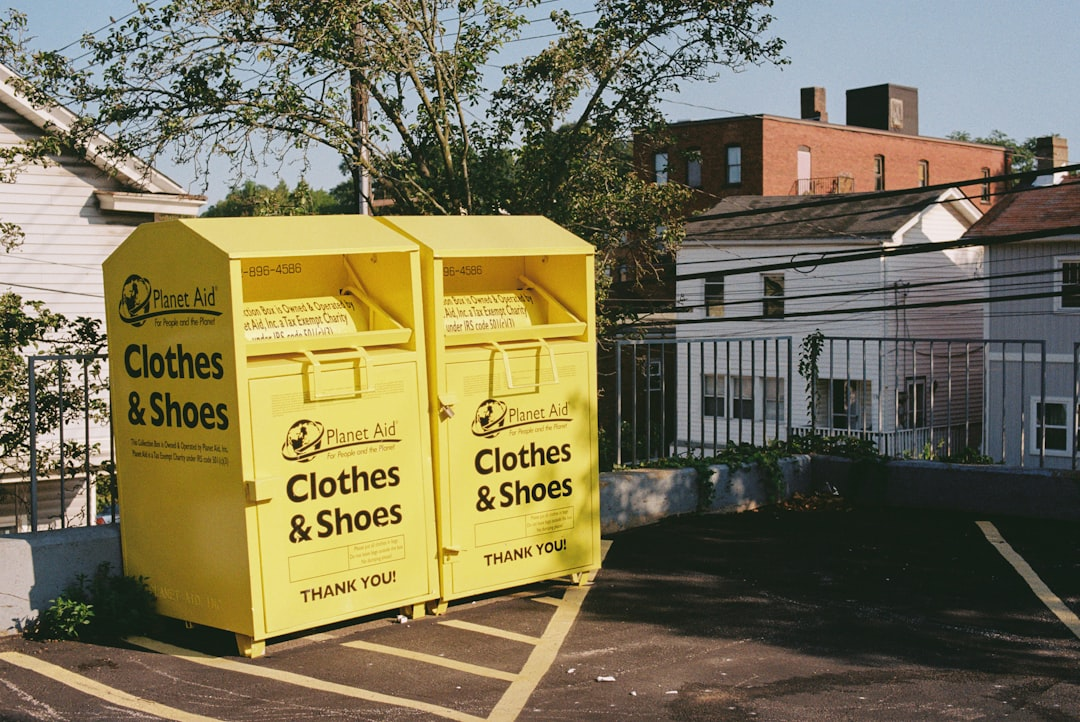
Photo by Infinity Movers Cape Coral on Unsplash
How the textile recycling franchise works — the simple operations
Here’s the operational flow I recommend you understand before you invest:
- Place branded donation containers in high-traffic parking lots (think Targets, grocery anchors, retail centers).
- Bins are fitted with sensors or monitors that notify the owner when they’re full.
- The owner or their team follows a route with a box truck, collects filled bins, and returns the material to a warehouse or packing location.
- Clothing is bagged into large white wholesale bags and sold by weight (per pound) to wholesalers, recyclers, or consignment channels.
- Revenue scales with the number of bins and the efficiency of your routes — it’s a numbers game.
Because the model is largely logistics and asset-driven, you don’t need a storefront or a big team. A warehouse, a box truck, and smart placement of bins are the primary operational requirements. The beauty of it is that you can often run this alongside a 9-to-5 while you scale to more containers and routes.

Initial investment and franchise support — affordability and financing
One of the reasons I’m excited about this space is its accessibility. Compared to many traditional franchises, textile recycling models can be lower-cost to get started because they don’t require retail build-outs or large staff hires.
Typical costs include:
- Franchise fee (varies by system)
- Acquisition or financing of bins (this can be a significant portion of your capital)
- Box truck (purchase or lease)
- Warehouse or storage space (could be small at first)
- Marketing and location placement fees (some property owners charge a nominal rent for the space)
Financing options are plentiful for this model. SBA loans can cover equipment and working capital, and some franchisors offer owner financing on bin purchases. As a Business Ownership Coach | Investor Financing Podcast advisor, I help clients piece together lender relationships, SBA packaging, and owner financing options so they don’t have to go it alone.

Operational scalability and day-to-day playbook
Scalability is straightforward: add more bins in the right locations, optimize collection routes, and increase the pounds you sell. Many owners start with 20 bins and grow to 40, 60, and beyond as market demand proves out.
Key operational tips:
- Use the bin-monitoring app to schedule efficient daily routes — you want to minimize drive time per pound collected.
- Track weight per bin and per route so you know which locations are top performers.
- Build relationships with wholesalers to get better per-pound pricing; larger franchisors often have buying power that improves margins.
- Consider selling higher-quality items through consignment or resale channels to capture incremental revenue.
Because the model is repeatable and largely automated with sensor tech, it’s possible to scale without a proportional increase in headcount — a big advantage for owners who want to stay lean.
Environmental and community impact — measurable and meaningful
The environmental argument is straightforward: millions of pounds of textiles that once went to landfills are now diverted into recycling and reuse streams. That reduction in landfill waste has downstream benefits for communities and ecosystems.
On the community side, owners often partner with charities, provide donation drives, and facilitate local reuse marketplaces. That means the business generates social impact alongside a profit — a dual bottom line that many investors and buyers value highly.

Financial math — revenue per pound, write-offs, and upside
Here are the rough financial mechanics I discussed on the podcast (note: these are illustrative; do your own due diligence):
- Wholesale sale price typically falls in a range measured in cents per pound. In the conversation I referenced figures in a range around $0.59 to $0.69 per pound as an example. Exact rates depend on buyer contracts and material mix.
- Your revenue increases directly with pounds collected. Better locations and more bins = higher pounds = higher revenue.
- Because bins and equipment are capital assets, you can depreciate them — creating tax advantages and write-offs that improve the effective return on your investment.
Profitability depends on efficient routes, per-pound pricing, and keeping warehouse and truck costs in check. If you can secure a better per-pound price through franchisor buying power or direct wholesale contracts, your margins improve significantly.
Who this model is for — the ideal candidate
This opportunity fits several types of buyers:
- Corporate professionals seeking an ownership transition while maintaining their job during ramp-up.
- Entrepreneurs who want a tangible, asset-based business with clear scaling levers.
- Impact-driven investors who want to pair returns with environmental and social benefits.
- Operators who prefer logistics and systems over retail hours and heavy staffing.
If you value flexibility, recurring revenue, and mission-aligned business ownership, textile recycling franchising merits serious consideration.
Getting started — the roadmap I recommend
Here’s a practical checklist to move from curiosity to ownership:
- Market research: evaluate demand in your metro for donation bins and identify high-traffic anchor parking lots.
- Franchise vetting: compare franchisors, their buying power, support systems, and national accounts.
- Financial modeling: map pounds-per-bin, revenue per pound, route costs, and expected margins.
- Financing: explore SBA loans, franchisor owner-financing, equipment financing, and personal capital structures.
- Operational plan: choose your initial bin count (many start at 20), truck lease/purchase, and warehouse setup.
- Launch and scale: place bins in prioritized locations, optimize routes, and expand incrementally.
If you want help mapping this out, connect with an experienced advisor. As a Business Ownership Coach | Investor Financing Podcast host, I guide entrepreneurs through franchise selection, financing, and early operational challenges so they don’t have to figure everything out on their own.
Conclusion — why textile recycling is worth a look
Textile recycling franchises offer a compelling mix of low overhead, clear scaling mechanics, environmental benefit, and the kind of recurring revenue model many buyers are looking for. Whether you want to start small alongside a day job or build a larger enterprise, the framework is repeatable and simple to manage.
If you’re serious about exploring this opportunity, take these next steps: run the numbers for your market, evaluate franchisors and their purchasing power, and speak to lenders about SBA and equipment financing options. And if you’d like hands-on guidance, I offer coaching and finance connections through my practice — you can start at bookwithbo.com.
Thanks for reading. If you want to dig deeper into franchise opportunities that combine profit and purpose, you can always revisit the episode and reach out — I’m here to help other entrepreneurs own businesses that matter.
Additional resources & next steps
If you want a quick checklist to move from research to launch, start with market sizing, a simple per-bin financial model, and a route-efficiency plan. Use local parking counts and a conservative estimate of donations per week to size your initial 20-bin test.
For hands-on help with franchise vetting, lender introductions, or SBA packaging, you can schedule coaching through bookwithbo.com (enter the URL in your browser). I work with prospective owners to refine projections, evaluate franchisors, and prepare financing materials.
If you’d like a printable startup checklist or a sample per-bin revenue template, reply to the post with your email and I’ll share those resources directly.