
Business Ownership Coach | Investor Financing Podcast is about helping busy professionals create supplemental income and long term wealth without quitting a current career. If you are in medicine, tech, law, or finance and want reliable, semi-passive cash flow, franchising offers systems, training, and funding pathways that make business ownership accessible.
What semi-passive franchising really means
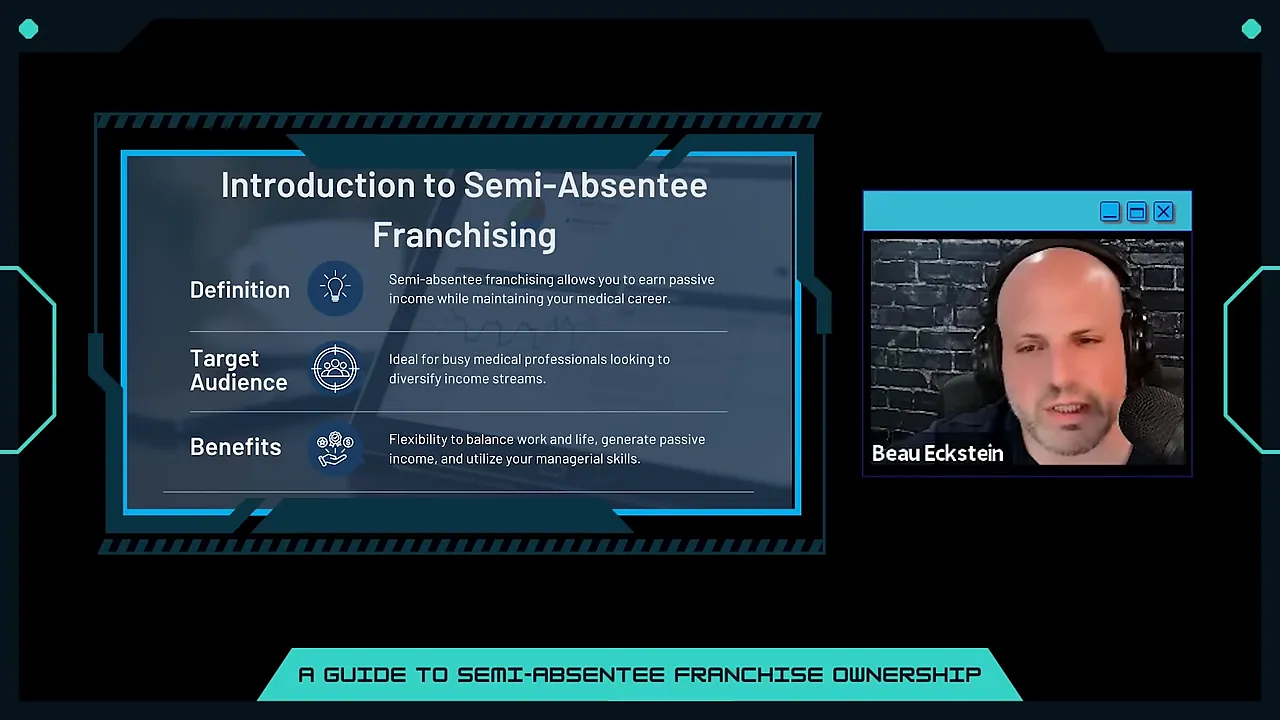
Semi-passive franchising is about working on the business rather than in the business. You buy a proven system, hire a general manager or lead technician to run day to day operations, and focus on strategy, growth, and oversight. This model differs from hands-off real estate investments because businesses have more moving parts. That complexity brings more upside: recurring revenue, tax advantages, and a sellable asset when the time is right.
As a Business Ownership Coach | Investor Financing Podcast, the most important question I ask clients is: what do you want this business to do for you? Is it supplemental income, a tax strategy to offset W2 income, or the first step toward a multi-unit portfolio?
Why medical professionals are often a perfect fit

Photo by Amina Atar on Unsplash
Medical professionals have high earned income and limited time. Franchises can deliver predictable cash flow without requiring the owner to be present full time. Sectors that pair naturally with clinical backgrounds include senior home care, medical services, med spas, and wellness clinics. Many of these concepts require relatively low employee counts and rely on memberships, recurring service plans, or referral relationships—structures that fit a semi-passive owner.
Owning a business can also be a strategic tax lever for clinicians. Instead of every dollar taxed at W2 rates, business ownership opens deductions, depreciation, and entity structuring options that are designed for entrepreneurs.
Funding options and how SBA financing works

SBA financing is one of the most powerful tools for franchise buyers. The SBA 7a program commonly funds 80 to 90 percent of total project costs, which can include the franchise fee, buildout, equipment, working capital, and initial payroll. That means a lower cash requirement up front and a path to leverage someone else’s capital to build an income producing asset.
There are variations. SBA 504 is best when real estate is involved and can be paired with 7a in some deals. Loan terms, rates, and down payment expectations vary by lender, but there are creative structures: seller carrybacks, partner equity, and even retirement rollovers for funding. As a Business Ownership Coach | Investor Financing Podcast, I help clients match funding strategy to their goals and risk comfort.
The franchise discovery process step by step

Finding the right franchise is a process. Start with an assessment of your goals, time, and capital. Then move through territory checks, introductions to multiple brands, and focused conversations with three finalists. The deep diligence phases include receiving and reviewing the FDD, doing validation calls with current franchisees, and attending a discovery day to meet leadership and see operations firsthand.
The franchise Disclosure Document is long and detailed. It contains itemized costs, financial performance representations, litigation history, and system obligations. Validation calls are where the real, practical questions get answered: staffing challenges, ramp up timelines, and what success looks like in your territory.
Choosing the right model and planning to scale

Not all franchise models fit every owner. Consider these filters when evaluating options: recurring revenue, ability to operate semi-passively, ramp up time, initial investment, and how easy it is to replicate the model for multi-unit growth.
- Recurring revenue: Service contracts, memberships, or subscription models stabilize cash flow and make projections realistic.
- Unit economics: Know your average ticket, calls per day, and breakpoints for adding a second truck or technician.
- Workload expectations: Some semi-absentee businesses still require solid leadership. Hiring and retaining a reliable lead operator is essential.
Scaling a home service brand, for example, often follows a clear formula: get one territory profitable, then add technicians and vehicles to multiply revenue. As a Business Ownership Coach | Investor Financing Podcast, I encourage owners to map out the first 24 months before signing the agreement so expectations are aligned.
Tax benefits, depreciation, and exit strategies

Small business ownership unlocks tax tools that employees rarely access. Section 179 and bonus depreciation allow accelerated write offs for equipment purchases. Structuring the business entity thoughtfully creates more opportunities to offset W2 income. These tax efficiencies are a big reason high earners consider semi-passive franchises.
Franchises also create sellable assets. As a business becomes more profitable, it becomes attractive to private equity or strategic buyers who pay a multiple of earnings. That provides a viable exit strategy and an opportunity to convert years of effort into liquidity.
Real examples: home services and recurring revenue in action
Home services illustrate many of the advantages of semi-passive ownership. Concepts like HVAC, pest control, and landscaping rely on service subscriptions and repeat business. For example, a model with a “comfort club” membership drives automatic monthly revenue, while field technicians deliver work that scales as the owner adds trucks and hires more staff.
These businesses validate well in the market because the franchisor supplies marketing, recruiting, purchasing power, and onboarding. That support is why many owners without industry experience succeed.
Next steps: working with a Business Ownership Coach | Investor Financing Podcast
If you are curious, begin with a clear self assessment: desired time commitment, budget, and long term goals. Then run territory checks, review FDDs, and speak with franchisees. Advisors can streamline that work and reduce overwhelm. A coach who knows funding channels and lender appetites can save months in the process.
As a Business Ownership Coach | Investor Financing Podcast, I recommend treating franchise selection like a medical diagnosis: gather data, test hypotheses, and verify outcomes before treating the condition. That discipline leads to better matches and more predictable results.

Final thoughts and an action plan
Owning a semi-passive franchise is a strategic way for busy professionals to diversify income, reduce taxes, and build an asset that can be sold later. The path is systematic: assess goals, evaluate business models, secure funding, do deep diligence, and then onboard with strong operational leadership.
Count the benefits: recurring cash flow, tax advantages, professional growth, and the option to scale into multi-unit ownership. If your priority is to preserve a demanding career while building long term wealth, this approach deserves a spot on your financial plan.
Business Ownership Coach | Investor Financing Podcast can guide each step of this journey, from funding strategy to franchise selection and exit planning. Build the right business for your life, not a life built around your business.