
Ever feel like you are doing everything right—working hard, climbing the ladder, collecting promotions—and still not getting ahead? As a Business Ownership Coach | Investor Financing Podcast guide, I help people break that loop and create income streams through owning businesses. The path to real freedom is not a magic resignation; it is a repeatable plan built on the right business model and smart financing.
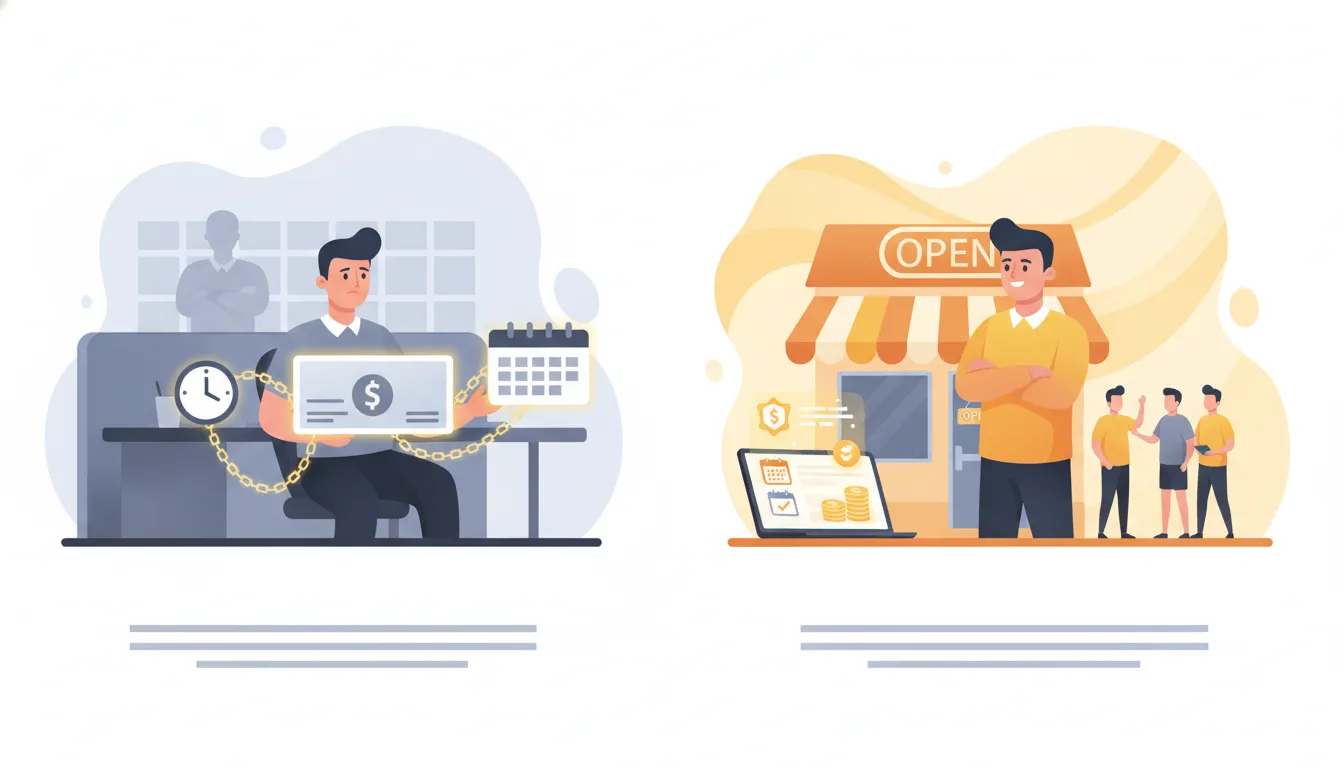
Why a paycheck will never buy true freedom
Relying on a salary ties your financial life to other people’s calendars: bosses, budget cycles, and quarterly reviews. That arrangement works for stability, not autonomy. Stability feels safe until a reorg or a market shift removes it overnight.
Freedom means replacing reliance on a boss with predictable business cash flow. As a Business Ownership Coach | Investor Financing Podcast host I emphasize predictable cash flow over vanity growth. Predictable means you can forecast payroll, personal income, and time freedom without needing permission every quarter.
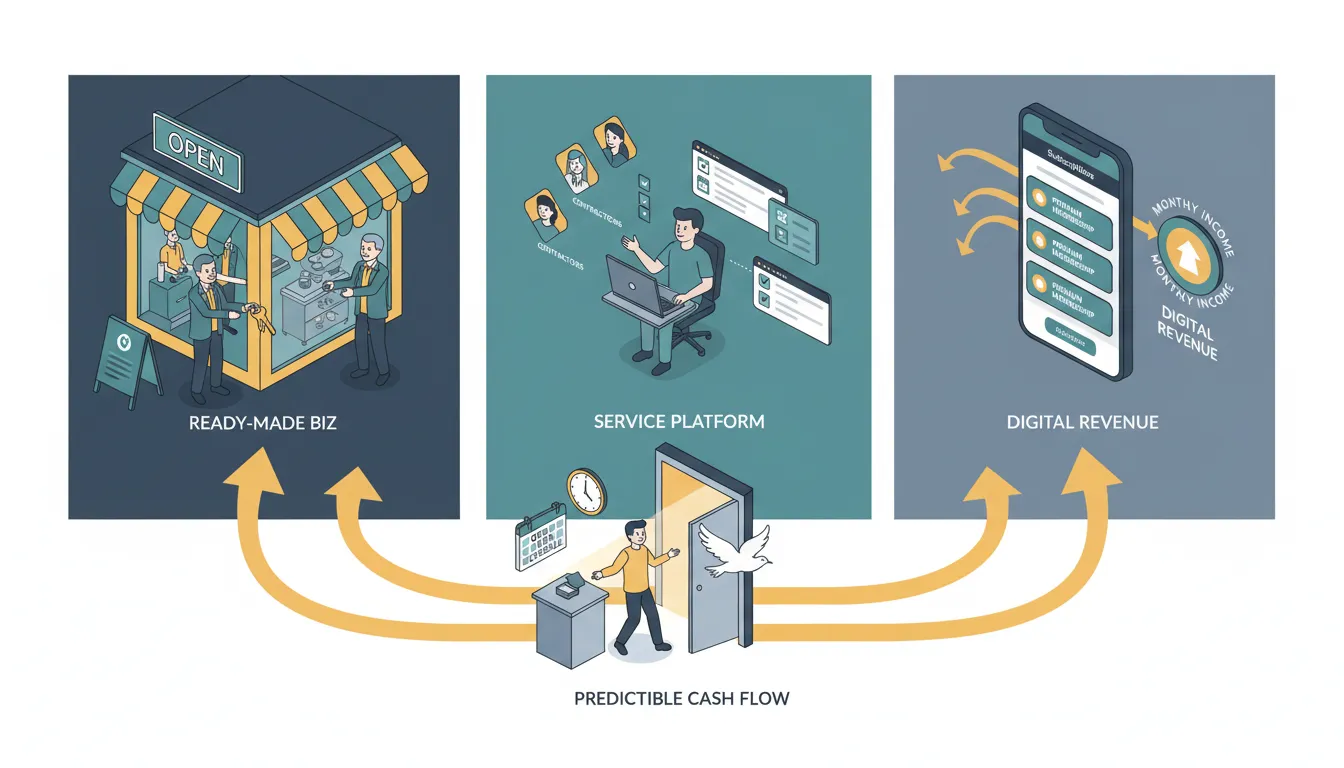
The business models that actually free you
Not every business will set you free. The models that do share three traits: predictable recurring revenue, delegated operations, and the ability to scale without a proportional increase in your hours.
- Buyer-ready small businesses and franchises — Proven playbooks, trained staff, and existing cash flow make these the fastest path to replace a salary.
- Asset-light service platforms — Businesses that leverage contractors or virtual teams reduce overhead and make delegation straightforward.
- Digital recurring revenue — Memberships, subscription services, and managed services that produce monthly predictability.
Each of these models can be funded and scaled faster if you combine the right acquisition target with financing designed to preserve your personal cash. That is the spot where a Business Ownership Coach | Investor Financing Podcast approach adds the most value—matching a business model to financing that keeps you protected.

How SBA financing lets you replace your salary with as little as 10% down
SBA loans are a common lever people overlook when moving from employee to owner. They are not free money, but they offer long amortizations, competitive rates, and the ability to finance a large portion of a purchase so you do not drain personal reserves.
How it works in plain terms:
- SBA evaluates the business cash flow that will repay the loan, not just your personal credit.
- You typically put down as little as 10% on an acquisition when the deal and business qualify.
- Longer terms and lower monthly payments mean the business can carry much of the repayment burden while you transition into ownership.
That structure makes it possible to replace your paycheck without selling your house or taking all your savings. When you pair the right deal with the right loan, the business’s cash flow becomes the engine that pays the loan and funds your lifestyle. A Business Ownership Coach | Investor Financing Podcast mindset focuses on cash-on-cash returns and resilience, not just headlines about purchase price.
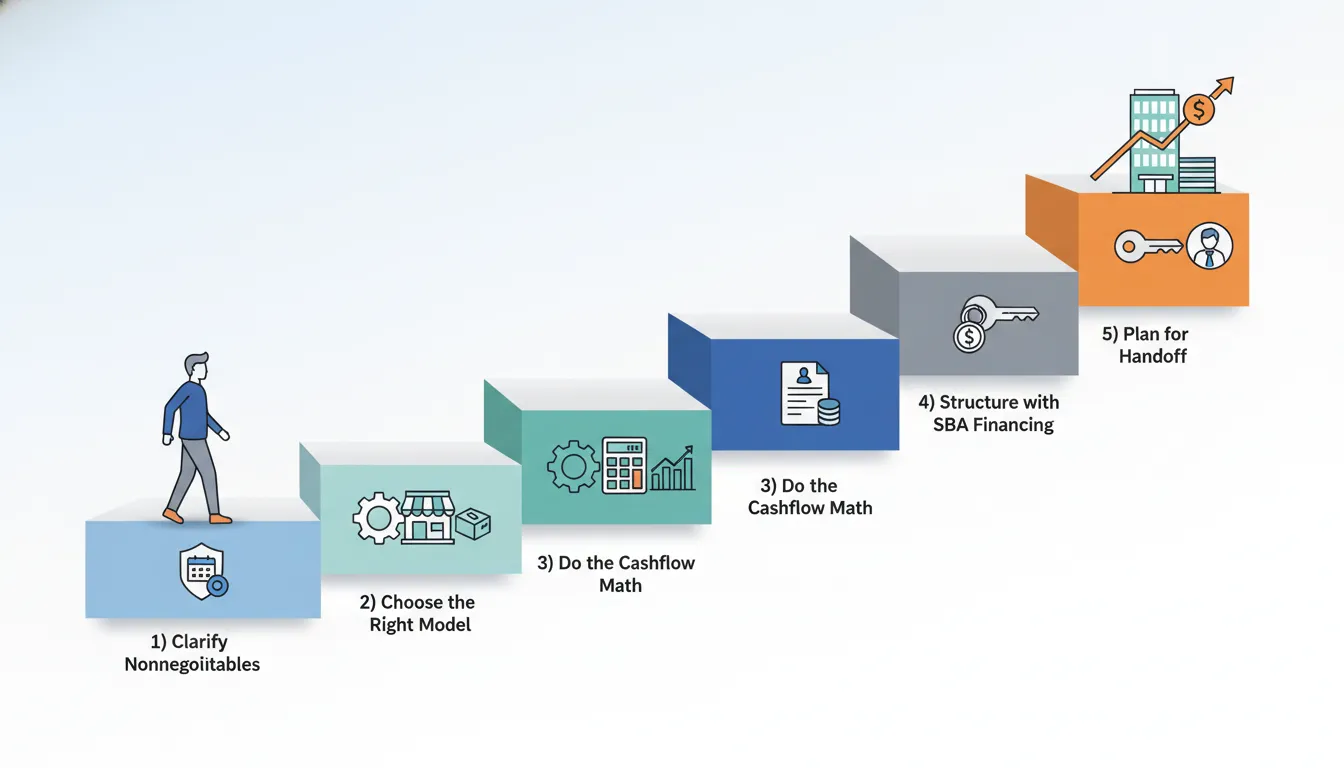
A simple step-by-step plan to move from employee to owner
Transitioning is less about bold leaps and more about disciplined steps. Here is a repeatable roadmap I use with clients to buy a business and replace a salary.
- Clarify nonnegotiables — Set your minimum salary replacement, acceptable commute, and how much time you want to spend operationally.
- Choose the right model — Filter opportunities for recurring cash flow, strong margins, and operator-friendly systems.
- Do the cashflow math — Evaluate normalized seller cash flow, add back adjustments, and model how much owner benefit the business produces.
- Structure the deal with SBA financing — Use loan proceeds to minimize down payment while keeping personal exposure manageable.
- Plan for handoff — Hire or train a manager, systems for remote oversight, and a virtual assistant to free your time.
These steps turn an abstract dream into a sequence with measurable milestones. The goal is straightforward: replace employment income with business income while keeping risk small and control tight. This is exactly what a Business Ownership Coach | Investor Financing Podcast strategy teaches clients to do.
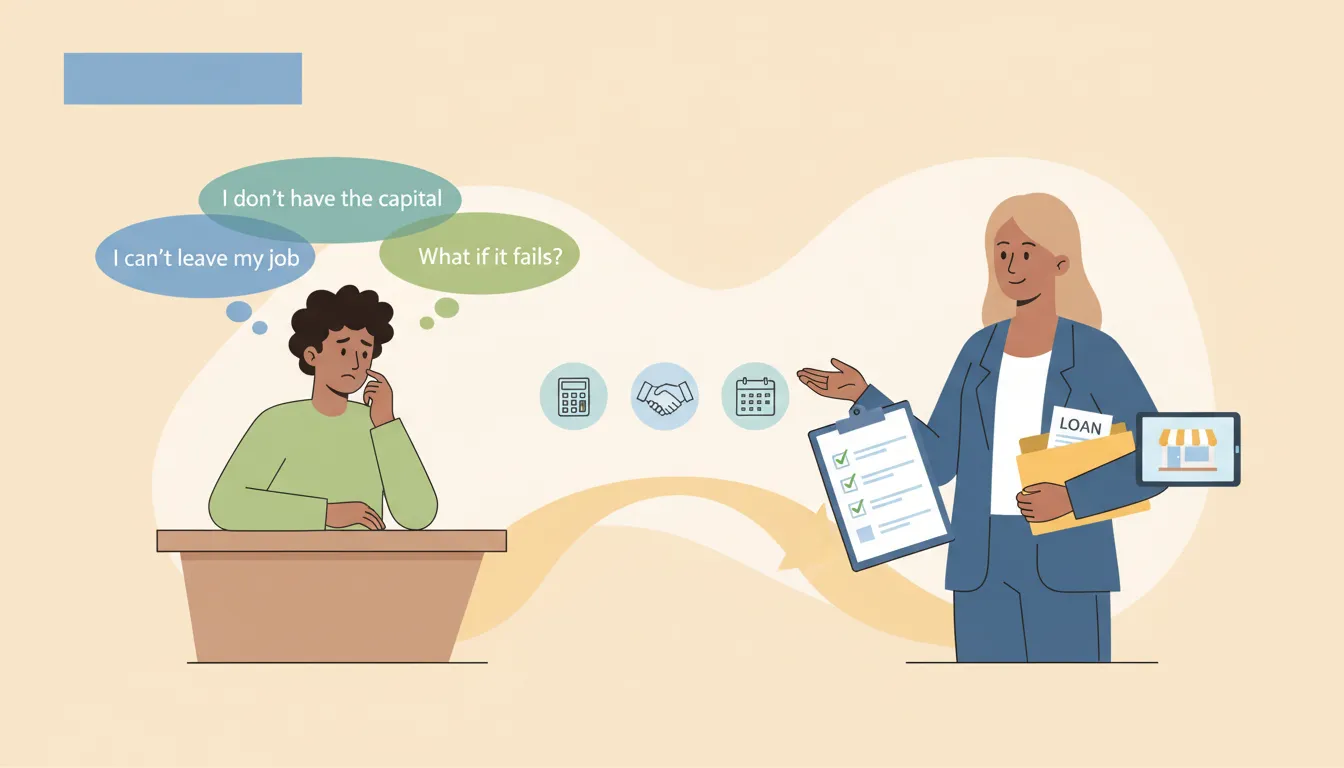
Common objections and honest answers
“I don’t have the capital.” Financing exists to bridge that gap when the deal makes sense. SBA loans can cut initial cash needs dramatically.
“I can’t leave my job.” You do not need to quit immediately. The safest path involves keeping income while you close and then transitioning as the business proves itself.
“What if it fails?” Buy a business with predictable history and conservative projections. Structuring the deal to protect personal assets and staging your ownership reduces downside.
These concerns are real and solvable. A repeatable process, conservative underwriting, and staged ownership transitions are the practical tools that convert fear into forward motion.

Next moves you can take today
If you are tired of waiting for someday, there are concrete next steps to accelerate progress without burning bridges:
- Clarify your replacement number — Know the monthly owner benefit you need to replace the paycheck.
- Start deal sourcing — Look for businesses with three to five years of stable cash flow and systems.
- Talk to lenders early — Learn how SBA underwriting will view a target business before you make offers.
- Build a small team — Hire a virtual assistant and a fractional operator early to test delegation.
Taking those steps will move you from stuck to strategic. Replacing a salary is rarely instant, but it is predictable when you follow a repeatable playbook that combines a solid business model with the right financing.
As your Business Ownership Coach | Investor Financing Podcast resource, I focus on helping people uncover businesses that match their lifestyle goals and structuring deals that protect downside while maximizing cash-on-cash returns. If you want to learn the exact models and funding pathways that free people from the grind, commit to doing the math and testing one small acquisition scenario this month.
Ready to act? Reserve the time in your calendar to evaluate your replacement number and source two businesses that meet the criteria above. Take the numbers to a lender and ask how an SBA loan would shape the deal. Those three actions will create clarity and momentum.