
As a Business Ownership Coach | Investor Financing Podcast guest, I want to share practical, tactical lessons from my journey quitting a W-2 job and building a real estate business that includes flips, rentals, and land development. The phrase Business Ownership Coach | Investor Financing Podcast is more than a title here — it represents the mindset I adopted while learning to run projects, raise capital, and build relationships that scale.
From Corporate Job to Full-Time Investing
I moved from a stable corporate role into full-time real estate in 2014. That transition felt like jumping off a cliff. I did not have an iron-clad playbook; instead I had curiosity, a willingness to learn on the job, and the blunt metric that my family could survive while I took the leap.
Early on I treated the business like a learning lab. I asked contractors to explain each trade. I memorized the rough order of construction — electrical and plumbing, insulation, drywall, trim — and I learned how to convert that operational knowledge into predictable schedules and budgets. Treating mistakes as data points, not tragedies, accelerated my growth.
If you are listening to a Business Ownership Coach | Investor Financing Podcast style message, know this: being deliberate about risk (for me that meant having a partner with a steady W-2) makes the bold moves easier to execute.
How I Scaled Heavy Rehabs into Development and Rentals
Scaling didn’t mean simply doing more flips. It meant doing bigger, better, and higher-value projects. My average acquisition price landed around $500k to $600k, with rehab budgets that regularly climbed into the $200k+ range. These were not cosmetic flips; these were down-to-the-studs reconstructions and sometimes additions.
The mathematical framing I use is simple: net profit is king. Doing dozens of small-margin flips isn’t as attractive as fewer, high-margin projects that give you time and liquidity to pivot into rentals or a small subdivision. That’s how I went from flipping houses to subdividing lots and offering buildable parcels.
The Business Ownership Coach | Investor Financing Podcast approach here: focus on net profit per project, not vanity metrics like “number of doors.”
Systems, Team and the Independent Contractor Model
One myth I like to bust: you can build a high-output real estate business without a huge payroll. I run a lean operation where key roles — stagers, photographers, listing agents, general contractors, showing assistants, transaction coordinators — are trusted partners or independent contractors rather than full-time W-2 employees.
That agility paid off during market shifts. When demand softened, I paused flips and began buying long-term rentals. When inventory tightened, I flipped back in. Independent partners allowed me to scale up and down without the fixed overhead of an internal team.
- Hire for alignment: pick partners who want to grow with you.
- Pay fairly: giving your GC and partners a healthy slice of profit keeps them motivated and loyal.
- Keep repeat vendors: same stagers, photographers and title teams save time and reduce friction.
This is exactly the kind of guidance a Business Ownership Coach | Investor Financing Podcast conversation drills into: systems over ego, relationships over unnecessary control.
Losses, Lulls and the Value of Post-Mortems
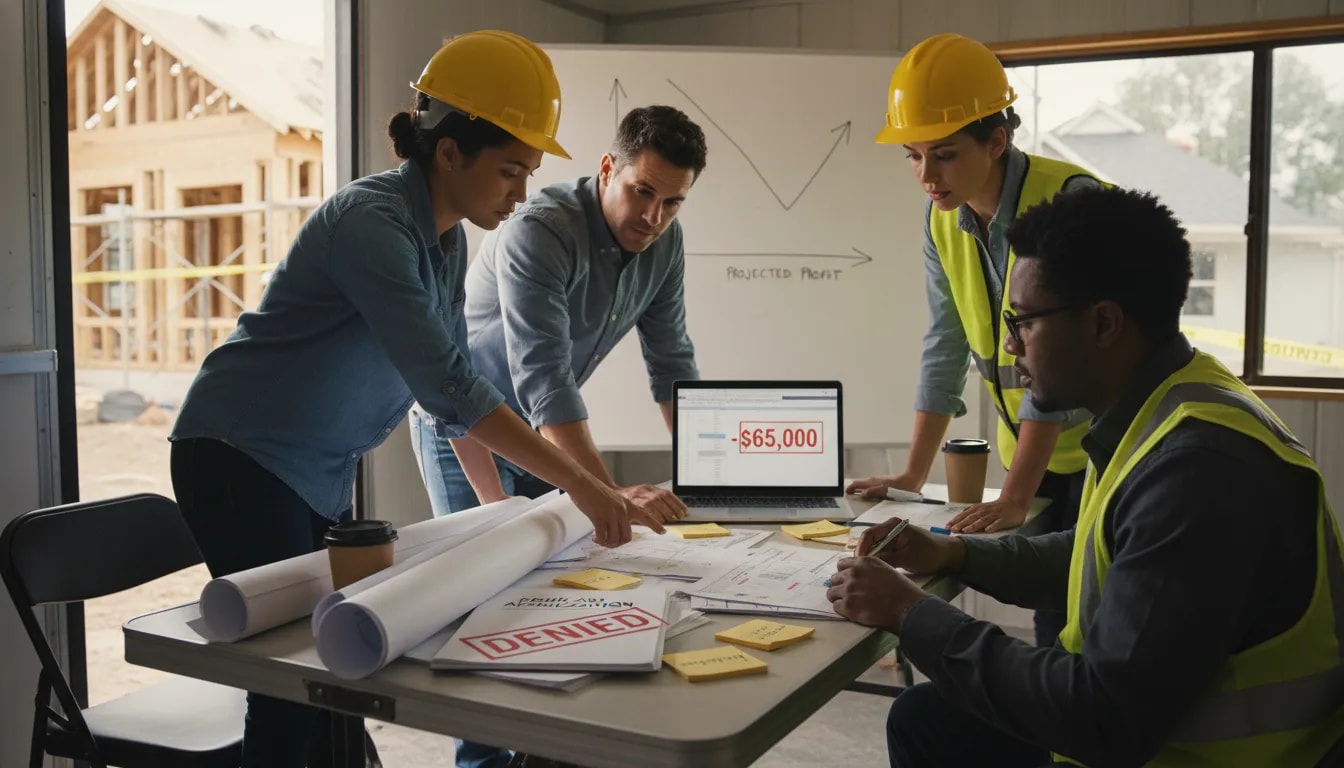
Losses teach faster than wins. I once expected a modest $65k rehab and ended up with a months-long permitting battle that turned a likely profit into a $65k loss. That project forced me to tighten acquisition underwriting and to build a buffer into timelines and budgets.
Key lessons from failures:
- Build time and cost contingencies into every pro forma.
- Understand local permitting and code enforcement risks before acquisition.
- Plan exit alternatives — renting the asset short-term can salvage a mis-timed market.
When you adopt the Business Ownership Coach | Investor Financing Podcast mindset, failures are analyzed and institutionalized into better process, not ignored.
Home Runs: What a Grand Slam Looks Like

The flip everyone dreams about: a full gut remodel in a desirable neighborhood that brought 75 walkthroughs over two open houses and produced 11 offers. We listed for $875k and closed at $1,050,000 — a result of the product, positioning and timing.
What we deliberately did differently:
- Design differentiation: each property needs its own voice — unique finishes, statement lighting, and thoughtful landscaping.
- Controlled scarcity: concentrate showings to create urgency and competitive bidding.
- Dealer presence: when you are deeply attached to the project, show up for open houses and answer buyer questions in real time.
Celebrating wins keeps the team motivated, but the Business Ownership Coach | Investor Financing Podcast lesson is to capture the playbook that led to the win and replicate the replicable parts.
Tools, Apps and Daily Habits That Keep Projects Moving
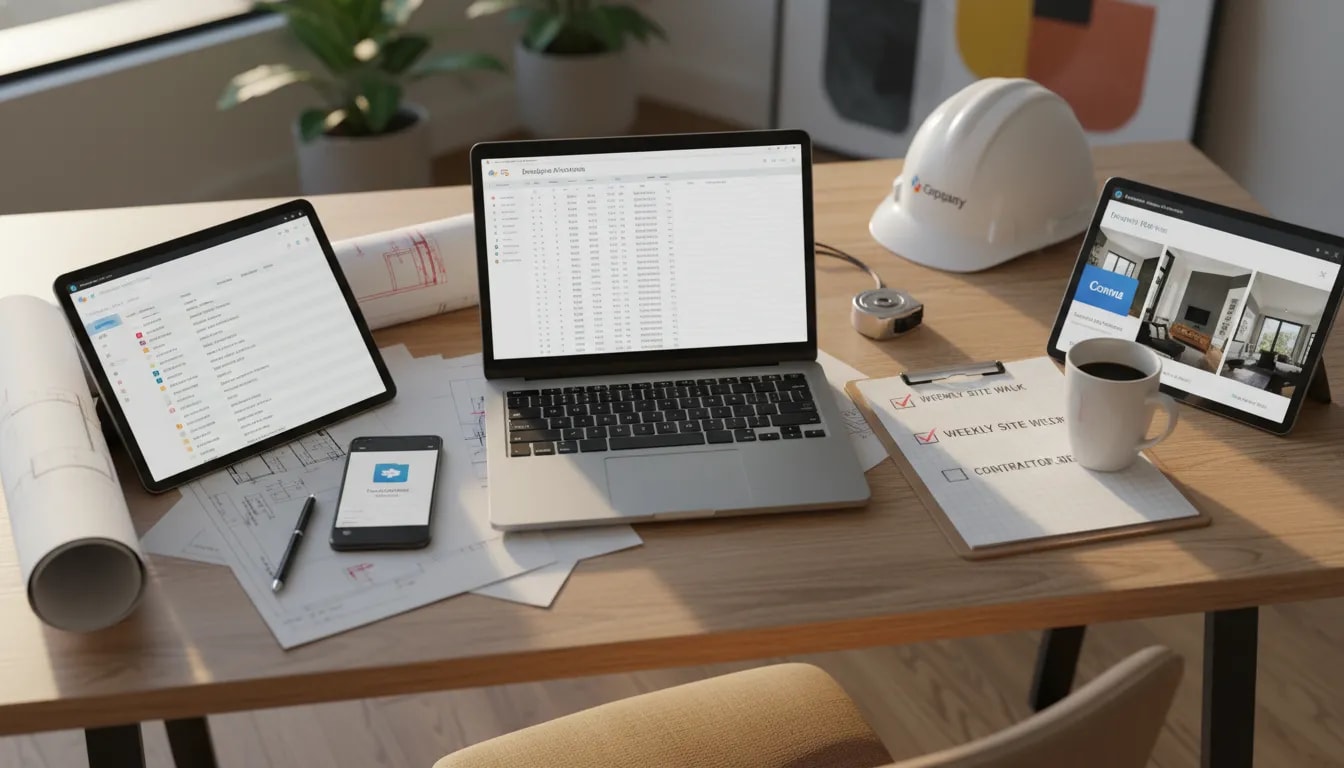
There’s no mystery app that replaces discipline. My stack is simple:
- Excel / Google Sheets: for pro forma and expense tracking.
- Dropbox / Google Drive: central document storage.
- DocuSign / SignEasy: to keep transactions paperless.
- Airtable: for lightweight project databases and workflows.
- Canva: for marketing assets and quick listing collateral.
Daily habits matter more than tools. Quick, consistent communication with contractors, weekly site walks, and a single accountability sheet for each project will save you months of heartache. That’s the practical advice you’ll hear from any Business Ownership Coach | Investor Financing Podcast conversation.
Raising Capital and Working with FinTech Lenders
Traditional hard-money terms can be punitive in some markets. I joined forces with a tech-focused lending platform early on because the product matched my workflow: faster underwriting, flexible terms, and technology that makes closing predictable.
For sponsors and operators, the two biggest takeaways are:
- Match the lender to your model: if your typical rehab is short and intensive, find lenders who underwrite speed, not just collateral.
- Be a solution provider: fintech partners want operator feedback — use that to influence product features and improve the capital experience for everyone.
Working with capital partners strategically is a core tenet of the Business Ownership Coach | Investor Financing Podcast playbook: leverage technology and relationships to lower friction and scale faster.
Final Lessons and How to Start
If you want a short roadmap to apply today:
- Do one project end-to-end before scaling.
- Prioritize net profit per project over vanity metrics.
- Build a flexible contractor network you can scale up or down.
- Use simple tools and consistent communication rhythms.
- Align with capital that understands your timeline and model.
Returning to the core theme — as a Business Ownership Coach | Investor Financing Podcast style practitioner — the best bets are disciplined learning, aligned relationships, and repeatable systems. That combination turns risky leaps into calculated growth.
Ready to take the next step? Keep the checklist above, start one project, and build the relationships that will let you scale without replacing your life with chaos. The practical side of entrepreneurship is a learnable skill set — adopt it one project at a time.