
If you earn a strong salary but still feel tied to your paycheck, Business Ownership Coach | Investor Financing Podcast highlights an important shift in thinking: high income and real ownership are not the same thing. Many professionals in medicine, tech, engineering, finance, and corporate sales are excellent earners, yet they have very little leverage, limited tax flexibility, and no asset that can grow beyond their labor.
The better question is not just how to earn more. It is how to own cash flow, systems, and equity while keeping your career intact. That is where operator-light, asset-based businesses come in. The right model can work alongside a W-2 job instead of competing with it.
This guide explains which business types fit that goal, why they can be attractive for busy professionals, and what to evaluate before buying or building one.
Why high-income professionals often feel stuck
For many W-2 employees, income goes up but flexibility does not. In fact, the opposite can happen. As compensation rises, taxes often become more painful, deductions are limited, and your household becomes increasingly dependent on one demanding role.
That creates a common problem:
- Great income, but little control
- Strong career success, but no ownership leverage
- Reliable pay, but no asset that builds equity outside your job
The core message behind Business Ownership Coach | Investor Financing Podcast is that ownership changes the equation. A well-chosen business can create cash flow, offer tax advantages, and build long-term value that is not directly tied to your billable hours, salary band, or bonus structure.
What kind of business works best if you are keeping your W-2 job?
Not every business is a good fit for a busy professional. If you already work full time, you typically do not want a model that depends on your constant presence.
The strongest options usually share a few traits:
- Asset-based operations
- Local, recurring demand
- Systems and managers that can handle daily execution
- Equipment or real estate that can hold value
- Scalability through capital and process, not endless personal labor
That means you are not looking for a job in disguise. You are looking for a business designed to be owned.
Best businesses to own while keeping your full-time job
Below are several business categories often discussed in Business Ownership Coach | Investor Financing Podcast because they can align well with high earners who want ownership without leaving their career.
Laundromats
Laundromats are easy to overlook because they are not flashy. That is exactly part of their appeal. They serve a recurring need, can be modernized with technology, and often require fewer employees than many traditional retail businesses.
Why they stand out:
- Steady, recurring demand
- Simple core operations
- Potential for professional management
- Technology-friendly systems such as cashless or card-based payments
- Potential cash flow from the start if acquired correctly
This is infrastructure ownership more than hands-on service work. The goal is not to spend your weekends doing laundry. The goal is to own a service people already need.
Dumpster rental and roll-off businesses
Dumpster and roll-off operations can be attractive because they are asset-backed, route-driven, and often benefit from local demand patterns. In growing markets, these businesses can serve contractors, remodelers, property cleanouts, and construction activity.
What makes them appealing:
- Revenue tied to equipment usage and contracts
- Operational work handled by drivers and field teams
- Potential for strong margins in the right market
- Clear assets such as trucks and containers
For a high-income professional, this kind of model can make sense because the value is in the equipment, routing, pricing, and systems rather than personal hustle.
Tree service, land clearing, and excavation

Photo by PuroClean of Fort Worth on Unsplash
Service businesses tied to heavy equipment can create a higher barrier to entry. That can reduce casual competition. Tree work, land clearing, and excavation are examples where equipment, insurance, scheduling, and capable crews matter.
These businesses may benefit from:
- Financeable equipment
- Potential depreciation advantages
- Demand from municipalities, utilities, developers, and property owners
- Operational leverage through crews and equipment utilization
This category is not passive. But it can be operator-light if the right leadership and field teams are in place.
Truck-based and infrastructure service businesses

Photo by Maxim Tolchinskiy on Unsplash
Another category featured in Business Ownership Coach | Investor Financing Podcast includes truck-based and equipment-driven services such as hydro excavation, asphalt repair, striping, concrete cutting, and environmental work.
These businesses appeal to some buyers because:
- Capital can replace a large amount of manual labor
- Systems often matter more than personality-driven sales
- Demand can be tied to infrastructure and commercial maintenance
- Growth can come from adding equipment, routes, or crews
In other words, these are often closer to operating platforms than small side hustles.
Motels and boutique hospitality

Photo by Thomas Stephan on Unsplash
Hospitality businesses with underlying real estate can be interesting when operations are underperforming due to poor management, weak marketing, or outdated systems. With better pricing, management, and targeted improvements, some properties may perform far better than they currently do.
The attraction here is the combination of:
- Business income
- Land ownership
- Potential operational upside
This path is more complex than owning a simple local service company, but it introduces something many professionals want: cash flow plus real estate control.
RV parks

RV parks are often discussed as a hybrid play because they can blend operating income with property ownership. Demand can come from affordable travel patterns and longer-term occupancy in some markets.
Potential advantages include:
- Real estate appreciation potential
- Business income from site rentals and operations
- Relatively simple infrastructure compared with other hospitality assets
For buyers who want a business tied to hard assets, this category can be compelling when managed well.
Self-storage

Photo by Adam Winger on Unsplash
Self-storage has a reputation for durability because it often combines low labor needs, recurring revenue, and technology-enabled management. Customers may stay longer than expected, and facilities can often be operated with lean staffing.
Why many buyers like it:
- Predictable monthly revenue
- Sticky customer behavior
- High margins relative to labor-heavy businesses
- Compatibility with third-party management and automation
For a full-time professional, that operator-light profile is a major advantage.
A simple framework: cash flow, real estate, and tax strategy
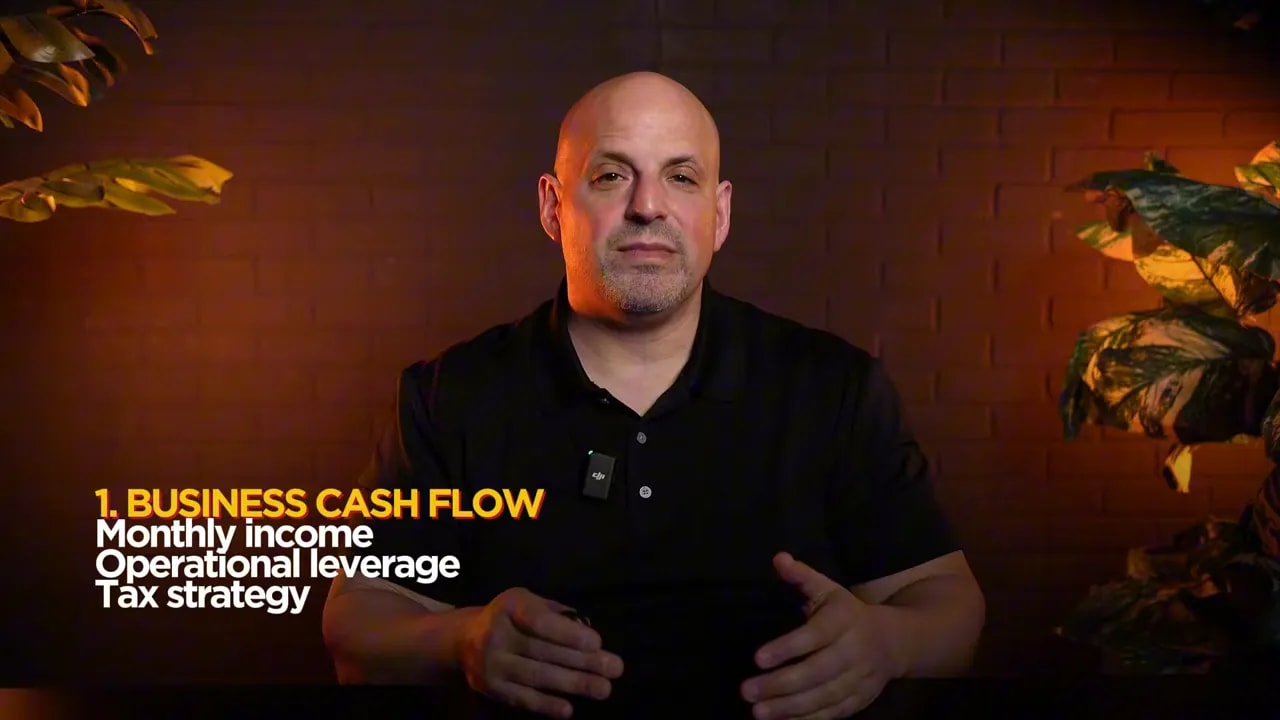
One useful way to think about business ownership is through three connected benefits:
- Business cash flow: income generated from operations
- Real estate ownership: appreciation, debt paydown, and underlying asset value
- Tax strategy: deductions, depreciation, and expense timing where applicable
This framework matters because many W-2 professionals only participate in one side of the equation: earned income. Ownership can open the door to other financial levers that employees often do not control in the same way.
That does not mean every business will provide all three benefits equally. But the strongest opportunities often combine more than one.
How to choose the right business if your time is limited
If your schedule is already demanding, the wrong acquisition can create another full-time job. Before moving forward, ask these questions:
1. Is the demand consistent?
Recurring need is better than trend-driven demand. Everyday services and operational essentials are often easier to underwrite than fad-based concepts.
2. Can operations run without you on-site every day?
If the business falls apart when the owner steps away, it may not fit a working professional. Look for systems, managers, crews, or third-party oversight that reduce owner dependence.
3. Is there an asset behind the income?
Equipment, real estate, routes, and contracts can provide a more durable ownership position than a pure service business built only around personality.
4. Is the complexity manageable?
Some businesses are attractive on paper but operationally intense. A simpler model with clear processes may outperform a more glamorous one that drains your attention.
5. Does it offer room for delegation?
Ownership works best when you can delegate execution and focus on oversight, capital allocation, and strategic decisions.
Common mistakes to avoid
Busy professionals often make the same errors when pursuing ownership.
- Buying for excitement instead of fit. Unsexy businesses can be excellent businesses.
- Underestimating management needs. Operator-light does not mean no operator at all.
- Ignoring local market dynamics. Asset-heavy businesses depend on strong local demand and execution.
- Thinking ownership means quitting your job immediately. In many cases, the smarter move is to build ownership alongside your career.
- Focusing only on revenue. Cash flow, systems, asset value, and tax treatment all matter.
Who these business models are best for

Photo by Charles Forerunner on Unsplash
The ideas covered in Business Ownership Coach | Investor Financing Podcast are especially relevant for:
- Doctors and medical professionals
- Tech executives and engineers
- Finance leaders
- Corporate sales professionals
- Any high-income W-2 earner who wants ownership without immediately leaving a stable career
If that describes you, the key shift is to stop viewing ownership as an all-or-nothing leap. In many cases, the first smart move is simply acquiring one solid, manageable business with durable demand.
Final takeaway
High income can create comfort, but ownership creates leverage. That is the central idea behind Business Ownership Coach | Investor Financing Podcast. If your paycheck is strong but your financial life still depends on your continued labor, then ownership may be the missing piece.
The best businesses to own while keeping a full-time job are usually not glamorous. They are practical, asset-backed, system-driven, and designed to run with operators, equipment, and process. Laundromats, dumpster businesses, heavy equipment services, self-storage, RV parks, and select hospitality assets all fit that broader pattern.
The goal is not to replace your career overnight. The goal is to start owning something that can produce cash flow, build equity, and give you more control over your financial future.