
If you are tired of believing that success is pure luck, timing, or some secret only the elite have access to, there is a repeatable formula you can follow. As a Business Ownership Coach | Investor Financing Podcast host, I want to walk you through a clear playbook I use with clients every day: Find It, Fund It, Scale It. This is the step-by-step blueprint that takes someone from W-2 employee to owner-operator to a wealth builder who leverages SBA financing, acquisitions, and real estate to create lasting financial freedom.
Find It: How to identify the right business or franchise
Choosing the right business starts with a structured intake process. Begin with a business assessment, an intake form, and a clarity call. These are not busywork; they are designed to open your eyes to what is available and to force alignment between what you want and what the opportunity actually delivers.
Think about your background and strengths. If you are a software engineer, ask if there are franchise owners with technical experience. If you are coming from corporate operations, look for concepts with strong systems and coaching. The goal is not to chase the flashiest brand. It is to match your skills, risk tolerance, capital, and lifestyle goals to a business model that will allow you to win.
Practical steps to find the right fit
- Complete a structured business assessment to clarify your objectives and constraints.
- Ask for a clarity call with a reputable advisor who can map options to your situation.
- Shortlist franchises or resales based on alignment with your skills and the company support model.
- Plan validation conversations with current owners before you commit.
Validate It: The real way to vet a franchise or resale opportunity
Validation is where many hopeful buyers fall short. The Franchise Disclosure Document is important, but reading the FDD alone is not enough. You need to talk to owners. The number of existing locations matters. A franchise with hundreds of units will be very different from one with five or even a single location.
Validation checklist highlights
- Talk to as many franchise owners as possible, with emphasis on those who share your background.
- Ask how fast the business began cash flowing and where the immediate pain points were.
- Probe how marketing support from corporate performs in real life and what the local owner must do to succeed.
- Request lessons learned: What would you do differently starting over?
When you interview owners, come prepared with a checklist and take notes. Building rapport often yields the best insights, and you may want to return to owners multiple times during due diligence. The real answers live in the details of how owners solved problems and where the system required more effort than expected.
Fund It: SBA financing myths and how to qualify

People often say SBA loans are impossible to get. The truth is banks do look for certain deal characteristics, and with the right preparation, many buyers can qualify. The first question banks ask is: what is the franchise and how established is it? Banks typically prefer franchise systems with more locations and a track record.
Key qualification factors banks look for
- Franchise strength: Longevity and unit count matter to many lenders.
- Your credit profile: Low credit card utilization and a strong credit score help. We use a 0 to 300 scoring system and aim for 180 or higher.
- Down payment and liquidity: Expect to bring 10 to 20 percent down plus roughly 10 percent post-close liquidity, though exceptions exist.
- Personal cash flow: Your current income must comfortably cover your living obligations during the startup period.
Most startup franchise projects we see fall below a $500,000 loan amount. For established franchises, lenders will often finance 80 to 90 percent of the total project cost. For resales with verified historical cash flow, SBA 7(a) financing can fund up to 90 percent of the acquisition with a loan structure that relies on the seller's tax returns and financials rather than projections.
Funding examples: How large deals get structured

Examples illustrate what is possible. For franchise startups we routinely finance loans in the couple-hundred-thousand-dollar range and have closed deals that financed 80 percent of startup costs. On the other end of the spectrum are resales and acquisitions. For profitable businesses, structuring is everything.
One deal we closed combined SBA 7(a) financing with a seller carryback and conventional financing for a total acquisition near $10 million. Another upcoming close was a $180,000 loan for a startup that financed 80 percent of costs. The key is matching deal structure to the asset: startups rely more on projections and franchisor support, while resales rely on historical tax returns and proven cash flow.
Scale It: From operator to true owner and building a wealth machine
Owning a business is different from running it. At first you will likely be an operator. To scale up and become the CEO, you must systemize, document processes, hire leadership, and then acquire scale through multiple units, territories, or acquisitions.
Common growth pathways
- Organize operational systems: Use the franchisor playbook and add internal SOPs that your team follows.
- Hire and train: Build a management layer so the business does not depend on you for daily operations.
- Buy adjacent territories or add more locations once you have two years of solid tax returns. Many lenders will finance expansion based on your business history.
- Use SBA owner-occupied real estate financing to acquire warehouses, shops, or facilities that support your operations and build equity on the balance sheet.
Scale strategies also include roll-ups. Buying a retiring competitor can instantly add revenue, customer base, and geographic coverage. Private equity calls this a roll-up. It is how many small operators become regional players with multiple profitable locations.
The Triangle Method: Tax strategy, operating business, and real estate
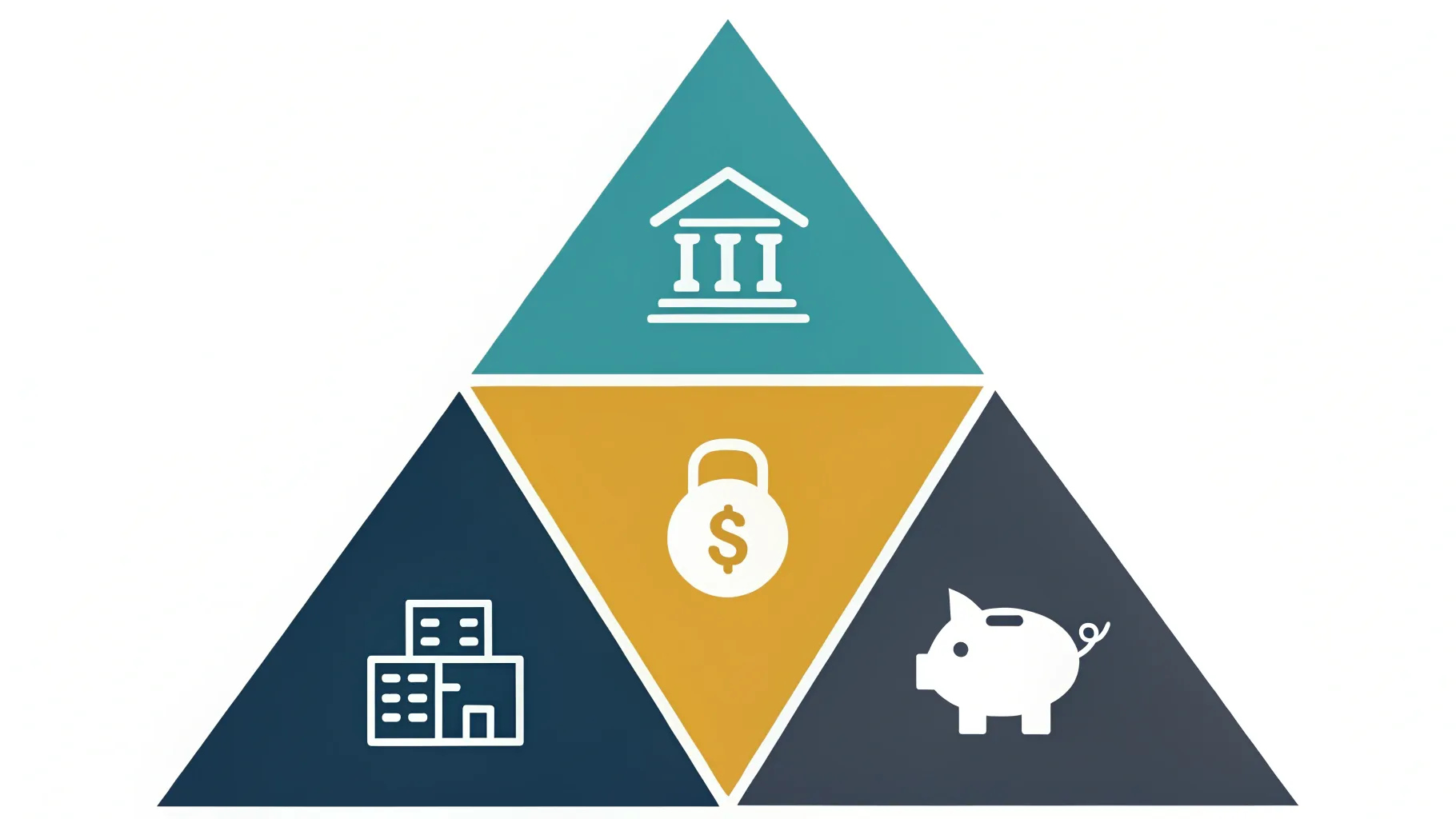
After years of trial and error, I developed the Triangle Method: operate a business that produces excess cash flow, use tax strategies and retirement vehicles to protect and grow wealth, and then buy real estate as the long-term hold. Unlike relying solely on rental properties, an operating business often generates higher cash flow earlier and provides better tax advantages in the early years.
Why this method works
- Operating businesses generate operating cash flow that can fund acquisitions and real estate purchases.
- Tax strategies available to business owners include self-directed retirement plans and deductions that reduce taxable income.
- Real estate held long term creates equity appreciation and additional tax benefits such as depreciation when structured correctly.
The practical flow: build an operating business that earns and accumulates cash, optimize tax strategy through business entities and retirement plans, then deploy excess cash into owner-occupied or investment real estate to secure long-term wealth and legacy assets.

How to go from W-2 employee to CEO in one year
If you want to make the switch next year, start with clarity. Book a single clarity call, complete a business assessment, and let someone map opportunities that match your situation. You need a reality check on your capital, your credit, and your timeline. That call should result in an actionable roadmap: the best-fit businesses to pursue, what validation conversations to conduct, and a financing plan.
What to prepare before you talk to lenders or advisors
- Your personal credit report and a sense of card utilization.
- Bank statements and proof of liquidity for down payment and post-close reserves.
- Current income statements so lenders can see your ability to cover personal expenses.
- Questions to ask franchise owners and sellers during validation calls.
Even if your resources are limited, structure matters more than raw capital in many cases. Lenders will underwrite responsibly, and with creative structuring, down payment assistance, or seller carrybacks, many buyers get into businesses with much less cash than they expect. The first step is clarity and a plan.
Next steps and resources
Begin with the clarity call and a structured validation checklist. Use the Triangle Method to plan long-term wealth, and do not underestimate the role of proper financing and deal structuring. Whether you are exploring a franchise startup, a resale acquisition, or building a portfolio via roll-ups and real estate, the Find It, Fund It, Scale It formula gives you the repeatable path.
Actionable three-step checklist
- Schedule a clarity call and complete a business assessment to identify opportunities that match your skills and goals.
- Run a thorough validation process: talk to owners, read the FDD, and use a checklist for due diligence.
- Prepare for financing: improve credit use, secure down payment liquidity, and plan for post-close reserves.
If you want help mapping a path from employee to owner to wealth builder, invest time in getting clarity and structure now. The process is simple to start: a focused conversation, honest validation, and disciplined financing. Execute those steps, and you will be surprised how quickly a W-2 life can transform into a CEO life with real wealth-building potential.