
If you’ve been stuck in the W2 grind, making decent money but feeling like you have no real control over your time or financial future, this is where the conversation gets real. Business Ownership Coach | Investor Financing Podcast is all about helping people make smarter moves into business ownership, and one of the biggest mistakes I see is not that people do nothing. It’s that they choose the wrong business.
That’s the part that costs people years. Wrong model, wrong economics, wrong fit, wrong expectations. A lot of people buy based on emotion. They like the product, they like the idea, or they think they found some semi-absentee dream business that will run itself. That’s not how this works.
The goal is not just to buy a franchise. The goal is to find a business that fits your life, your goals, your financial position, and your ability to execute. When you do that right, franchising can be one of the cleanest paths to replacing income and building long-term wealth.
Most People Don’t Fail Because They Never Start
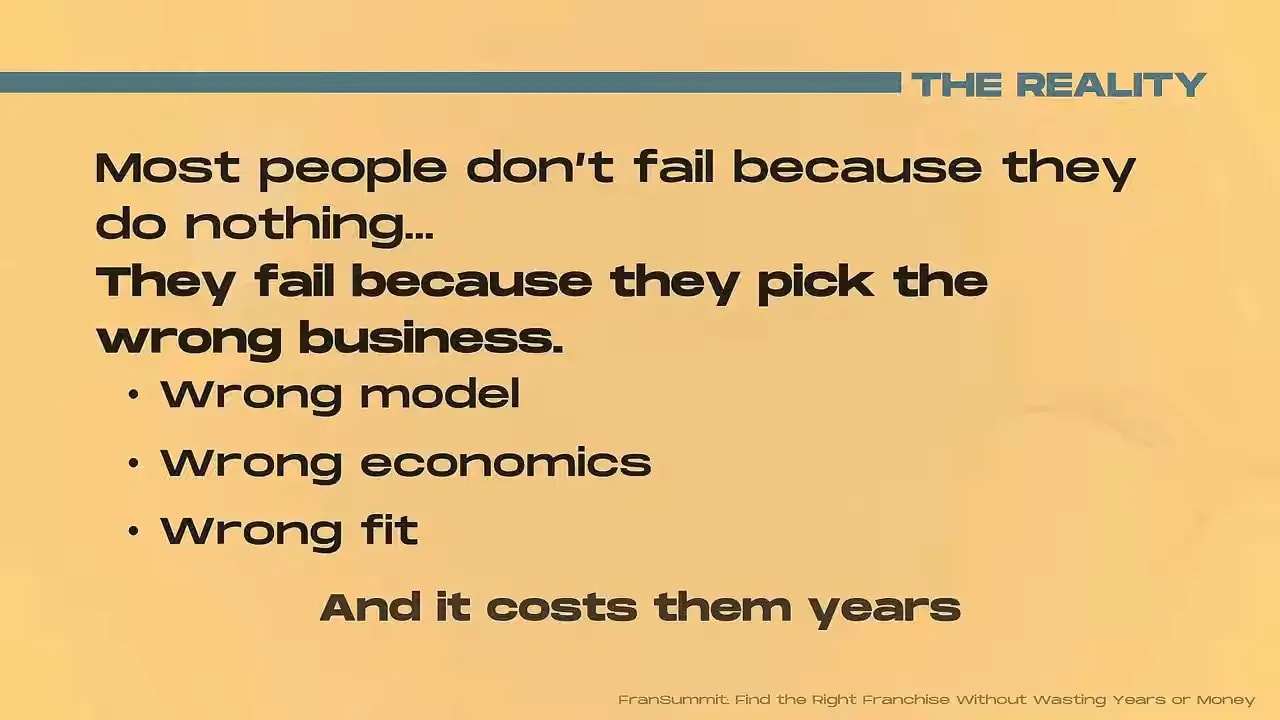
The biggest lesson here is simple: business ownership failure usually starts with a bad fit.
Too many first-time buyers get pulled toward flashy brands, expensive build-outs, or businesses they “love” as consumers. That can be dangerous. Just because you enjoy the product doesn’t mean the economics are strong. Just because a concept is trendy doesn’t mean it has staying power.
In many cases, especially for first-time owners, brick-and-mortar concepts come with more risk than people realize. They often require:
- Higher startup costs
- Longer ramp-up periods
- More overhead
- A slower return on investment
That’s why I spend so much time talking about home service and B2B models. They tend to be simpler, leaner, and faster to scale. They’re not sexy, but boring businesses can be incredibly profitable.
Why Franchising Still Works
The reason franchising works is not magic. It’s systems, process, support, and a playbook.
If you’re coachable and you step into the right system, your odds improve dramatically. You don’t have to reinvent every part of the business. You’re buying into a structure that already has operating procedures, marketing support, training, and in some cases even call center support that puts appointments on your calendar.
That matters, especially if your goal is to build something that eventually operates with less day-to-day dependence on you.
Now let me be clear about “semi-absentee.” A real semi-absentee business is not one where you do nothing from day one. It usually means the opposite. You work hard on the front end, learn the business, hire the right people, understand the numbers, and build systems. Then, over time, maybe your role drops from 40 hours a week to 15.
That’s real. “Set it and forget it” is usually fantasy.
What Business Models Are Working Right Now
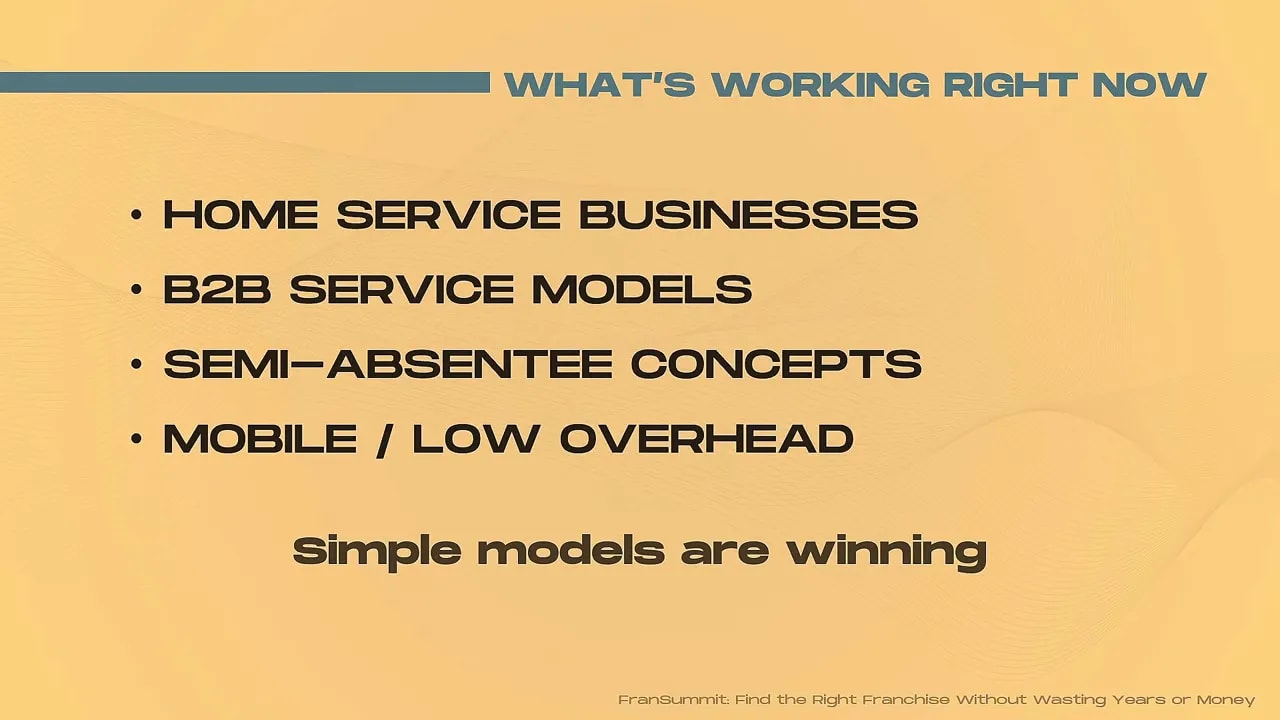
The models that continue to stand out are the ones with low overhead, repeatable operations, and room to scale. Think:
- Home service businesses
- B2B service models
- Mobile concepts
- Recurring revenue businesses
- Simple, operationally boring businesses
Examples include cleaning, maintenance, restoration, commercial services, child-focused concepts, and home improvement businesses. These businesses often scale in a predictable way. Add another truck. Add another technician. Add another territory. Improve route density. Tighten operations. Repeat.
That’s what scalable looks like.
Startup Franchise vs Franchise Resale
There are two main ways people enter franchising: startup and resale.
A franchise startup means you’re opening a new territory, often in a market where that brand may not yet exist. A franchise resale means you’re buying an existing location or group of units from an owner who wants out.
Both can be great. Both can also be wrong if you don’t understand the details.
An emerging franchise may have more upside, but also more risk. A mature resale might come with cash flow on day one, but there may be operational baggage or a transition challenge. The right answer depends on your goals.
If you’re trying to replace W2 income quickly, a quality resale can be incredibly powerful. If you want to build something from the ground up and follow a newer growth curve, a startup can make sense.

Photo by Amina Atar on Unsplash
Validation Is Where the Truth Comes Out
This is one of the most important parts of the process, and most people either rush it or skip it.
Validation means talking to existing franchisees and getting the real story. Not the sales deck version. The good, the bad, the ugly.
You want to ask questions like:
- What does the day-to-day actually look like?
- How long did it take to ramp up?
- What surprised you after opening?
- Would you buy this business again?
- What does owner involvement really look like?
This matters because franchisors cannot make earnings claims unless financial performance is properly disclosed in Item 19 of the Franchise Disclosure Document. If there’s no Item 19 earnings disclosure, you won’t get those numbers from the brand directly. Existing operators are often where you learn what the business really feels like.
That’s why guidance matters. Good questions can save you from a bad investment.
SBA Financing Can Open the Door Faster Than People Think
One of the best parts of the Business Ownership Coach | Investor Financing Podcast approach is understanding how financing actually works in the real world.
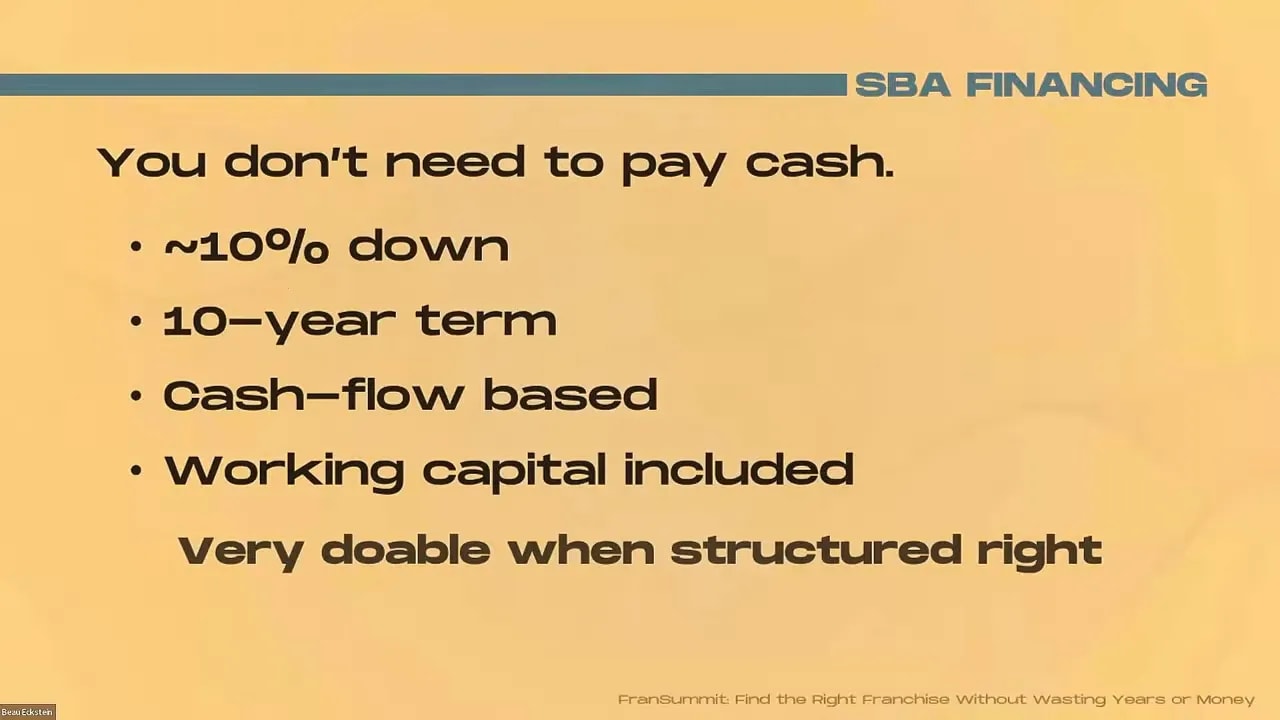
Many people assume business ownership takes hundreds of thousands of dollars in cash. Sometimes it does. But often it doesn’t.
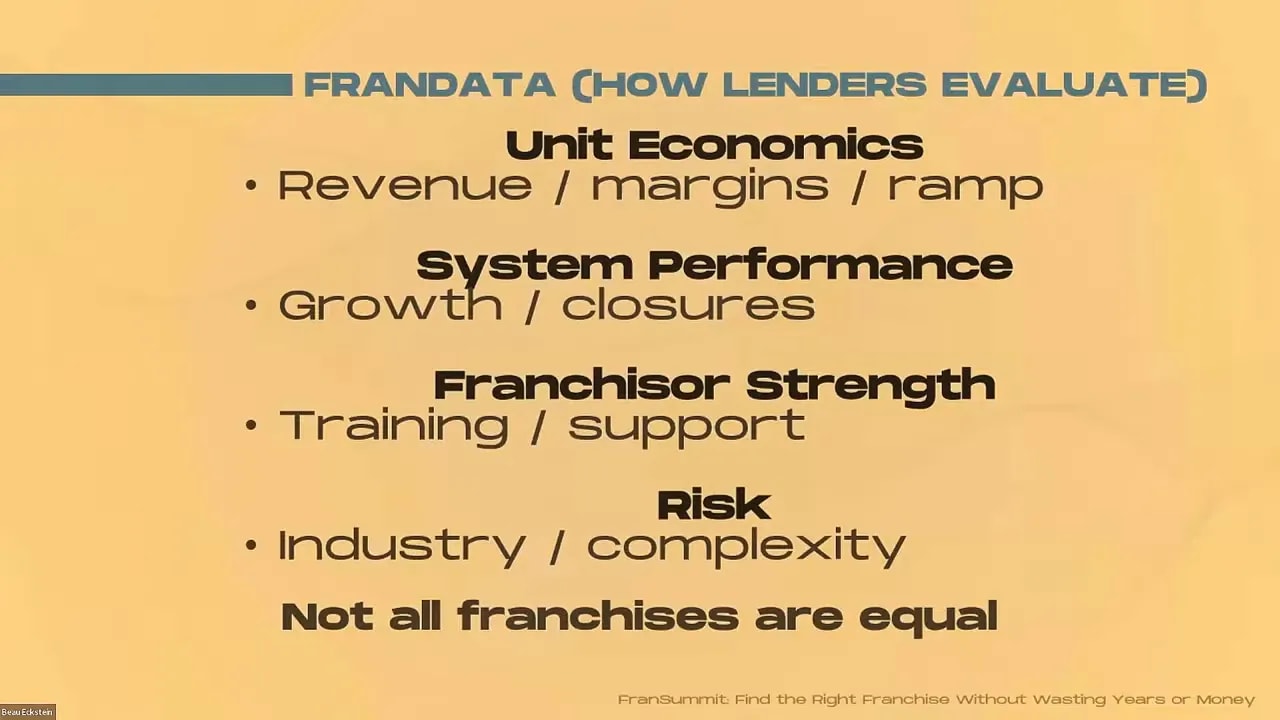
With SBA financing, qualified buyers can sometimes get into a franchise with as little as 10% down. That means if the all-in project cost is $100,000 to $150,000, your required equity injection might be in the $10,000 to $15,000 range, depending on the deal and lender.
That total project cost can include:
- Franchise fee
- Working capital
- Equipment
- Startup costs
The key is not just getting approved. It’s being properly capitalized. One major issue in franchising is that people underestimate working capital. Three months of working capital on paper may not be enough in reality. If you don’t structure the deal correctly, even a good business can become a stressful one.
If you want to better understand the lending side, Beau’s SBA financing course is a useful resource for learning how lenders evaluate deals.
A Real Example of a Small Start That Changed Someone’s Life

Photo by Sebastian Herrmann on Unsplash
One of my favorite examples is a guy who didn’t come in with a mountain of capital. He got into a painting franchise with a subcontractor model, and the total project cost was roughly around $90,000 to $100,000. His cash injection was around $10,000.
Today he’s doing great, and it changed his life.
That story matters because it shows what happens when someone is coachable, motivated, and willing to commit to the process. Not everyone needs to start with a million-dollar deal. Sometimes the right first business is a lower-overhead model that gives you experience, cash flow, and momentum.
How I Match People to the Right Opportunity
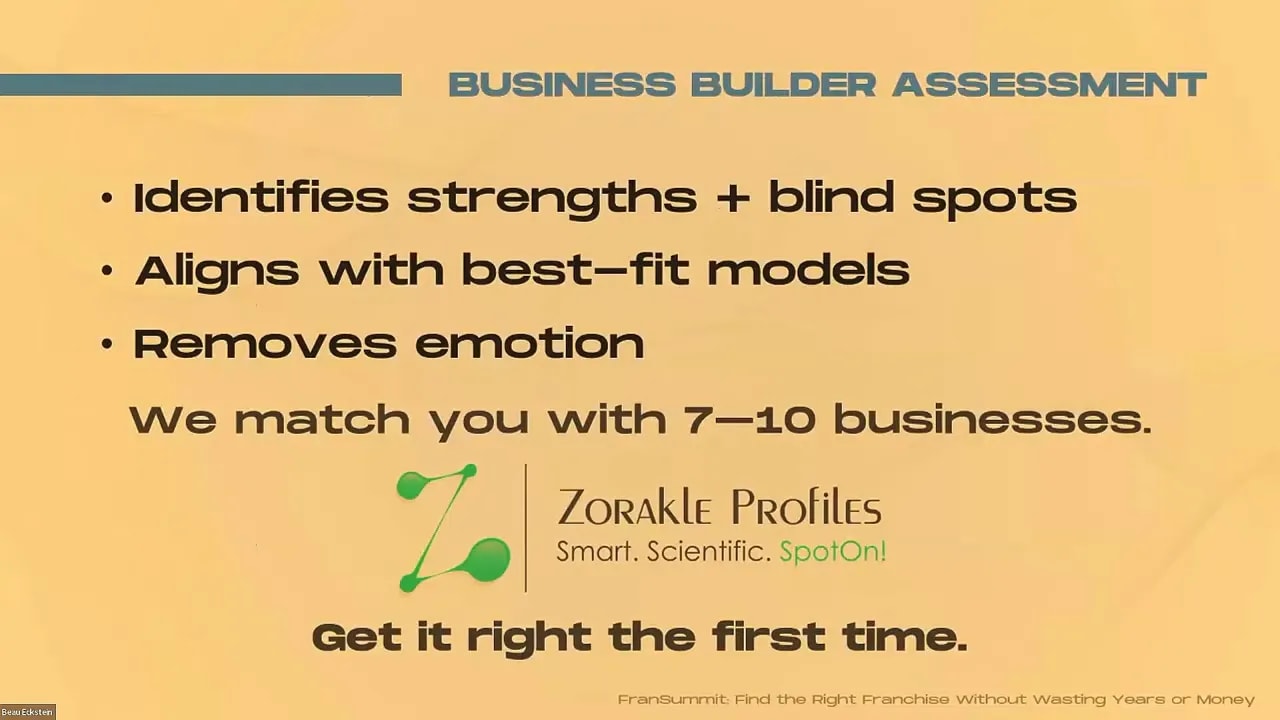
There’s no serious strategy in randomly clicking around listing sites and chasing whatever looks interesting that day. That’s how people get overwhelmed and go nowhere.
The better approach is to build a business thesis around the person first.
I use a profile assessment called Zoracle, along with a real conversation about goals, family, skills, timeline, market, and financial position. From there, we build a shortlist of opportunities that actually make sense.
What I’m looking for includes:
- Lifestyle fit
- Financial fit
- Skill alignment
- Scalability
Then we review multiple options, not just one. That’s important because a business can sound great at a high level and still be a poor fit once you learn the day-to-day reality.
If you want to talk through financing or fit, you can schedule an SBA discovery call or book a call directly.
Franchise Examples That Show What “Scalable” Really Looks Like
A few examples make this easier to understand.
Closets by Design
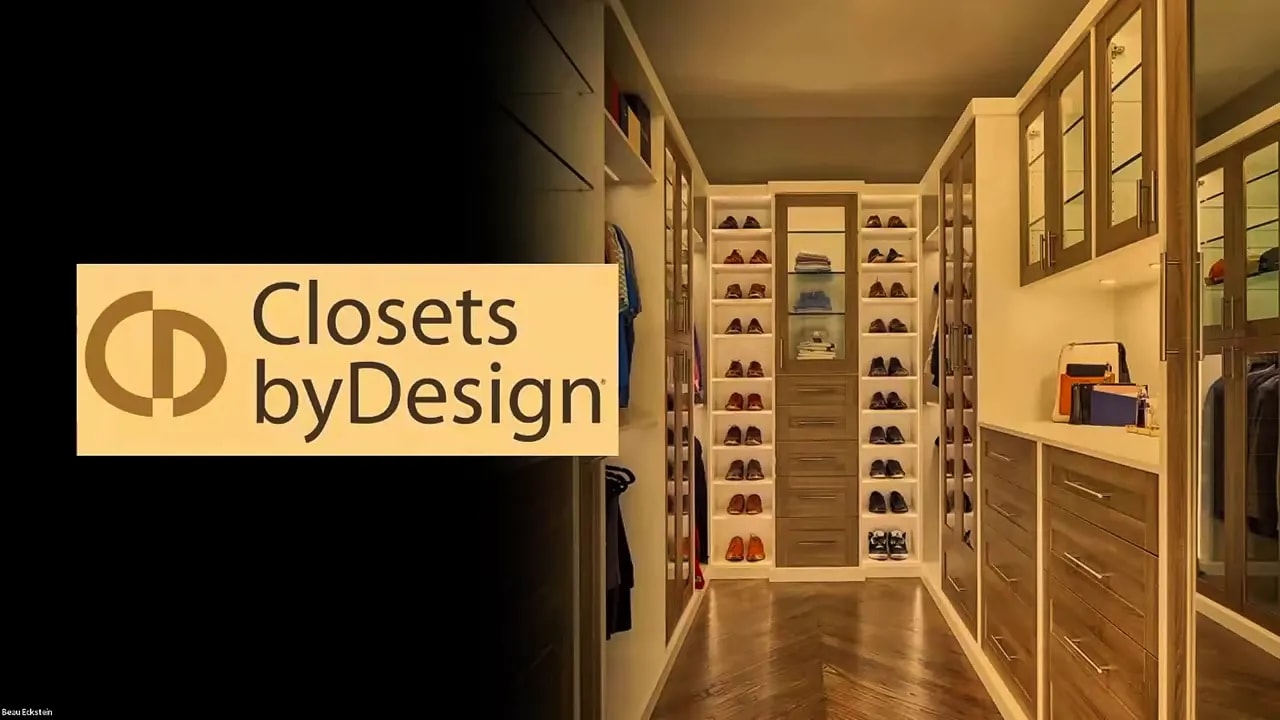
This is a custom home organization business doing closets, garages, offices, and storage systems. Strong ticket sizes, solid home-improvement tailwinds, and the ability to scale through design consultants and installers. Mature operators can build very large businesses here.
HomeSmiles
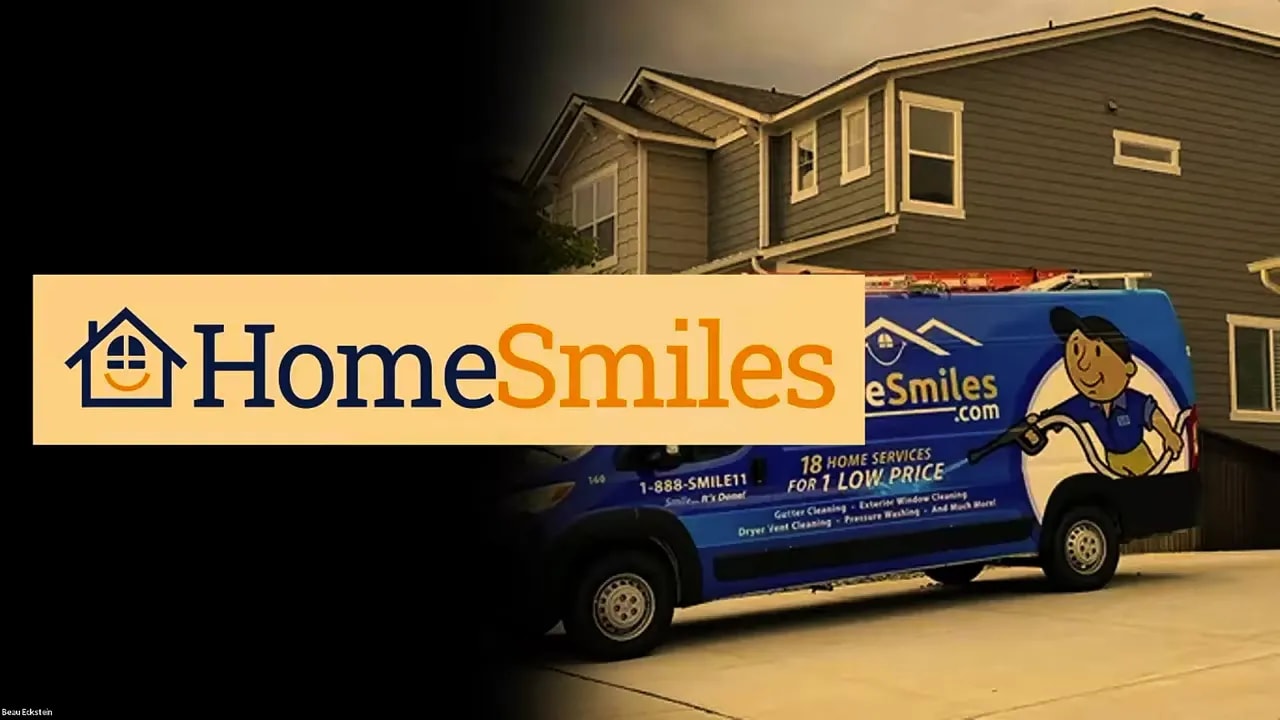
This one is a home-based maintenance business. You can start with a van and a couple of technicians. Services are bundled into recurring maintenance packages like air filters, gutter cleaning, water heater draining, power washing, and more.
It’s especially interesting because it serves multiple verticals, including property managers, real estate brokerages, and commercial accounts. Add a truck, add a tech, and keep growing.
Go Painting
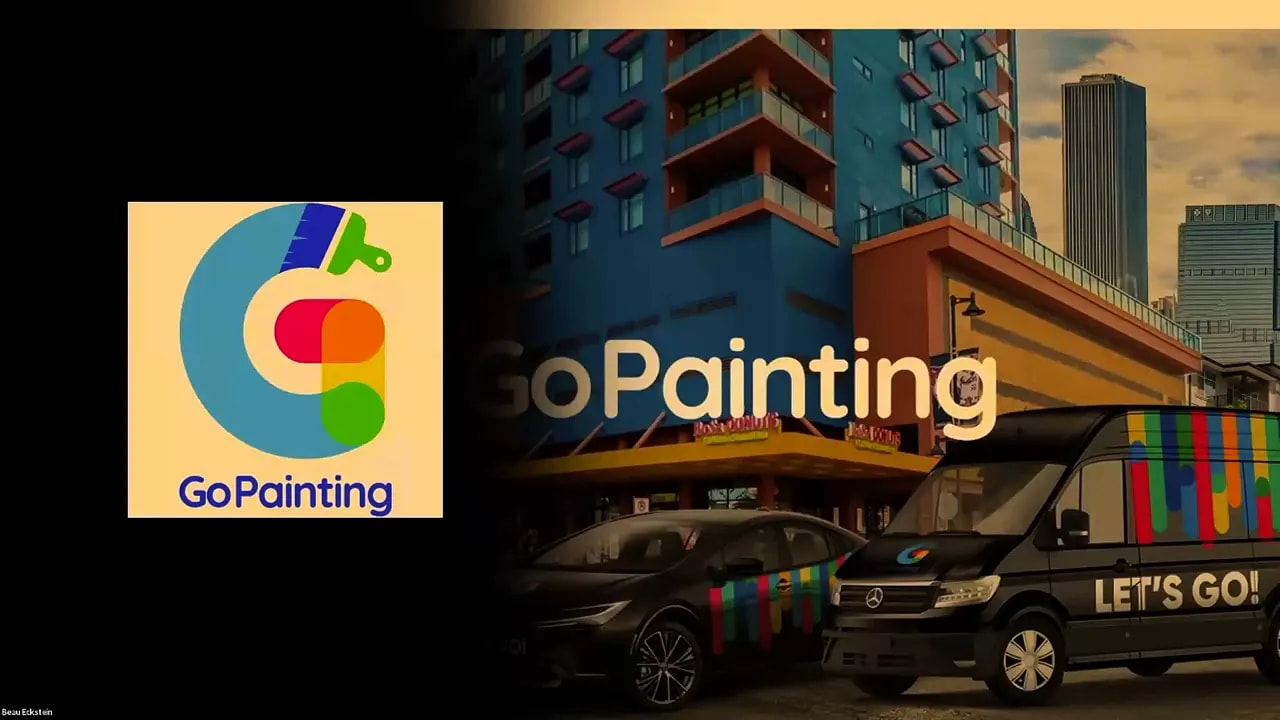
This is one I really like. It’s a commercial-focused painting model with a subcontractor structure, which keeps overhead lower and avoids the need for a huge employee base. It’s home-based, scalable, and built around larger-ticket commercial jobs.
For a lot of people, this kind of model is attractive because you don’t have to be a painter. You need to understand the system, manage relationships, and build the business.
Smart Market AI Vending
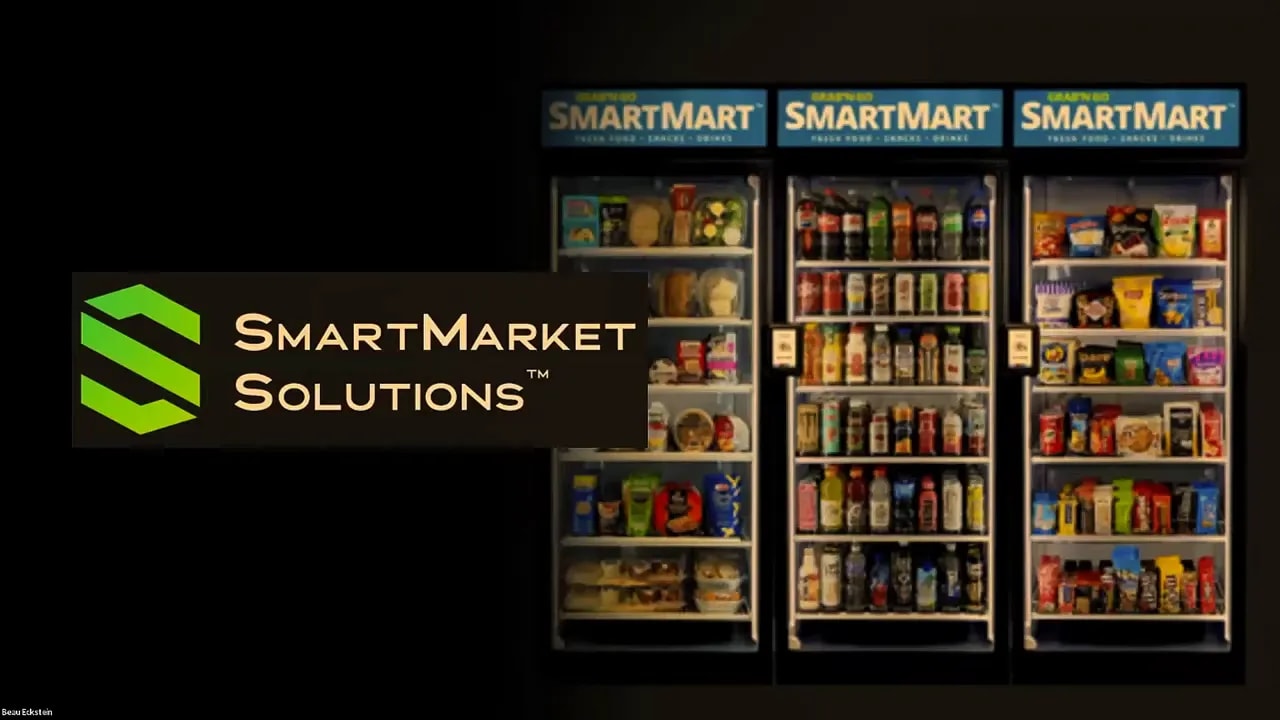
Not a franchise, but a business opportunity worth mentioning. These are AI-powered vending machines where customers open the machine, grab what they want, and the system tracks the purchase automatically.
I call this a gateway business. It can be a simpler entry point into ownership, often with strong tax benefits and less operational complexity. Some owners use family members or gig workers to help restock machines, and the digital display can add advertising revenue too.
Miracle Method
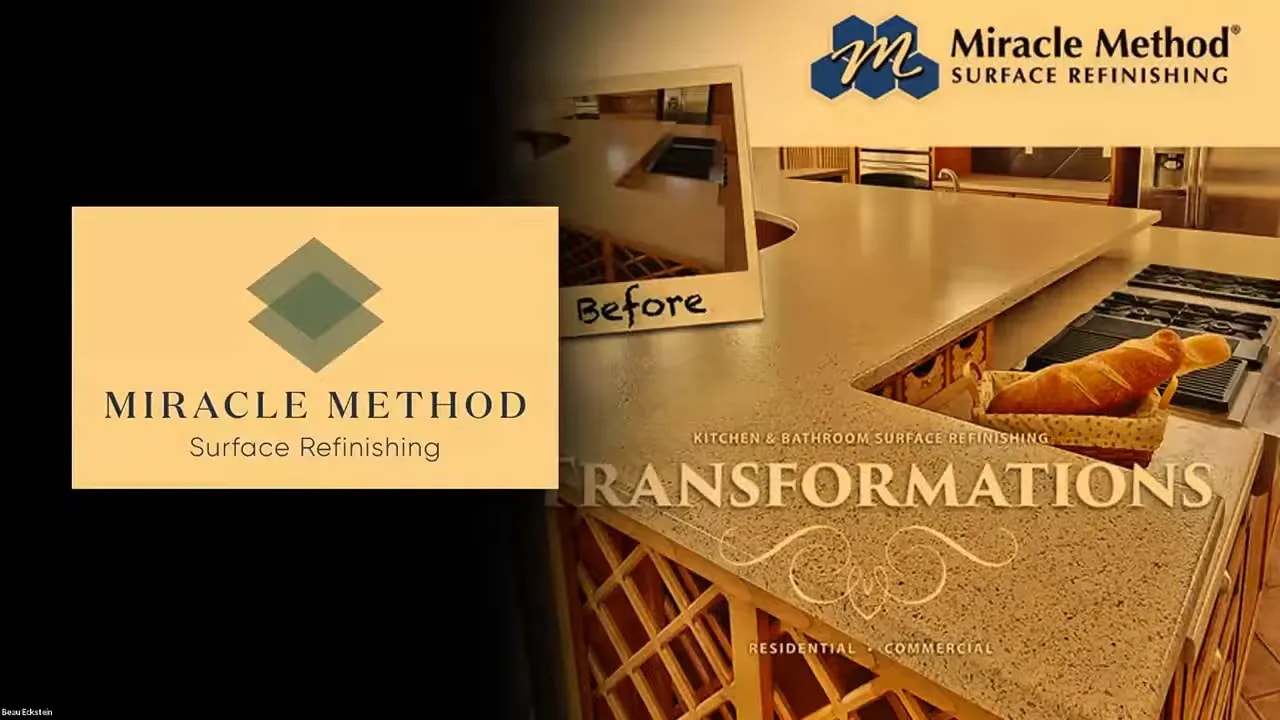
This brand refinishes countertops, tubs, cabinets, and bathrooms instead of replacing them. That makes it highly relevant in a market where homeowners want an upgrade without a full remodel bill. National accounts and commercial work add another layer of opportunity.
You Do Not Need Industry Experience
This is where people talk themselves out of good opportunities.
You do not need to be the technician, the tradesperson, or the industry veteran. In many franchise systems, most buyers come from completely different backgrounds. Attorneys, sales professionals, corporate employees, tech workers, medical professionals. The common thread is not trade experience. It’s coachability and commitment.
You want to work on the business, not just in the business.
That means learning the economics, understanding hiring, using the system, tracking the numbers, and building something that can grow beyond you.
Final Thought
The biggest value in this whole process is not being rushed into a bad decision. Sometimes the right outcome is buying a franchise. Sometimes it’s buying a resale. Sometimes it’s starting with a smaller business opportunity. And sometimes the right move is waiting until the timing is better.
But if you go through the process correctly, you learn how businesses really work. You learn what scales, what cash flows, what fits your life, and what should be avoided. That education alone is valuable.
Business Ownership Coach | Investor Financing Podcast is really about helping people get into the game the right way. Not emotionally. Not randomly. Strategically.
Additional Resources
- Weekly business ownership newsletter
- Virtual assistant support options