
Working with a Business Ownership Coach can help you evaluate an acquisition, franchise, or SBA-financed opportunity with clearer eyes. Buying a business can create long-term wealth, but it is not a shortcut to passive income, instant cash flow, or freedom from work.
The hard truth is that a business can look strong on paper and still struggle after a transition. Revenue can decline, employees can leave, customers can change behavior, and a new owner may discover that the seller was carrying more of the operation than expected. The right move is not to avoid business ownership. It is to enter it prepared, properly capitalized, and realistic about the work ahead.

Photo by Scott Graham on Unsplash
Key Takeaways
- Business ownership requires hands-on leadership, especially during the transition after closing.
- Semi-absentee operations are built through management, systems, and consistent owner oversight.
- Starting with one manageable business can reduce risk before pursuing larger expansion.
- SBA financing supports acquisitions but does not remove operational or cash-flow risk.
Business Ownership Is an Operating Commitment

Photo by Campaign Creators on Unsplash
A business acquisition is not simply the purchase of an income stream. You are taking responsibility for customers, payroll, service quality, vendors, systems, and decisions that can affect the company every day.
That responsibility is especially important for first-time buyers with limited liquidity. Owners with substantial capital may be able to hire experienced operators and build layers of management quickly. Most new buyers cannot. They need to be hands-on, particularly during the transition period.
A capable Business Ownership Coach should help you start with the right expectation: the business may eventually become less owner-dependent, but that outcome is built through leadership, hiring, systems, and consistent oversight.
Think of the acquisition in two phases:
- Transition phase: Learn the operation, retain key people, protect revenue, and identify immediate risks.
- Stabilization phase: Improve systems, build management capacity, and reduce dependence on the owner over time.
If you expect to skip the first phase, you may be setting yourself up for disappointment before closing.
The Semi-Absentee Business Model Is Commonly Misunderstood

Semi-absentee ownership is often presented as a lifestyle-friendly way to own a franchise or business while keeping another job. There are business models that can become semi-absentee, but that word needs context.
In many cases, semi-absentee does not mean hands-off. It means the owner has built an operation that can function with a general manager, documented processes, trained employees, and reliable reporting. Those pieces do not appear automatically when the deal closes.
For the first couple of years, many buyers should expect significant involvement. That may include recruiting a manager, learning systems, reviewing performance, solving staffing problems, building customer relationships, and making sure standards are maintained.
Some retail and health-and-wellness concepts may have a lighter operational lift than a highly technical service business. But home services, B2B operations, and licensed businesses can require much more owner attention, especially when the buyer is new to the industry.
Before accepting the semi-absentee label, ask:
- Who currently runs daily operations?
- Is that person staying after the sale?
- What responsibilities would the owner still need to handle?
- How long will it take to recruit, train, and supervise a general manager?
- What happens if a key employee resigns?
Why Buying Multiple Businesses at Once Can Raise Risk

Photo by Campaign Creators on Unsplash
Buying two locations or two separate businesses at the same time can look like an efficient way to scale. It may make sense in certain situations, particularly when there are shared operations, proven managers, or a clear operational advantage. But it also doubles the number of moving parts during a period when a buyer is still learning.
Every acquisition has transition risk. Two simultaneous transitions can mean twice the staffing issues, twice the customer concerns, twice the financial reporting, and more pressure on cash reserves. If both businesses experience a revenue drop, debt payments and fixed expenses do not pause.
A Business Ownership Coach should encourage buyers to understand the reason behind the expansion plan rather than just the upside story. More territory, more locations, or more businesses are not automatically better.
Starting with one manageable operation can be a more disciplined approach. Establish proof of concept, learn what drives results, build the management structure, then expand with real operating data instead of assumptions.
Evaluate SBA Financing as a Tool, Not a Safety Net
SBA financing can be a powerful tool for purchasing an existing business, funding a franchise, or supporting expansion. It can also increase the consequences of a weak deal because debt service must be paid regardless of whether the business performs exactly as projected.
Defaults and business failures do occur. They can be reviewed by industry, but broad default statistics should never be used as a substitute for diligence on a specific deal. The relevant question is whether your target business has reliable cash flow, enough working capital, a defensible customer base, and an operational plan that works under pressure.
As of 2026, financing structures, lender requirements, and SBA program guidance should be confirmed directly with qualified lending professionals before making a decision. Underwriting is only one part of risk management. A lender’s approval does not eliminate the owner’s responsibility to understand the business.
For buyers who want to discuss capital structure, loan readiness, and acquisition financing, schedule an SBA discovery call. The goal should be to understand both the financing opportunity and the operational burden that comes with it.
Build a Diligence Process That Tests Reality

Online business content can make ownership look effortless. A serious buyer needs a process that separates a compelling story from a durable opportunity. This is where a Business Ownership Coach can add value by helping you ask the uncomfortable questions before your money is committed.
Use this acquisition diligence checklist:
- Validate financial performance. Review the business records carefully and identify whether earnings are stable, seasonal, declining, or dependent on a small number of customers.
- Understand seller dependence. Determine which relationships, sales activities, technical skills, or management duties currently sit with the seller.
- Review the team. Identify essential employees, compensation expectations, leadership gaps, and potential turnover risk.
- Test working capital. Plan for more than the purchase price. The company needs cash to handle payroll, inventory, marketing, repairs, and unexpected revenue softness.
- Know the operational workload. Write down what must be done daily, weekly, and monthly by the owner or manager.
- Create a downside case. Consider what happens if revenue drops after closing or a key person leaves.
The biggest mistake is assuming the business will operate exactly as it did under the seller. A new owner needs a transition plan, not blind faith in historical performance.
Choose Education and Coaching Carefully

Coaching can accelerate the learning curve, but buyers should evaluate it the same way they evaluate any investment. Credentials matter. Direct experience matters. The questions asked matter.
Before paying for a high-ticket program, get a lay of the land. Learn the terminology, understand the industry you are considering, and clarify the outcome you want. Then decide whether specialized guidance provides a reasonable return on investment.
A good Business Ownership Coach does not sell a fantasy of easy cash flow. The guidance should help you improve your decision-making, diligence, financing preparation, and operating plan.
For foundational education and business-buying resources, explore the Business Ownership Academy. For ongoing acquisition and financing insights, consider joining the business ownership newsletter.
Use the Triangle Method to Think Beyond One Deal

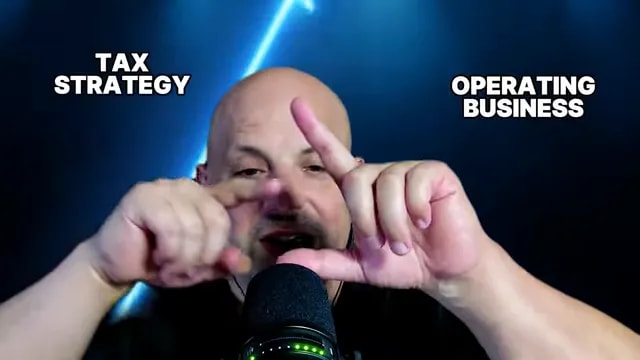
Long-term wealth is rarely built from one perfect transaction. A practical framework is to think in terms of three connected areas: tax strategy, operating businesses, and real estate.
An operating business can create income and business value. Tax strategy helps owners make more informed decisions about how those results are structured. Real estate can become a separate long-term asset class when the business and financial position support it.
The important point is that this is a long-term framework, not a reason to rush. Each part requires education, capital, and execution. Get the operating business right first. Build a foundation. Then consider the next layer when the timing and economics make sense.
How to Start Smaller and Scale With More Control

Starting smaller is not thinking small. It is often the smartest way to control risk. One location, one territory, or one well-understood acquisition may give you the experience needed to make better expansion decisions later.
Once the business has demonstrated stable performance under your ownership, you can assess whether expansion is justified. That is a much different position than buying multiple units because a pitch suggests bigger is always better.
When growth is appropriate, systems matter. Document workflows, create accountability, monitor key operational information, and build a team that can execute without constant owner intervention. Virtual assistants and automation may help support administrative processes, follow-up, and organization, but they do not replace a sound operating model. Learn more about using virtual assistants for business growth when your workflow is ready to support delegation.
Take the Next Step With a Realistic Ownership Plan

Business ownership can be an outstanding path for the right buyer. The right buyer is not necessarily the person with the biggest ambition. It is the person who respects the work, understands the risks, prepares for the transition, and keeps enough capital and focus to handle the unexpected.
A Business Ownership Coach can help you narrow the field, evaluate your role as an operator, and align a business opportunity with your financing capacity. Start with the business you can responsibly lead, not just the largest opportunity you can qualify to buy.
If you are exploring a franchise, acquisition, or SBA financing strategy, book a business ownership conversation to discuss the next practical steps.