
Hello — I’m Beau Eckstein. In this post I’m unpacking the core lessons from a conversation I’ve had countless times with entrepreneurs and aspiring owners. As the host of the Business Ownership Coach | Investor Financing Podcast, I help people evaluate franchise opportunities, build wealth strategically, and move toward passive ownership when that’s the goal.

Photo by Miguel Dominguez on Unsplash
Why some business models are stronger than others
Not every franchise is created equal. When I evaluate a franchise for clients, three things jump to the top: recurring revenue, national accounts (and similar large contracts), and brand recognition. These components matter because they reduce volatility, increase predictability, and make it easier to scale or operate with reduced day-to-day involvement.
As someone who works with entrepreneurs on the Business Ownership Coach | Investor Financing Podcast, I can tell you a simple rule of thumb: if you're aiming for semi-absentee ownership, start by looking at established systems with proven recurring income. Emerging concepts can be winners, but they demand more hands-on time, faster iterations, and larger tolerance for risk.
Define your “why”: goals determine the right model
Before you even start scanning franchise directories, answer the question: why do you want to own a business? I spoke with a successful financial-services professional recently — making close to a million dollars a year — who told me, “I want to own a business.” That’s a great aspiration, but it’s incomplete without understanding purpose.
Are you looking for a legacy asset to hand to your kids, a business that will replace your W-2, or a cash-flowing piece of a diversified portfolio? Each objective implies different choices. If you want passive income and minimal daily involvement, you’ll prioritize systems that support semi-absentee ownership. If you want a fast-growth hands-on play, you might accept more labor-intensity early on.
Business ownership isn’t a set-it-and-forget-it passive implant

People often compare owning a business to owning a rental: hire a manager and check the bank account. That’s a false equivalence. Operating a service business or franchise has many moving parts — employees, supply chains, customer service, local marketing, scheduling, and quality control. It can become passive over time, but only after heavy upfront effort and smart systems are in place.
On the Business Ownership Coach | Investor Financing Podcast, I stress realistic expectations: the first six months (or longer) will likely require intensive involvement. Build your playbook, document processes, and use the early phase as an apprenticeship in operations even if your end goal is to be 100% passive.
Do your homework: projections, validation, and the numbers that matter
Too many buyers skip the math. You need clear projections: when will you break even, how many service calls or transactions per day are realistic, and at what point do you add another technician or unit? We run discovery sessions to model these variables for clients because personal goals, family situation, and acceptable workload differ wildly.
On top of projections, do validation calls. Reach out to existing franchisees and ask direct questions about margins, hours, churn, lead flow, and how long it took for initial systems to stabilize. Validation is the antidote to glossy marketing material.
How the Triangle method helps build lasting wealth
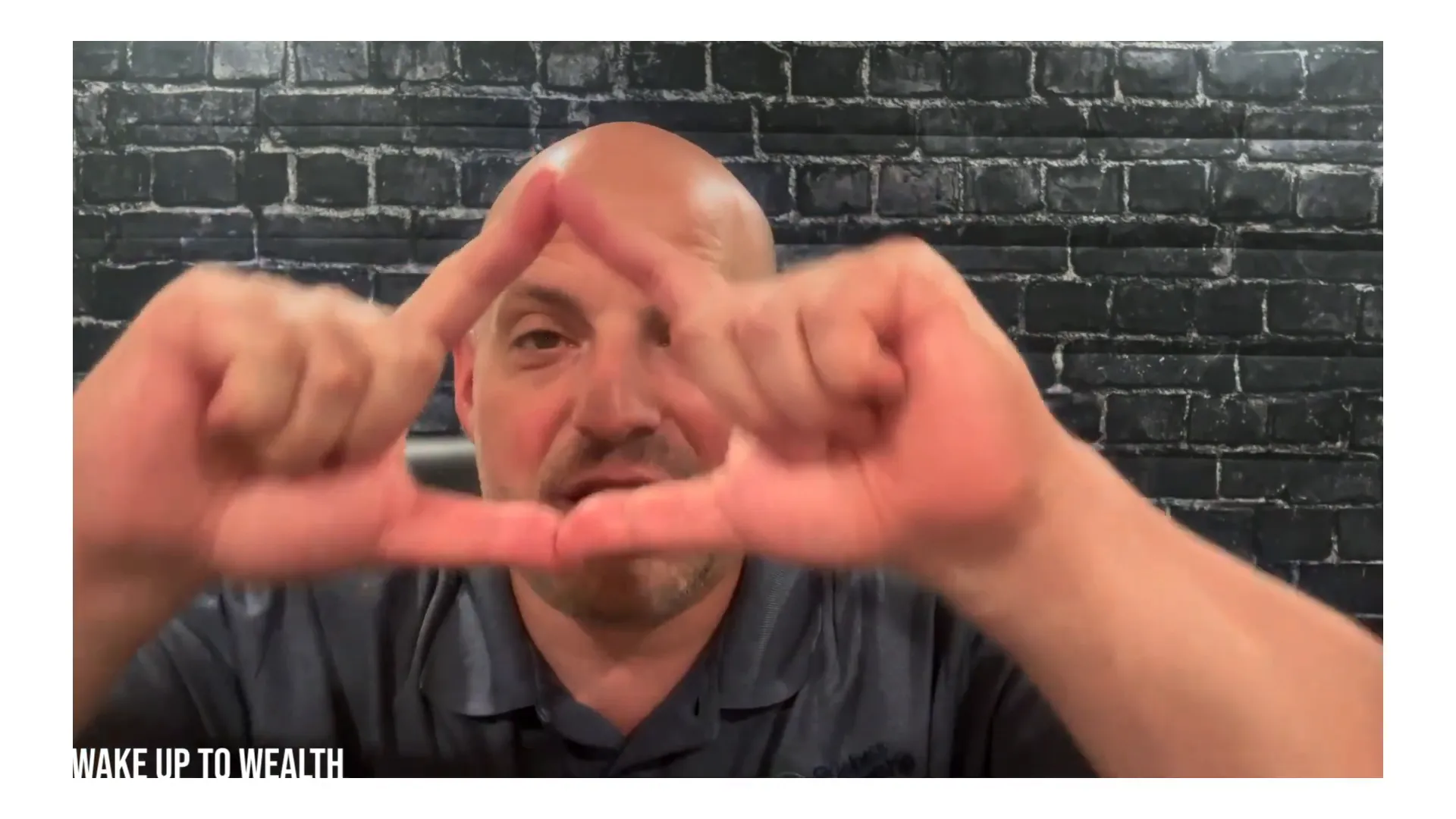
My preferred framework is what I call the Triangle method: tax strategy, real estate investment, and one or two operating businesses. Together, these pillars create diversified cash flow, tax efficiency, and long-term appreciation. A franchise can be the operational side of the triangle — giving you cash flow while you acquire real estate and build tax-advantaged structures.
As you evaluate opportunities, think about how a franchise fits into this larger triangle. Does it produce consistent cash to service loans? Can you apply tax strategies that lower your effective rate? Is the business transferrable or scalable so it becomes a legacy asset?
Matching franchise style to your life and skills

Some clients want a storefront and the brand experience; others want a home-based or van-based service business that doesn’t require retail hours. Your skill set, tolerance for managing teams, and preferred hours will narrow the options quickly. For example, if you value evenings and weekends free, you’ll avoid food-service franchises that demand long hours and many employees.
When choosing a franchise, ask if the brand can demonstrate semi-absentee operators who are successful. This is different than a claim in a prospectus — it’s visible proof of how the model works in real life.
Semi-absentee ownership: realistic expectations and validation
You’ll hear a lot of “run it in your spare time” messaging. Beware — many systems require full attention early on to set up SOPs, hire reliable staff, and install training and controls. Yes, a franchise can become a 5–15 hour/week business in the medium term, but getting there takes months of high-touch operation.
Validation calls are vital: ask owners directly how long it took to reduce their hours, what systems made it possible, and what ongoing responsibilities remain. We call this “validation” for a reason — it separates marketing from reality.
Key factors to evaluate before signing
Start with three filters: time commitment, ability/skills, and capital. From there, layer in your investment horizon: is this a 5–10 year growth play or a legacy business you want to keep in the family? Territory availability, brand maturity, marketing support, and whether the business is emergency-response or scheduled service will shape your final decision.
On the Business Ownership Coach | Investor Financing Podcast, we help clients create a shortlist of brands based on these filters, then run financial models and validation calls so you can make an evidence-based choice.
How we help: the discovery process and commitment to learning

Our approach is simple: stay open-minded and commit to the process. We don’t ask you to commit to an investment up front; we ask you to commit to learning. We align your goals and capabilities with realistic brand options, model the numbers, and guide validation conversations.
As the Business Ownership Coach | Investor Financing Podcast host, my job is to help you see both the upside and the work required — and to place you in franchises that fit your life, not just your fantasies.
Conclusion: smart ownership starts with clarity and validation
Owning a franchise can be a powerful path to financial freedom, but only when you choose the right model, run the numbers, and validate the reality through conversations with current owners. Use recurring revenue, national accounts, and brand strength as filters for semi-absentee aspirations, but always pair them with disciplined financial modeling and a solid exit or legacy plan.
If you’re serious about finding a franchise that fits your life, the process starts with clarity: define your goals, understand the trade-offs, and lean into discovery and validation. As host of the Business Ownership Coach | Investor Financing Podcast, I’m here to guide that process — because the right guidance turns aspiration into a repeatable, scalable plan.
Next steps: Decide your target time commitment, your available capital, and whether you’re building for legacy or for medium-term cash flow. Then run the numbers and talk to owners — you’ll find the truth in their answers, not the brochures. And remember: commit to the discovery process before committing capital.