
An auto repair franchise can be a compelling path for entrepreneurs who want to own a needs-based local business without personally repairing vehicles. The right Business Ownership Coach helps you look beyond the idea of “cars” and evaluate the real operating model: management, technician recruiting, site selection, cash flow, financing, and the systems required to scale.
For 2026, automotive repair remains worth considering because consumers continue to keep vehicles longer, seek alternatives to dealership service after warranties expire, and need dependable maintenance and repair. But this is not passive investing. It is a management business built around people, processes, customer trust, and financial discipline.
Can You Own an Auto Repair Franchise Without Mechanical Experience?

Yes, you can own an auto repair franchise without being a mechanic. In a franchise model designed for semi-absentee or manager-led ownership, the owner’s role is not to turn wrenches. The owner is responsible for leading the business while qualified technicians perform diagnostics and repairs.
A capable owner typically focuses on three areas:
- Business development: Building local fleet accounts, referral relationships, and community visibility.
- Management: Reviewing sales, labor, parts costs, customer experience, and shop performance.
- Leadership: Hiring, retaining, coaching, and holding the manager and team accountable.
Technical experience can be helpful, but it is not the core requirement. Strong operators usually bring leadership, financial awareness, sales discipline, and the ability to follow a proven process. A Business Ownership Coach can help determine whether your background fits the owner role or whether you need a more hands-on operating business.
Why Automotive Repair Is a Strong Franchise Category
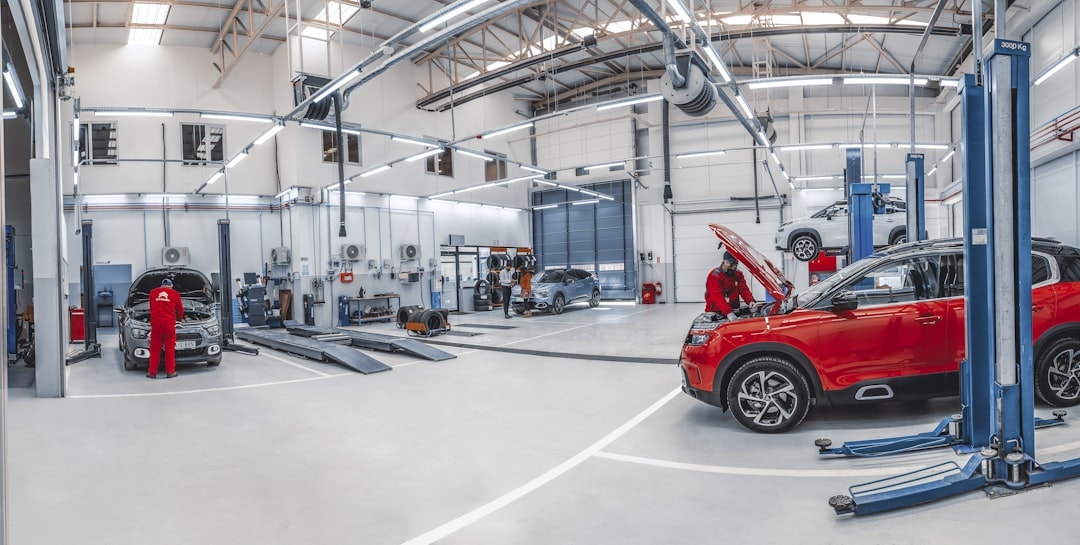
Photo by Kato Blackmore 🇺🇦 on Unsplash
Automotive repair is a needs-based service. When brakes wear down, warning lights appear, or a transmission fails, customers cannot simply postpone the problem indefinitely. This helps distinguish repair businesses from discretionary retail concepts.
Another major factor is vehicle age. The automotive market has shifted toward owners keeping vehicles longer, which creates ongoing demand for maintenance, diagnostics, replacement parts, and major repairs after manufacturer warranties end.
A complete auto care model can combine recurring, lower-ticket maintenance work with less frequent, higher-ticket repair work. For example, a general repair department may handle oil changes, brakes, diagnostics, maintenance, and parts replacement, while a transmission specialty component can address drivetrain repairs.
This creates two important revenue characteristics:
- General repair supports repeat customer relationships and more frequent car counts.
- Transmission and drivetrain work can provide larger repair tickets when complex issues occur.
In the referenced franchise system, general repair work represented approximately 60% of early co-branded sales mix, while transmission work represented approximately 40%. That mix can change by market and maturity. It should never be treated as a guarantee.
Understanding Auto Repair Franchise Costs in 2026

Startup costs vary widely by location, condition of the facility, equipment needs, lease terms, franchise brand, and working capital requirements. For the discussed co-branded automotive concept, the disclosed startup range for an empty, automotive-zoned location was approximately $290,000 to $360,000.
That range included items such as equipment, furniture, fixtures, signage, franchise fees, marketing, and working capital. Before relying on any number in 2026, request and review the brand’s current Franchise Disclosure Document, especially Item 7, which details estimated initial investment.
The more important question is not just “What does it cost?” It is “What am I buying for that cost?” A ground-up location, an empty second-generation shop, and an established acquisition all have different risk profiles.
Three Ways to Enter the Auto Repair Business

A Business Ownership Coach should help you compare the entry path, not simply the franchise fee. There are three common ways to establish an automotive repair operation.
1. Open a new location in a vacant automotive facility. This approach may involve leasing an existing repair building that already has automotive zoning. It can reduce the time and cost associated with building a new facility from the ground up, although equipment and improvements may still be required.
2. Convert an existing independent repair shop. Many long-time independent shop owners are approaching retirement. A buyer may acquire the underlying business and transition it into a franchise system. This can provide an existing location, team, equipment, customer base, and potentially operating cash flow from day one.
3. Acquire a value opportunity. Some businesses may have a usable facility and equipment but incomplete financial records or weaker operating performance. These opportunities may be less expensive, but they require more caution because financing and valuation depend heavily on reliable documentation.
A healthy acquisition must be examined closely. Review tax returns, profit and loss statements, balance sheets, payroll, lease terms, customer concentration, equipment condition, and legitimate owner add-backs. Do not confuse a busy shop with a profitable shop.
SBA Financing for an Auto Repair Business Acquisition

SBA financing may be used to acquire an established auto repair business, subject to lender underwriting and SBA requirements. For an acquisition, lenders want to understand the historical cash flow, business valuation, buyer experience, liquidity, equity injection, and ability to repay debt.
In the automotive repair context, valuation is often discussed as a multiple of earnings, but every transaction is unique. A lender will not finance a vague story. The financial records must support the price and debt service.
Before signing a letter of intent, build a complete acquisition model that includes:
- Purchase price and required buyer injection
- Equipment value and necessary replacements
- Franchise conversion, signage, and improvement costs
- Working capital during transition
- Manager and technician payroll
- Debt payments, rent, insurance, royalties, and marketing
If you are considering SBA financing, schedule an SBA discovery call to discuss the transaction structure, financial readiness, and lender-facing story before committing to a purchase.
What the Financial Performance Numbers Actually Mean

Franchise buyers often focus too quickly on revenue. Revenue is important, but it does not equal owner income. In the referenced system’s Item 19 financial performance representation, average unit volume was approximately $1 million, with cost of goods around 53%, producing an indicated gross margin of roughly 47% before operating expenses.
From gross margin, the business must still pay rent, non-shop payroll, insurance, royalties, marketing, software, utilities, debt service, and other operating expenses. That is why every buyer should study the current Item 19 carefully rather than relying on broad earnings claims.
Ask franchisors and existing owners practical questions:
- What does the revenue ramp look like after opening?
- How many technicians are needed at different sales levels?
- What are the largest controllable expenses?
- How does the owner manage parts, labor, and payroll?
- What does manager-led ownership look like in practice?
How to Run an Auto Repair Franchise Semi-Absentee

Photo by Mehmet Talha Onuk on Unsplash
Semi-absentee ownership is possible, but it starts with the right manager. A remote professional or executive may retain outside income while building the business, provided the operation has a qualified manager and the owner remains actively engaged.
Do not mistake semi-absentee for absentee. Especially during the launch period, the owner needs to learn the systems, build relationships with employees, understand the numbers, and maintain regular contact with the manager.
As the first location matures, some owners may reduce their operational time or add locations. Multi-unit growth requires stronger infrastructure, including store-level managers, centralized reporting, and eventually district-level leadership. Scale only after the first unit has stable systems and management.
How New Auto Repair Locations Build Customers

A new automotive repair business needs a deliberate ramp-up plan. Digital marketing can help capture demand when local customers search for an oil change, brake repair, diagnostic service, or transmission issue. Introductory maintenance offers can also bring first-time customers into the shop.
Long-term growth, however, comes from trust and repeat business. Fleet relationships are especially valuable because local contractors, plumbers, and small businesses depend on working vehicles. Relationship building should be systematic, not occasional.
A practical early marketing checklist includes:
- Launch local digital campaigns around high-intent repair searches.
- Use maintenance offers to increase first-time car counts.
- Build a prospect list of local fleet operators.
- Track customer reviews, referrals, and repeat visits.
- Follow up consistently after service to earn future repair work.
Common Auto Repair Franchise Mistakes to Avoid

The most successful owners do not assume the brand alone creates results. They follow the operating system, manage cash carefully, and take ownership of decisions.
- Buying based only on revenue: Review profitability, cash flow, debt service, and working capital.
- Underestimating staffing: Technician and manager quality can make or break customer experience and production.
- Using business cash personally: Payroll, parts, and operating reserves must be protected.
- Ignoring franchise validation: Speak with multiple current owners before making a decision.
- Assuming location solves everything: Operations and financial discipline often matter more than a premium corner.
Next Steps for Prospective Owners

Photo by Mehmet Talha Onuk on Unsplash
An auto repair franchise may fit professionals who want a manager-led, service-based business with the potential for multiple locations. It is particularly worth exploring if you are comfortable leading people, reviewing numbers, building local relationships, and following an established operating model.
The first step is to assess your goals, available capital, financing options, desired involvement, and risk tolerance. A Business Ownership Coach can help you compare automotive repair with other franchise and acquisition opportunities, then guide you through a thoughtful discovery process.
For broader education on buying a business with SBA financing, explore the SBA financing course preview. To discuss franchise options and business ownership goals, book a strategy call. You can also access the Business Ownership Academy community, subscribe to the business ownership newsletter, or learn how a virtual assistant can support your business.