
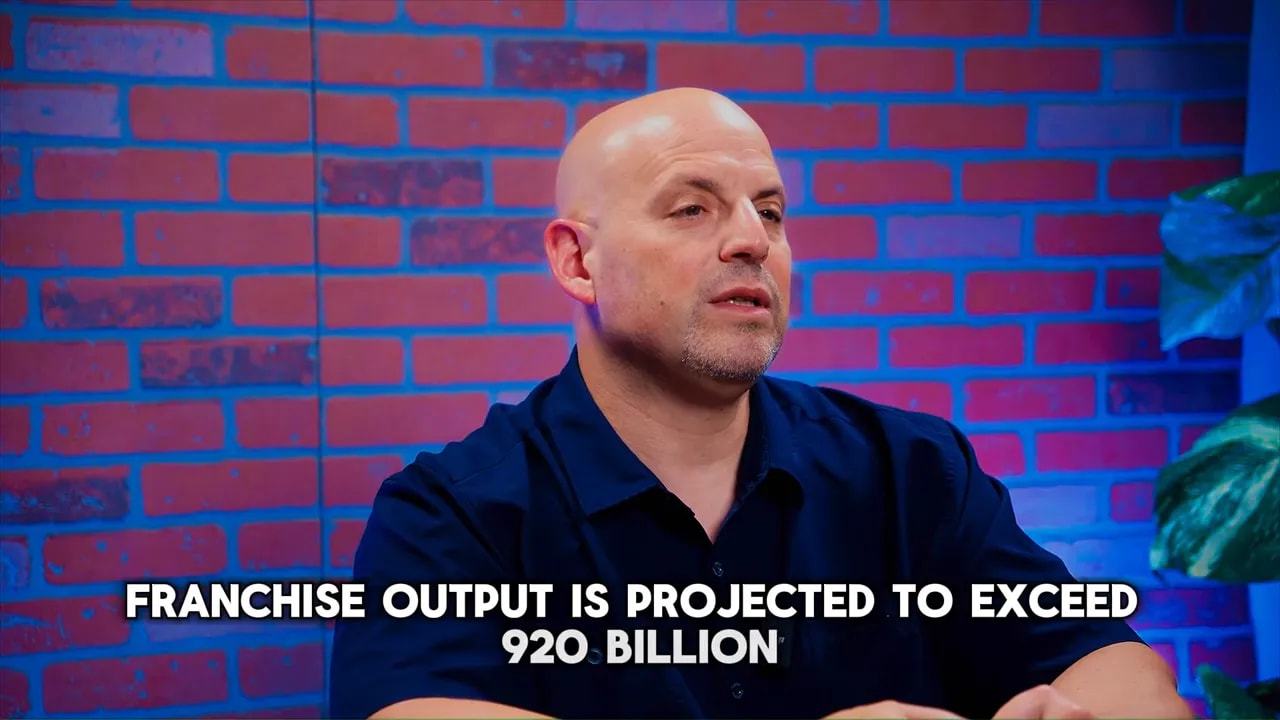
The Business Ownership Coach | Investor Financing Podcast lens on franchising in 2026 is straightforward: this is not a market for hype, impulse, or sloppy expansion. It is a market that rewards structure. Even while economic headlines point to caution, franchise businesses are still projected to generate more than $920 billion in economic output in 2026, with total units trending toward roughly 845,000 establishments and employment nearing 8.9 million jobs.
That matters for high-income professionals, first-time buyers, and existing operators alike. The opportunity is real, but the winning approach is changing. The strongest results are likely to go to owners who choose essential sectors, use technology well, protect liquidity, and build systems that can scale beyond a single location.
If you are researching whether franchising is still a good business ownership path, this guide breaks down what is actually driving growth, where the risks are, and how disciplined operators are approaching 2026.
What the 2026 franchise outlook really suggests
The big takeaway is not that franchising is booming in every category. It is that franchising is recalibrating.
In uncertain economies, independent businesses often feel pressure faster because they have less leverage with vendors, less access to centralized marketing, and less operating data. Franchise systems can hold up better because they are built on repeatable processes. The advantage is not glamour. It is consistency.
That distinction is central to the Business Ownership Coach | Investor Financing Podcast approach. A franchise is not automatically safe, profitable, or easy. But in a tighter environment, systems often outperform improvisation.
For buyers, that means the main question is no longer, “Is franchising growing?” The better question is, “Which franchise models are built for this cycle?”
Why franchise systems can outperform independent businesses during economic pressure

There are four practical advantages that matter most when costs rise and credit tightens.
1. Purchasing power
National and regional franchise systems often negotiate at a scale that independent operators cannot match. When labor, inventory, supplies, or equipment get more expensive, that gap becomes more important.
2. Centralized marketing
Many franchise brands support lead generation at the brand level. That can help stabilize demand when local operators might otherwise cut marketing to preserve cash flow.
3. Unified technology
Franchise systems increasingly deploy integrated tools for CRM, scheduling, inventory, and marketing automation. Stronger systems reduce the need for owners to stitch together disconnected software.
4. Better lender familiarity
Banks generally understand franchise models more easily than one-off concepts. Historical system performance and standardized reporting can make underwriting more straightforward, especially when lenders are selective.
None of these advantages guarantee success. But together, they explain why structured operators can keep gaining share even when the broader economy feels uneven.
How AI is changing franchise economics in 2026

Artificial intelligence is no longer just a buzzword in franchise operations. In 2026, it is increasingly used for practical, margin-oriented tasks.
The highest-value uses mentioned in the Business Ownership Coach | Investor Financing Podcast discussion are operational rather than flashy:
- Lead qualification
- Automated follow-up
- Labor scheduling
- Inventory management
- Marketing personalization
- Booking and workflow automation
The practical result is improved unit economics. For example, when AI helps sort higher-intent leads from low-intent inquiries, sales teams spend more time on revenue-producing activity and less time chasing weak prospects. That can improve close rates and lower the cost per booked job without increasing ad spend.
The important point is this: AI is not replacing franchise ownership. It is improving discipline. Owners who pair good systems with targeted automation may quietly increase EBITDA without dramatically changing the customer experience.
Which franchise sectors look strongest in 2026?
Sector selection matters more than broad enthusiasm. The categories projected to show stronger growth are concentrated in need-based demand.
Areas highlighted for stronger momentum include:
- Child services
- Commercial services
- Residential services
- Retail value concepts
- Health and wellness
Slower-growth areas include categories such as:
- Quick-service restaurants
- Automotive
- Real estate brokerage
A simple filter helps here: Is the offering essential or optional?
Parents still spend on child development. Homeowners still need repairs. Businesses still need recurring services like cleaning. Consumers often continue prioritizing health. But discretionary spending tends to soften when confidence drops.
That does not mean every need-based concept will win, or every discretionary concept will struggle. It means buyers should be extra careful about demand resilience when evaluating a franchise opportunity.
Where franchise growth is happening geographically
Geography is becoming a bigger strategic factor. The Southeast holds the largest share of franchise units, while the Southwest is seeing some of the fastest percentage growth. States repeatedly associated with stronger franchise momentum include:
- Texas
- Florida
- Georgia
- Arizona
- North Carolina
- Colorado
- Utah
The logic is simple. Where people move, demand follows. Where income relocates, service businesses often expand with it.
That means territory selection should be based on demographics, migration, and local demand patterns, not just excitement around a brand name. Smart expansion is geographic strategy, not random market grabbing.
The rise of multi-unit franchise ownership

One of the clearest shifts in franchising is the rise of the professional operator. Roughly 19% of franchise owners control nearly 60% of total units. That signals a market increasingly dominated by operators who treat franchise ownership like portfolio management, not a side project.
That trend has several implications:
- More emphasis on documented operating procedures
- More use of general managers and layered management
- More back-office centralization across units
- More purchasing leverage as scale increases
- More focus on building assets that can be recapitalized or sold
For first-time buyers, this does not mean starting with five units. It means thinking from day one about whether the business can eventually run with structure. Owners who stabilize one unit properly may put themselves in a much stronger position to add units later.
Why private equity is paying attention again

Photo by Felix Viray on Unsplash
Private equity interest is returning, but selectively. Capital is not simply chasing any franchise deal. It is gravitating toward platforms, consolidation, and experienced multi-unit operators with real systems already in place.
Franchise businesses appeal to investors for a few reasons:
- Predictable royalty structures
- Standardized systems
- Diversified risk across multiple units
- Transferable management infrastructure
This is also why stronger operators often buy from weaker ones during uncertain periods. Tight cycles tend to accelerate consolidation. If an owner wants long-term optionality, the goal should be to build something that is investable, not just a job with overhead.
How W-2 professionals can move into franchise ownership more safely
This is where the Business Ownership Coach | Investor Financing Podcast perspective becomes especially relevant for corporate professionals. A rushed exit from a salaried role is rarely the strongest move. Structured transitions tend to be more financeable and less risky.
A better framework often looks like this:
- Keep your W-2 income initially if possible.
- Choose a model that fits your involvement level, including semi-absentee options when appropriate.
- Maintain liquidity and prepare thorough documentation.
- Use financing strategically, including SBA lending where it fits.
- Install management early if the model requires lower day-to-day owner involvement.
- Stabilize first, then optimize, then reduce W-2 dependence gradually.
This kind of non-emotional transition tends to align better with lender expectations. If you need help understanding SBA funding options, a focused SBA discovery call can be a practical next step.
For broader franchise and financing guidance, a business ownership strategy consultation may also help clarify fit, funding readiness, and expansion planning.
What lenders and buyers are focusing on now
Even if interest rates ease somewhat, credit can still remain tight. That means lenders are likely to pay close attention to:
- Liquidity
- Outside income
- Operational experience
- Business plan quality
- Documentation and financial clarity
Buyers should take the same standards seriously. A franchise that looks attractive on a brochure can still be a poor fit if the capital structure is thin, the owner role is misunderstood, or the market is weak.
Tax and policy advantages worth knowing
Business ownership can offer structural tax advantages that salaried income does not. Two items specifically referenced are:
- Section 199 qualified business income deduction
- Bonus depreciation for eligible capital expenditures
That said, tax benefits should never be the main reason to buy a franchise. They can improve the economics of a good business, but they do not rescue weak operations or poor execution.
Common mistakes franchise buyers should avoid in 2026

Photo by Vaishnav Chogale on Unsplash
- Chasing hype instead of demand. Essential categories often hold up better than optional ones.
- Expanding too fast. One well-run unit can be more valuable than several unstable ones.
- Ignoring local demographics. Territory quality matters.
- Underestimating management needs. Semi-absentee does not mean hands-off without structure.
- Treating AI like a gimmick. The best use is practical efficiency, not novelty.
- Assuming all franchises are equally financeable. Lender comfort varies by model and operator profile.
- Buying for tax reasons alone. Operations come first.
A practical 2026 checklist for evaluating a franchise opportunity
Before moving forward, ask:
- Is the product or service need-based?
- Does the brand offer strong systems and operating support?
- Can technology improve conversion, scheduling, or labor efficiency?
- Is the territory backed by favorable population or income trends?
- Can this business be managed with layered leadership over time?
- Would this asset be attractive to lenders or future buyers?
- Do I have enough liquidity and a realistic transition plan?
If too many of these answers are unclear, it is usually a sign to slow down, not speed up.
Final takeaway
The strongest insight from the Business Ownership Coach | Investor Financing Podcast framework is that 2026 is shaping up to reward disciplined ownership. Franchising may keep growing, but the winners are less likely to be speculators and more likely to be operators who think in systems, margins, management layers, and long-term asset value.
If you are a W-2 professional exploring ownership, or an operator considering your next move, focus on need-based demand, capital readiness, and structured execution. That is where the edge appears to be.
Additional Resources
For ongoing insights on buying, building, and scaling a business, the business ownership newsletter offers practical frameworks on financing, acquisitions, and growth.
If staffing leverage is part of your operating plan, this resource on virtual assistant support may also be useful for building operational capacity.