
Business Ownership Coach | Investor Financing Podcast is built on one simple idea: you do not need a giant pile of cash to start building serious wealth. You need a system for finding deals, underwriting them correctly, and financing them creatively.
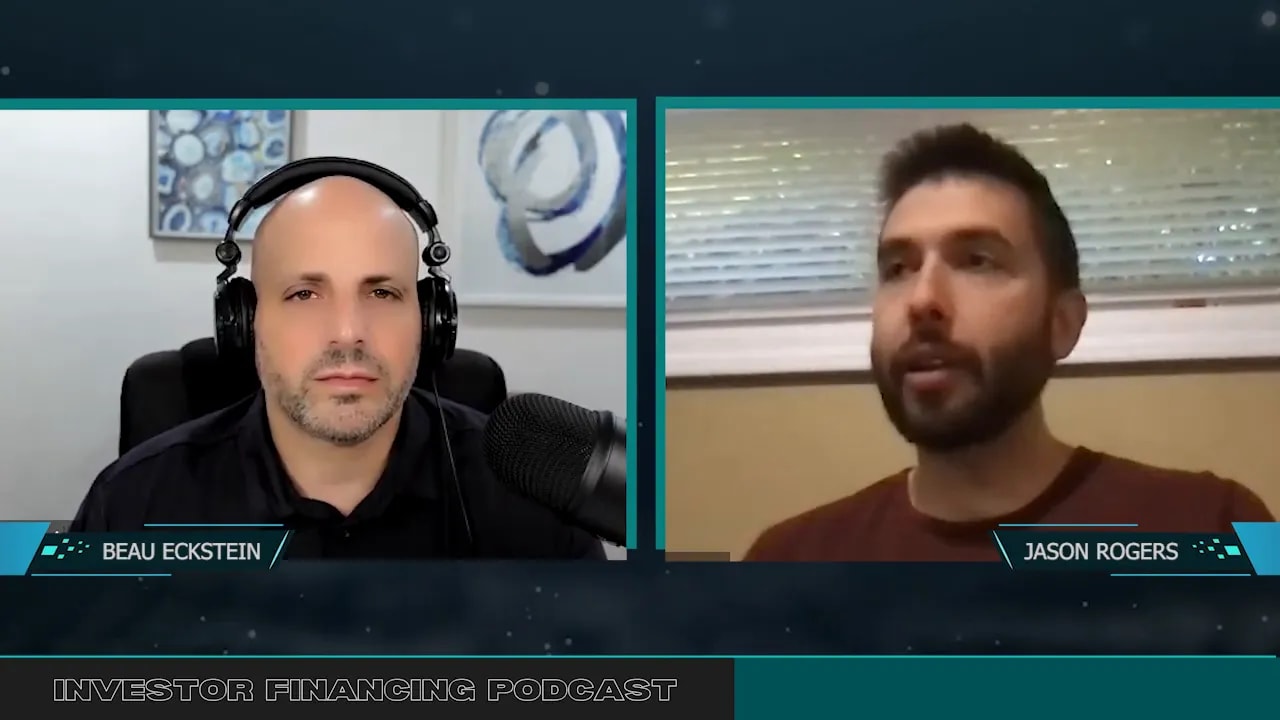
In a conversation with Jason Rogers, majority owner and managing director of a portfolio in the real estate and utility sector (through his Investment Group), the message is consistent: building businesses is less about “getting rich quick” and more about learning fundamentals, managing risk, and being resilient enough to take a few punches along the way.

Jason’s path started like a lot of people’s paths do, with interest in entrepreneurship, a search for an industry that would always have demand, and the willingness to do the hard work while figuring out the financing. He began with a mobile home park and storage units, then moved into service-based utility businesses like plumbing and AC. Along the way, he learned what lenders care about, what you need to verify in a deal, and how to structure acquisitions so you are not betting your future on hope.
Why Business Acquisition Attracts People Who Want Freedom From a W-2
Most people do not mind working hard. They mind working for someone else. Jason framed business acquisition as a way to build something that can support your lifestyle instead of controlling it.
He also pointed to a major structural tailwind: millions of business owners are nearing retirement. Many of those owners will either sell, hand the business to a key employee, or exit because time becomes more valuable than continuing to operate. That creates opportunity, and it creates seller motivation.
But here is the best part: business acquisition can be less crowded than real estate investing because it intimidates many buyers. People understand houses. They feel unsure about profit margins, “add-backs,” and risk. When fewer people are competing, disciplined investors can find better deals and negotiate more effectively.
The mindset shift is important: you are not looking for a miracle. You are looking for a cash-flowing operation with a path to improvement, stability, and financing that fits the numbers.

Jason’s Entry Into the Game: Mobile Home Parks, Supply Constraints, and Using Other People’s Money
Jason’s story begins with entrepreneurial ambition rooted in watching his father run a roofing business. While his early online ventures did not make meaningful money, they gave him the experience of pursuing entrepreneurship without being trapped in a job.
Eventually, he stumbled into education about mergers and acquisitions and leverage finance. That is what pulled him in. The challenge intrigued him: acquiring cash-flowing assets using other people’s money.
He chose the manufactured housing and mobile home park space for two reasons:
- Affordable housing demand: it is unlikely to disappear.
- Supply constraints: zoning and new development are difficult, which caps supply while demand persists.
Jason drove around the Midwest, reviewing deals that often had management issues, low occupancy, or were in small, dying metros. Some of those red flags scared him. He knew he was not entering as an expert. He knew he would finance the acquisition and would need a learning curve to make it work.
Seller Financing Became the Path When Bank Requirements Were Too Tight
In one early deal in Nebraska (a small seven-figure transaction around just over a million dollars), Jason initially tried to finance through a bank. But he ran into a common lender issue: the financial statements did not align cleanly.
Lenders often want tidy books and tax returns to match. In his case, P&Ls and tax returns were not perfectly aligned. That mismatch reduced confidence.
So he pivoted. The deal flipped to a seller-financed structure, and he got it closed. More importantly, he took away a crucial lesson: the underwriting “power dynamic” can shift when you understand what the lender is struggling with and you can still perform as a buyer.
Learning Through Sweat: When You Cannot Hire Out, You Learn Faster
Jason was not just the buyer. For a time, he functioned as property manager and maintenance support because the deal cash flow did not adequately underwrite management costs. He was fixing AC units and plumbing systems himself. When he had to call service providers, it was expensive (he referenced $200 to $250 service calls in that phase), which made the economics obvious.
That experience became the bridge to utilities businesses. He realized the real opportunity was not just owning property. The opportunity was understanding the service layer and being able to professionalize it.
Refinancing Plans and the Reality of Interest Rate Timing
Jason did not claim everything went perfectly. He explained that he had a plan to clean up the property, stabilize it, increase rent, and then refinance around year three. But when “the whispers” of rising rates hit, he adapted.
The decision was to hold and ride out the current rate environment rather than refinance into worse terms. In other words, he treated refinancing as a tool, not a finish line.
This is one of those underappreciated skills in business and real estate acquisition: the ability to adjust when market conditions change. Your strategy should not be brittle.

Buying Service Businesses: How to Underwrite Without Getting Lost
Once Jason moved into utilities, the questions became more technical. How do you evaluate a plumbing or AC business quickly? What profit number matters? How do you avoid falling for bookkeeping games?
He gave a direct approach: lenders and investors should focus heavily on tax returns. It is “50% art, 50% science,” but he emphasized that it is harder to falsify tax returns than it is to manipulate QuickBooks-style numbers.
In Florida, he pointed out a practical starting place: line 21 on the tax return, which reflects net income.
Why Tax Returns Beat “Trust Me” Numbers
Jason stressed two reasons:
- Security and protection: you protect yourself by verifying what is real.
- Lender underwriting: lenders often underwrite based largely on tax returns.
If financials are inconsistent, it can block financing. And if you ignore that, you may buy something that looks profitable but cannot be financed (or cannot support debt once you take over).
A Rule of Thumb for Multiples (and Why Cash Flow Must Match the Price)
For smaller SBA-style business acquisitions (roughly businesses with about $1.5M to $5M in revenue), Jason described a rough framework:
- assume about 20% of revenue reaches the bottom line
- use that to estimate earnings
- these businesses often sell for about 3x to 4.5x earnings (noting that conditions can change)
The point is not the exact multiple. The point is the relationship: what you are willing to pay must match cash flow so you can pay yourself and the lender without stress.
Adjust for “Owner Pay” and Off-Book Reality
He emphasized that business owners sometimes compensate themselves in unusual ways, including through officer salary, or possibly not paying themselves appropriately. Underwriting has to reflect reality under new management.
He also highlighted a key principle that investors often get wrong:
Do not pay future debt based on prior cash flows. Pay based on what you expect the business to produce under your management.
In other words, underwriting is not just “plug the numbers.” It is modeling how the business will actually run once you take control.

Debt Service Coverage Ratio (DSCR): The Numbers That Decide Whether a Deal Is Safe
Jason’s underwriting workflow included building a spreadsheet model with his partner. The model helped calculate:
- debt costs
- free cash flow before debt service
- free cash flow after debt service
- the Debt Service Coverage Ratio (DSCR)
He shared comfort thresholds:
- DSCR around 1.6 to 1.75+ for these types of acquisitions
- if DSCR falls below 1.5, the deal becomes riskier
- he personally likes to see closer to 2.0 to be comfortable because business acquisitions can be more volatile than real estate
The DSCR is essentially your margin of safety. If cash flow does not reliably cover the debt, you are not investing. You are gambling.
Depreciation: Not Always the Cash Flow You Think It Is
Jason discussed depreciation in an honest way. Depreciation may reduce taxable income on paper, but it does not magically remove the need for reinvestment.
His view: depreciation is often “malarkey” in underwriting because the business still needs to replace trucks, equipment, and hard assets to continue producing revenue. In his framework, he is not a fan of counting depreciation as cash flow.
That is a philosophy question, not a universal rule. But it ties directly to his larger goal: estimate what you can truly take to the bottom without future tax or future “lien” issues.
Creative Financing: How Low-Money-Down Deal Structures Can Work
One of the most practical segments centered on how acquisitions can be financed without requiring everyone to bring huge down payments.
Jason pointed to SBA as a key mechanism. In his framing, you can sometimes obtain 85% to 90% of total acquisition project costs through SBA financing. The seller can carry back a portion as well, potentially 10% to 5%, reducing what you need from your pocket.
He also emphasized creativity in how that equity requirement is sourced, including the possibility that the equity portion does not necessarily all have to come from your own personal funds (for example, a gift or partner arrangement). He also noted that sellers often want to structure deals in ways that make financing workable.
That is the “art” part of investing. Underwriting gives you structure. Creative financing gives you execution leverage.

Roll-Ups: Turning Small Deals Into a Scalable Platform
Jason’s long-term ambition includes professional roll-ups of trades in the utilities world. He explained roll-ups in plain terms: buy multiple businesses in the same industry, consolidate back-office functions like HR, accounting, marketing, and recruiting, and then unify branding and operating procedures.
He compared the concept to past roll-ups like Blockbuster, while also noting that big players often ignore smaller businesses because they are too small for their acquisition appetite.
That creates room for investors like him to do “five, eight, or ten” smaller acquisitions, build a standardized platform, and eventually become attractive to institutional buyers who will pay premiums.
In his long-term vision, you can create a platform that is valuable enough to sell later. Or you can keep it indefinitely. Either way, you are building something with staying power.
How to Find the Right Deal: Two Filters That Matter
If you only take away one framework from Jason’s guidance, make it this: when selecting acquisitions, ask two core questions.
- Do you have business savvy or are you willing to build it? He noted that learning often comes through hard lessons, but you pay more indirectly if you try to skip fundamentals.
- Will the business stand the test of time? He argued you want services that remain needed irrespective of market cycles.
In utilities and similar trade categories, the demand is often tied to real-world necessity, not discretionary spending. That is the “tailwind” he looks for.
Resources and a Realistic Plan for Getting Started
Jason recommended using free educational content and mentors. He mentioned that his own YouTube channel contains “hundreds and hundreds” of free items, and he encouraged people to seek serious education that covers fundamentals like financing, risk, underwriting, and deal structure.
He also offered a healthy skepticism test: when learning, listen for fundamentals, not just hype. If someone avoids the nitty-gritty, it may not be the right guidance for your goals.
Finally, he emphasized that action beats theory. Like flipping a house, you need to work through real details, make calls, run numbers, and verify assumptions. Investing is not only learning. It is executing learning.

Photo by Blake Wisz on Unsplash
Bottom Line: Wealth Building Starts With Fundamentals Plus Resilience
Jason’s message is simple and practical. Business acquisition does not require magic. It requires:
- the willingness to work and learn
- the discipline to verify profit using tax returns
- a model that connects price to cash flow
- safe debt metrics like DSCR
- creative financing structures that reduce down payment pressure
- and resilience when rates, lenders, or timelines do not go your way
If you want out of a W-2 job, the opportunity is real. Business acquisition is intimidating, but that intimidation is also why competition can be lower. Put in the work, build the underwriting muscle, and use financing tools strategically. That is how you turn interest into ownership and ownership into legacy.
Follow and Next Steps
If you want to go deeper, Jason suggested starting with his YouTube channel for long-form deal education and learning materials. He also mentioned his website and social channels, primarily to connect around longer conversations and deeper deal discussions.
Business Ownership Coach | Investor Financing Podcast style investing is not about shortcuts. It is about building skills, applying them to real deals, and staying consistent long enough to compound results.
Getting Started With SBA Financing
If you’re planning a low-money-down acquisition, you’ll likely spend time understanding SBA options (loan structure, eligibility, and what lenders look for). A good next step is to review the SBA loan intake information here: SBA loans.
When you apply or speak with a lender, come prepared with your underwriting model basics—especially the revenue/earnings picture, tax returns, and how your financing plan ties to cash flow (including DSCR).