
As a Business Ownership Coach | Investor Financing Podcast, the simplest habit that separates high performers from everyone else is choosing a few high-impact actions and completing them early. I call these “small bigs” — small activities with big leverage. When you habitually knock out your small bigs, you create momentum, free mental bandwidth, and often generate what feels like an entire extra day.
The small bigs mindset

Photo by David Kristianto on Unsplash
Small bigs are intentionally chosen tasks that produce outsized results. They are not busywork. They are not every item on your to-do list. They are the 2 or 3 actions that, when completed, materially change the trajectory of your day or business.
Pick your small bigs the night before. That simple ritual forces clarity and reduces friction in the morning. Instead of inspecting the list and wondering where to start, you wake up and execute. That momentum compounds.
Why the night-before decision matters
When the decision of “what matters most” is postponed until morning, decision fatigue and distractions win. Choosing small bigs the night before converts willpower into action. It transforms mornings from reactive to proactive. By the time most people are catching up, you are already winning your day.

Design your morning to win the day
A high-leverage morning routine is the accelerator for small bigs. Keep the routine simple and non-negotiable:
- Movement: A short workout clears the mind and increases focus.
- Reflection: Use 5–10 minutes to review the small bigs you set the night before.
- Execution window: Block the first focused block (for example, until 11:00 a.m.) to complete those 2–3 tasks.
If you complete your three small bigs by mid-morning, you have already “won the freaking day.” That phrase captures the psychological lift of accomplishing what truly matters early.
Examples of small bigs

Photo by Ambre Estève on Unsplash
- Reach out to two potential investors with a tailored short message.
- Finalize the pitch deck and send it for feedback.
- Close a lead or make a follow-up call to a top prospect.
- Set up a critical meeting or secure a funding pre-approval.
- Draft the financial summary that enables a funding decision.
Build two days into one

Photo by Ambre Estève on Unsplash
When you start early and focus on small bigs, you effectively create “two days” in a single calendar day. The morning becomes Day One and the afternoon becomes Day Two. That mental framing increases productivity because you treat the afternoon like a fresh sprint instead of a decline.
The result: you consistently outwork, outsmart, and outperform the majority. Time leverage is not a trick. It is a disciplined sequence of decision, action, and momentum.
How to make the second-day sprint real
- Take a true pause after lunch — 20 to 40 minutes to reset.
- Reassess a short list of afternoon small bigs (1–2 items).
- Start the afternoon with a high-value activity, not administrative tasks.
- Protect the end of the day with a brief review and plan for tomorrow.

Applying small bigs to attract investors
If your goal is fundraising, your small bigs should directly reduce friction in the investor decision-making process. Practical examples:
- Refine the executive summary so an investor can grasp the opportunity in under two minutes.
- Send personalized outreach to three investors, each with a single clear next step.
- Prepare a one-page data sheet that answers top diligence questions in bullet form.
- Secure a warm introduction using a short, high-value message from a mutual contact.
- Schedule a prioritized follow-up on a specific date to keep momentum.
The purpose is to remove inertia. Investors respond to clarity and speed. When your early-day small bigs create that clarity, you dramatically increase the odds of positive outcomes.
Practical weekly habit
Make the night-before planning a weekly habit review. Each Sunday night identify three core small bigs for the week and then choose daily small bigs the night before. This reduces variance and keeps your compass aligned with long-term goals.
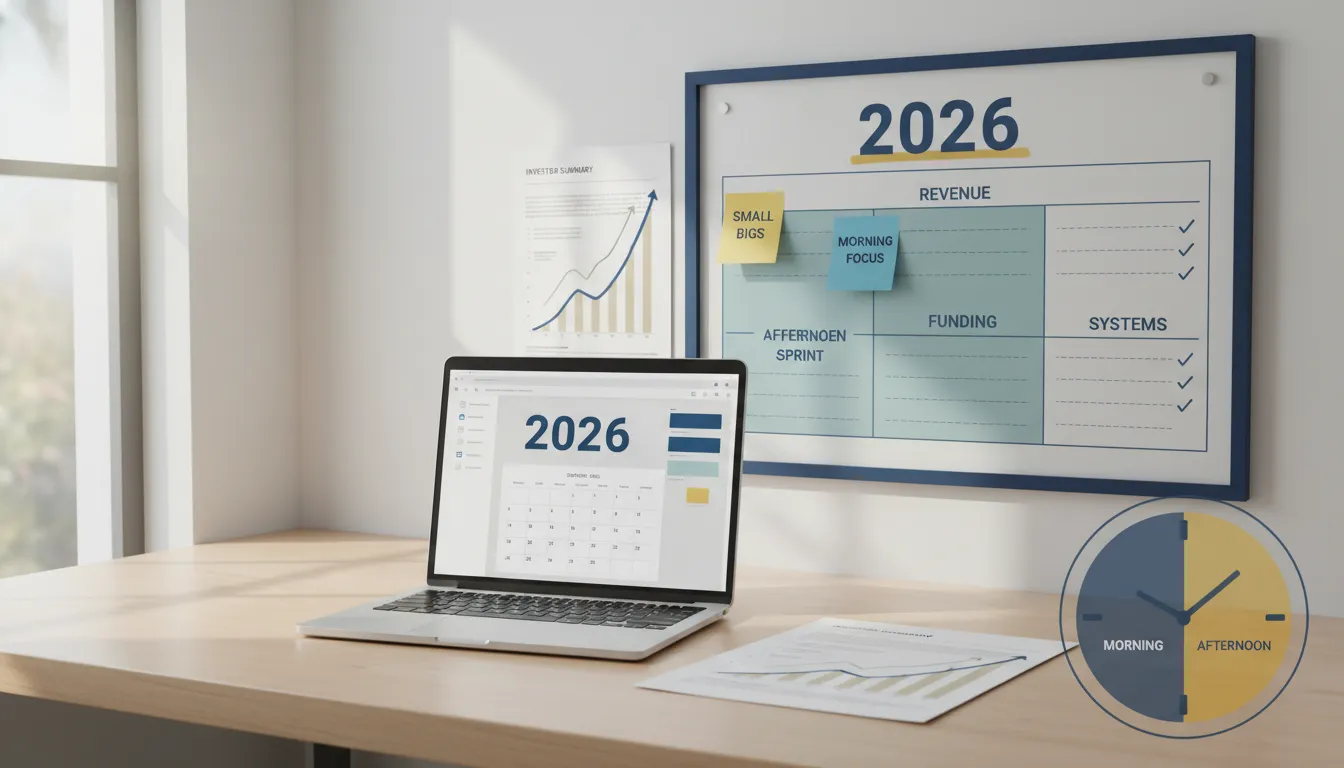
Focus areas for 2026
In the year ahead, the winners will be the ones who combine time leverage with clarity. That means:
- Prioritizing small bigs that map directly to revenue, funding, or scalable systems.
- Protecting focus windows and treating them like nonnegotiable meetings with yourself.
- Measuring outcomes so you know which small bigs deliver repeatable gains.
A simple daily ritual — plan the night before, complete morning small bigs, and treat the afternoon as a second day — will build the compound advantage you need.
Checklist: Tonight’s small bigs
- Write down 2–3 small bigs for tomorrow
- Schedule an uninterrupted block until those items are done
- Prepare any materials needed to remove start-up friction
- Set an alarm that gives you 60–90 minutes of quiet morning time
The practice is simple but not easy. It requires consistency. Over time, the compound effect of repeated small bigs is what scales a business. Keep your days intentional, and the growth will follow.