
Business Ownership Coach | Investor Financing Podcast—if that phrase sounds like the road map you need, here’s a practical strategy to acquire an income-producing RV park with surprisingly little cash up front. Many investors assume commercial real estate acquisition requires huge down payments or complicated syndication. In reality, SBA 7(a) and USDA financing make it possible to buy, renovate, and operate an RV park with as little as 10 percent down, plus the working capital to get the business humming.
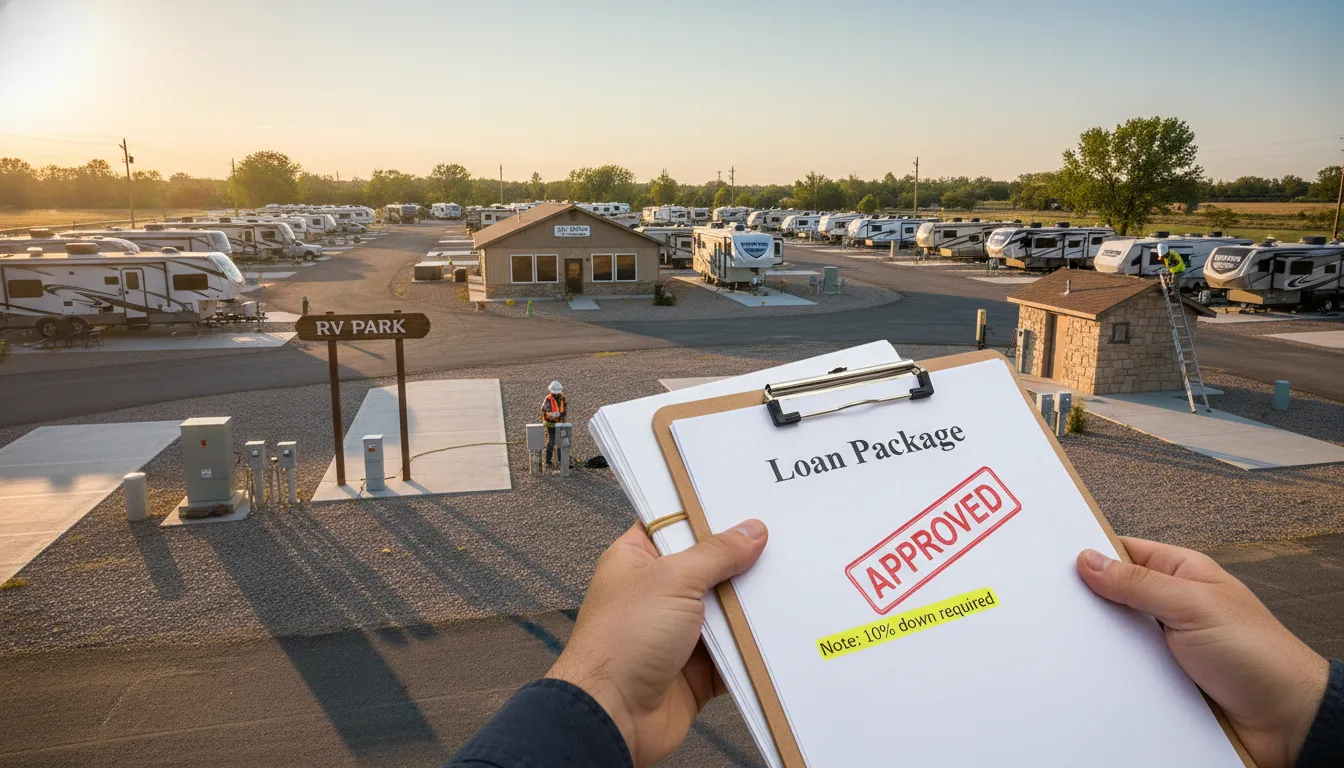
Why SBA 7(a) and USDA Loans Work for RV Parks
SBA 7(a) and USDA business loans are designed to help entrepreneurs acquire existing businesses. That makes them a terrific fit for RV park acquisitions. These programs can wrap acquisition costs, eligible improvements, renovations, and even working capital into a single loan package. For an RV park that’s already generating positive cash flow, that means you can leverage the park’s income to support the loan while preserving most of your liquidity.
One of the biggest misconceptions is that government-backed financing is rigid or only for small mom-and-pop operations. In fact, SBA 7(a) lenders and USDA business programs will underwrite the revenue, expenses, and the business plan for an RV park just like any other operating business. That underwriting allows for lower down payments—often around 10 percent—when the numbers make sense.
Business Ownership Coach | Investor Financing Podcast strategies emphasize structure: you need an acquisition plan, an improvement budget, and credible pro forma cash flow to present to lenders.
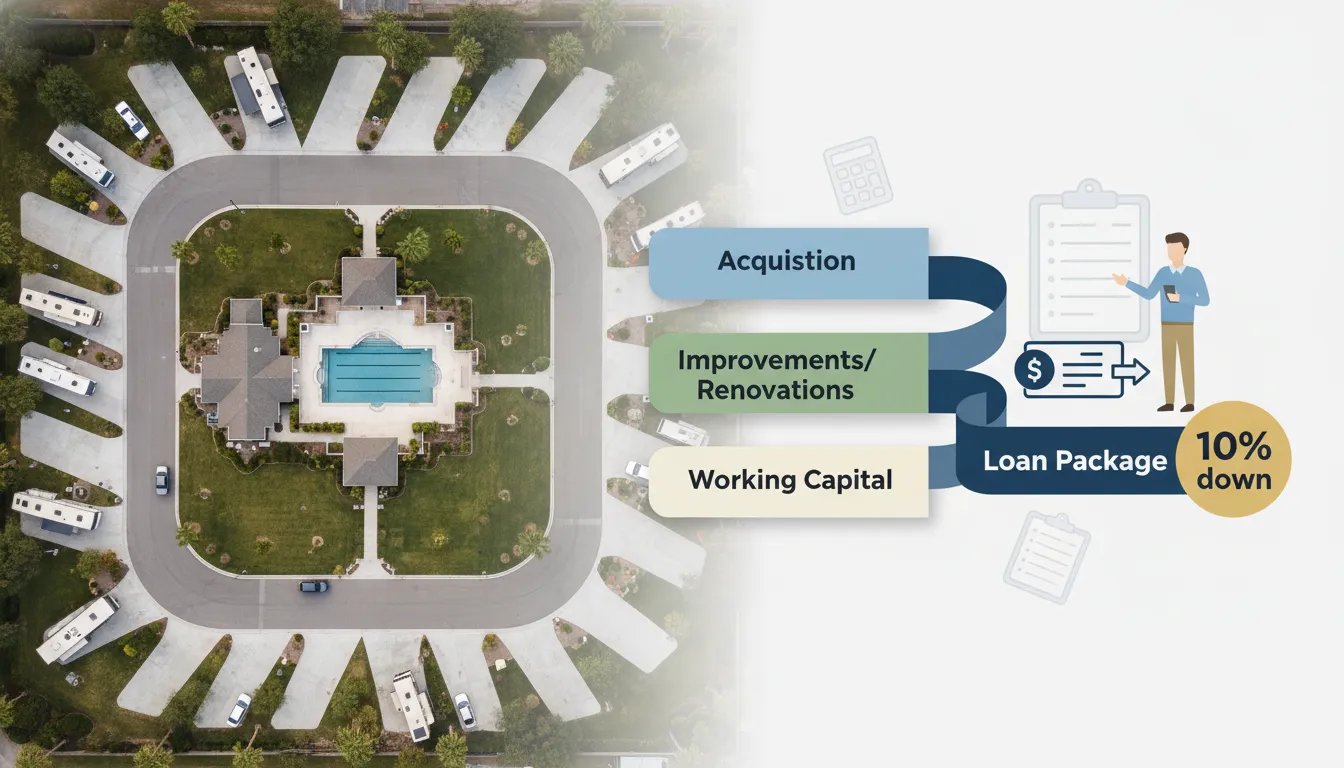
How the Financing Is Structured
SBA 7(a) loans are flexible. They can include:
- Acquisition—purchase price for the land, infrastructure, and business assets.
- Improvements and renovations—upgrades to pads, utilities, restrooms, laundry, or clubhouse.
- Working capital—seasonal cash needs, initial operating shortfalls, or marketing to grow occupancy.
USDA business and industry loans operate similarly in eligible rural areas and can also be structured to support full acquisition plus improvements. Lenders will evaluate historical income, site condition, management experience, and pro forma projections. With a well-prepared package you can roll renovations into the loan rather than paying cash out of pocket.
One more reminder from the Business Ownership Coach | Investor Financing Podcast approach: have detailed line-item budgets for renovations and clearly define the timeline for improvements. Lenders will want to see conservative projections and contingency planning.

What Lenders Look For
Lenders focus on cash flow, collateral, and management. For RV parks that means:
- Stabilized or demonstrable cash flow. Historical occupancy and rate data matter.
- Realistic expense assumptions. Include utilities, maintenance, payroll, and reserve items.
- Market analysis. Show demand drivers—seasonal tourism, nearby attractions, or long-term regional demand.
- Management plan. Lenders prefer borrowers with operating experience or a qualified management team.
- Collateral and valuation. Land and improvements serve as collateral; appraisals and environmental reports may be required.
Presenting a clear plan that ties purchase price to current income and projected upside will move your application forward. The Business Ownership Coach | Investor Financing Podcast methodology is to build a lender-friendly pro forma that proves the business can comfortably service the debt while delivering owner cash flow.
Typical Deal Economics: Real Numbers
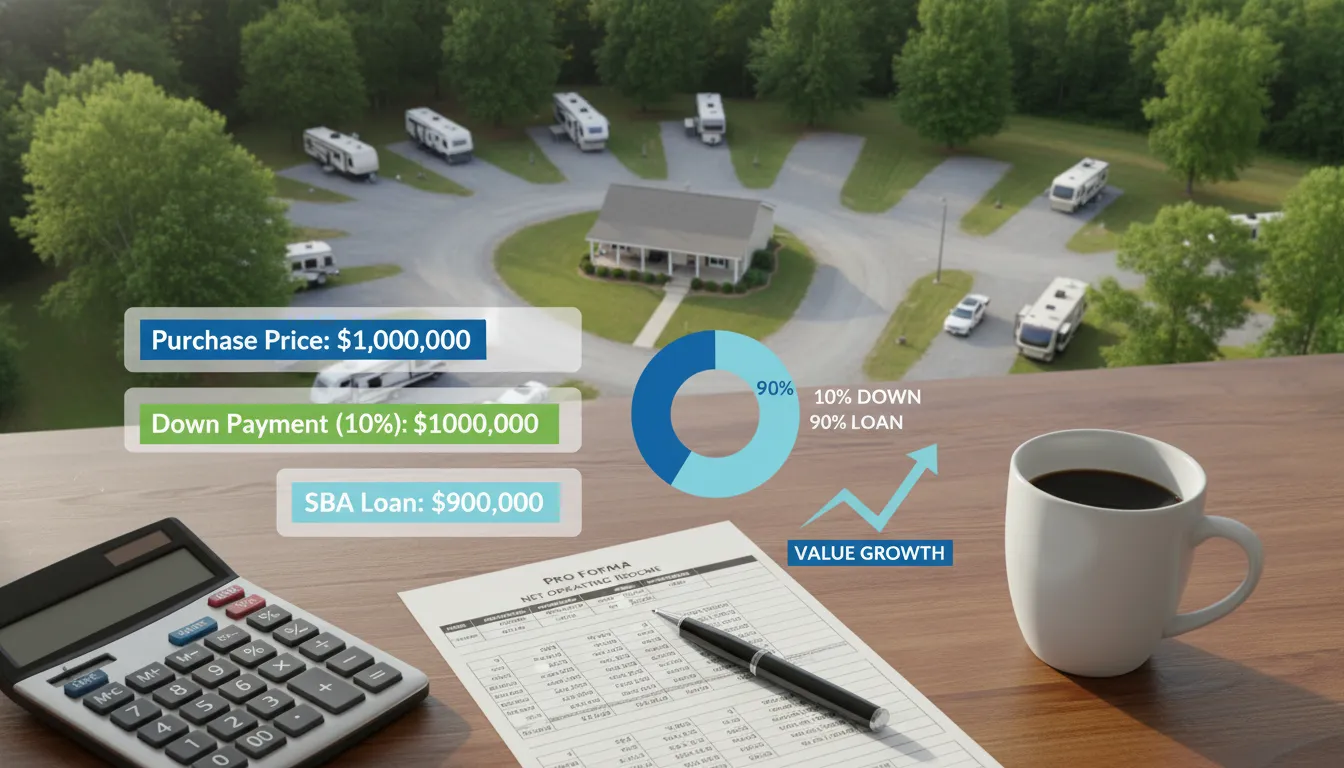
Here’s a simplified example to illustrate how 10 percent down can work.
- Purchase price: $1,000,000
- Down payment (10 percent): $100,000
- SBA 7(a) loan amount: $900,000 (covers acquisition + eligible renovations + some working capital)
- Annual net operating income after debt service: depends on rates and amortization, but many parks produce strong owner cash flow once stabilized
Because the loan can include renovations and working capital, you don’t drain your reserves on immediate capital projects. Instead you can invest strategically to increase occupancy and rates, which improves debt service coverage and long-term returns.
From the perspective of a Business Ownership Coach | Investor Financing Podcast investor, the key is to model conservative occupancy and rate gains and stress-test the numbers under multiple scenarios. If the debt service coverage holds up under a down-cycle, the deal is structurally sound.
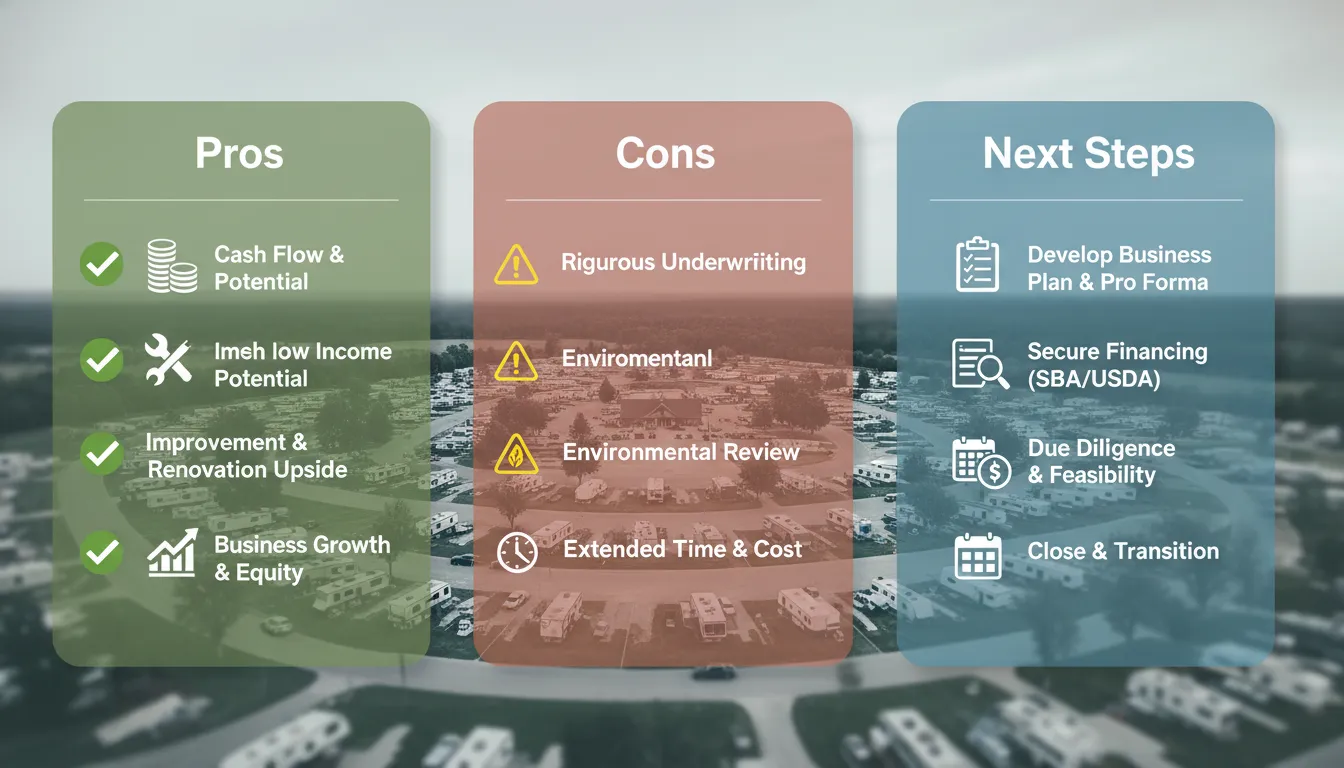
Pros, Cons, and Practical Next Steps
Pros:
- Low down payment relative to typical commercial deals
- Financing for renovations and working capital in one package
- Ability to buy cash-flowing assets and scale portfolio faster
Cons and caveats:
- Underwriting is rigorous—prepare documentation and conservative projections
- Some property types may require environmental or appraisal work that adds time and cost
- Not every RV park will qualify; strong historical performance or a credible turnaround plan helps
Practical next steps:
- Assemble historical financials, occupancy data, and a basic improvement budget.
- Create conservative pro forma models showing debt service coverage and owner returns.
- Speak with lenders who specialize in SBA 7(a) and USDA business lending for hospitality or recreational properties.
- Plan for due diligence items: environmental reports, appraisal, and proof of business assets included in the sale.
If you want to structure a deal properly, have realistic numbers, and present a lender-ready package, follow the same disciplined approach taught by the Business Ownership Coach | Investor Financing Podcast. Treat the acquisition like buying a business—not just buying land—because income and operations determine financing options.
Closing Thoughts
SBA 7(a) and USDA loans are powerful tools for acquiring RV parks with minimal upfront capital. They allow the acquisition, renovations, and working capital to be bundled into a single loan, which can accelerate growth and preserve cash for improvements. With careful underwriting, conservative projections, and a solid management plan, buying an RV park with 10 percent down is a realistic path to owning a profitable, cash-flowing business.
Use the framework from the Business Ownership Coach | Investor Financing Podcast to prepare your package, and prioritize lender communication early. The better your data and the clearer your plan, the faster you’ll move from opportunity to ownership.