
Business Ownership Coach | Investor Financing Podcast isn’t just a tagline — it’s the mindset that flips slow, disciplined saving into a faster path to wealth: owning cash flowing businesses. Most people are taught to save diligently, invest in index funds, and wait decades. That works, but it is slow. There’s an alternative many successful acquirers use to accelerate wealth creation: buying a profitable small business with smart financing so the business pays for itself and begins building equity immediately.

The scary math: saving $2,000 a month for 25 years
Let’s start with a simple scenario everyone can relate to. You save $2,000 every month and earn a steady 5 percent annual return. After 25 years, your nest egg will be roughly $1.19 million. That number sounds impressive until you look closer.
Twenty-five years is a long time. Life changes. Markets wobble. Inflation erodes purchasing power. More importantly, time is the currency most people don’t get back. The math itself isn’t scary — it’s honest. Saving works and compound interest is powerful. The reality that makes people uncomfortable is how long it takes to build meaningful wealth with savings alone.

Why owning a business accelerates wealth
There’s a straightforward reason buying a profitable business can outpace saving: leverage. When you buy an established, cash flowing business, the enterprise itself generates income that can cover debt service, operating expenses, and provide owner compensation. Using financing, particularly Small Business Administration (SBA) loans, lets you acquire that cash flow with a relatively small down payment.
Compare two paths:
- Save and invest: You provide the capital upfront and wait for compound returns over decades.
- Buy and operate: You acquire a business that already produces cash flow, use financing to amplify your buying power, and let the business pay down debt while you build equity and profit.
Owning compresses the timeline. Instead of waiting 25 years to hit a million-plus, an appropriately structured acquisition can begin creating meaningful owner equity within months or a few years.

How SBA financing makes acquisition possible with only 10% down
SBA loans are one of the most common tools for acquiring small businesses because they lower the cash barrier to entry. With typical SBA structures, buyers can put down as little as 10 percent of the purchase price and borrow the rest. That makes high-quality businesses accessible to buyers who don’t have hundreds of thousands in liquid capital.
Key features that matter:
- Low down payment — reduces the amount of personal capital required.
- Long amortization — spreads payments out to improve monthly cash flow.
- Reasonable interest rates — often competitive compared to alternative financing.
- Bank underwriting — lenders evaluate historical cash flow to ensure the business can support the loan.
Because the business generates income from day one, it can often cover loan payments. That means the buyer doesn’t need to divert large amounts of personal savings to accelerate equity building — the company does the heavy lifting.
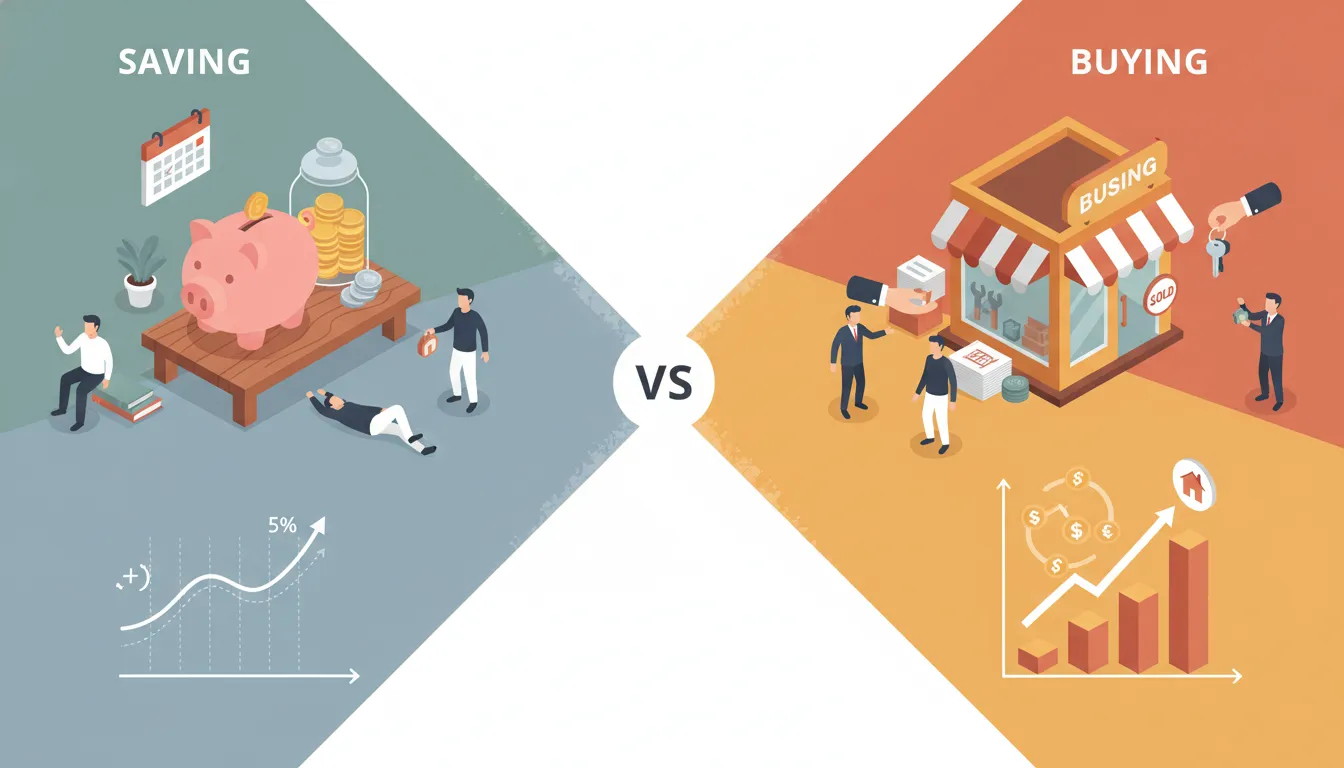
A simple comparison: saving vs buying
Let’s put the two approaches side by side using rough, illustrative math:
- Save $2,000 per month at 5% for 25 years — You reach approximately $1.19 million. Predictable, low effort, but slow.
- Buy a $500,000 profitable business with 10% down using SBA — Your cash outlay is $50,000. The business already has operating profits that can service the loan. Over several years the loan principal decreases, and owner equity grows faster than the passive savings route. You also get potential tax advantages, opportunities to increase EBITDA, and optional strategic exits.
Numbers will vary by industry, deal structure, and execution. The point is not that one route is universally better; it is that ownership unlocks mechanisms savings cannot — cash flow, operational improvements, and forced paydown of leverage that compounds equity faster than putting money in the market.

What risks you need to understand
Owning a business is not risk free. Key considerations include:
- Operational risk — Some businesses require more hands-on management than others.
- Financial risk — Leverage amplifies returns and losses. If cash flow declines, loan payments become a heavier burden.
- Due diligence — Buying without thorough vetting of financials, customers, and contracts is dangerous.
- Transition risk — Replacing an owner, retaining staff, and maintaining client relationships can be difficult if not planned.
These risks are manageable with proper vetting, conservative underwriting, and a plan for stabilization and growth. The people who win with acquisitions are disciplined in their approach: they verify numbers, understand the business model, and have contingency plans.
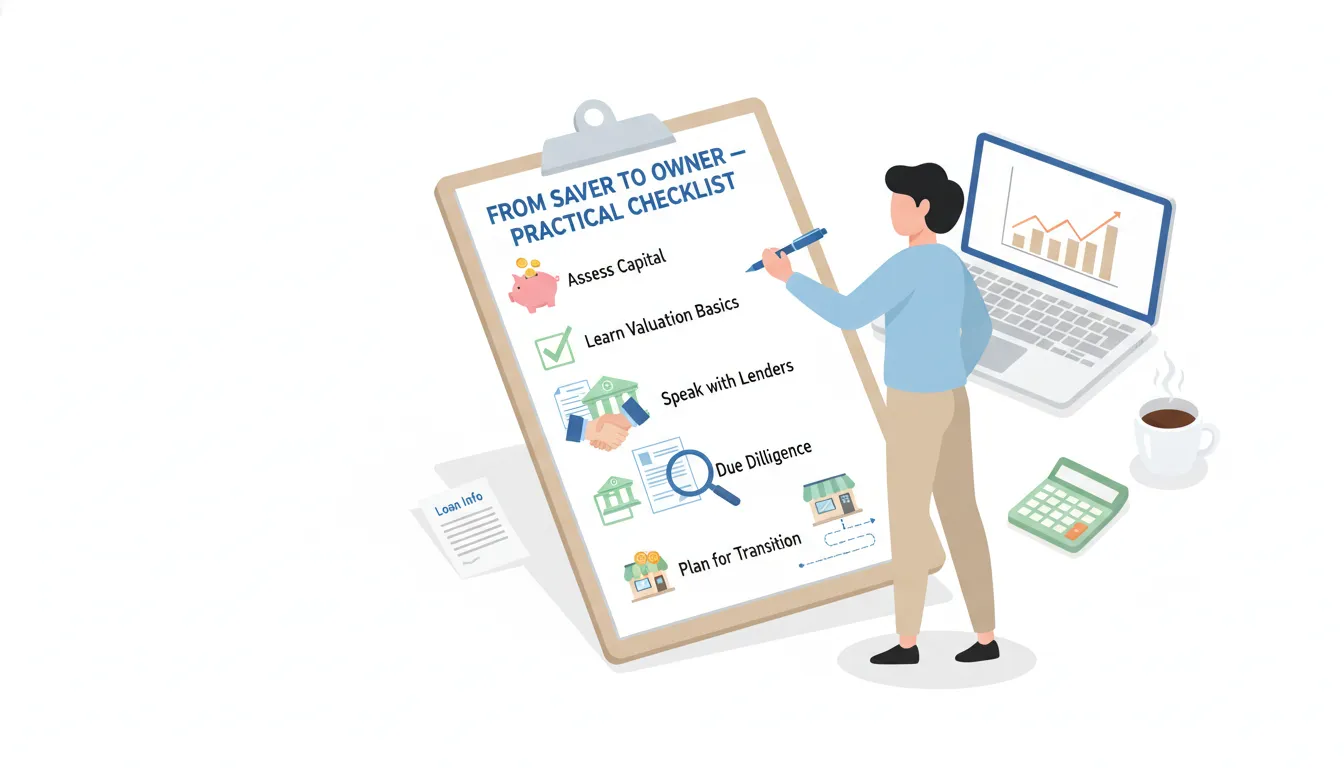
Practical checklist to move from saver to owner
If the owner path interests you, here are pragmatic steps to get started:
- Assess your capital — Know how much down payment you can provide and what financing you might qualify for.
- Learn valuation basics — Understand EBITDA, seller discretionary earnings, and typical multiples in your target industry.
- Speak with lending specialists — Early conversations with SBA-savvy lenders clarify how much you can finance and what documentation you need.
- Perform thorough due diligence — Review P&L statements, tax returns, customer concentration, and contracts.
- Plan for transition — Have a plan for owner involvement, staffing, and preserving key relationships after closing.
These steps convert possibility into an executable deal. With the right approach, the business itself can become the engine that de-risks your path to wealth by delivering immediate, measurable returns.
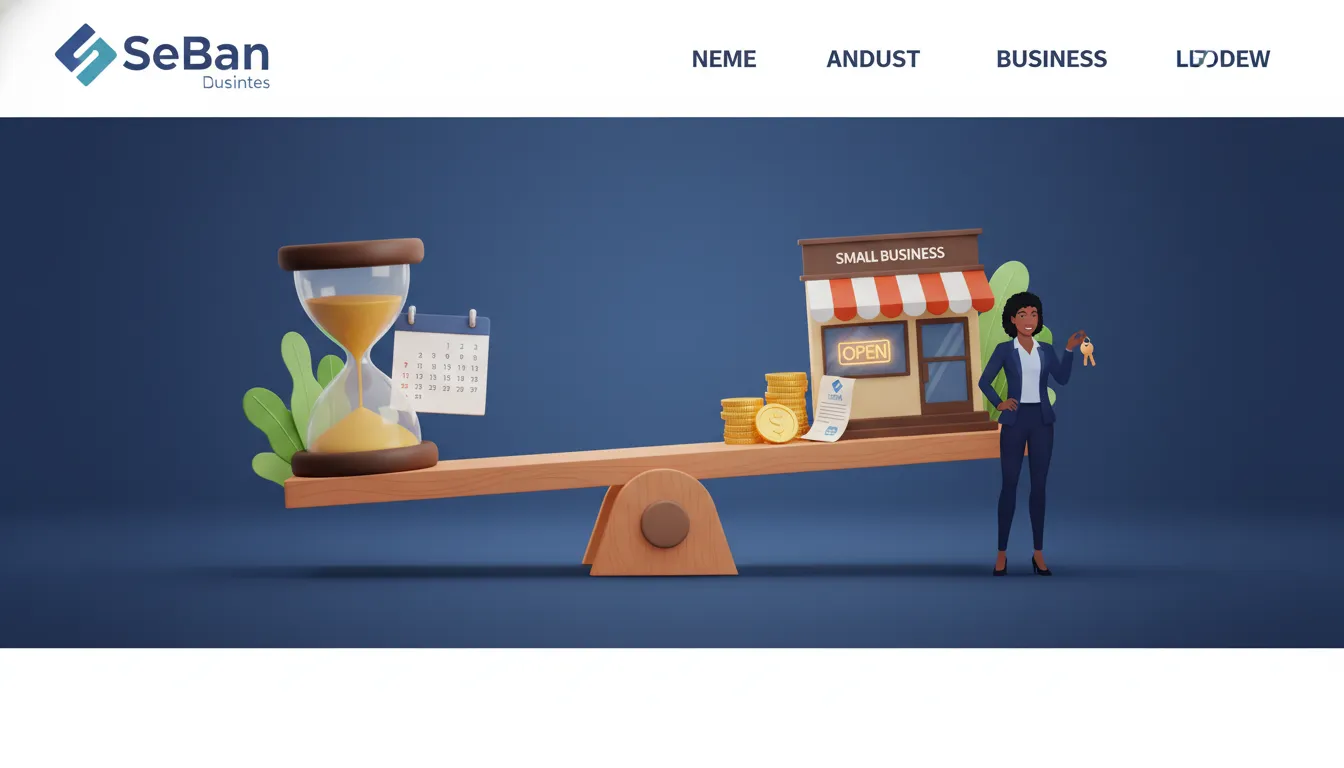
Real perspective: time, leverage, and ownership
Saving is noble and necessary. But understanding alternatives matters. The choice between hoarding cash for decades and strategically acquiring a business is not binary — many people blend both. Use savings to build optionality and use financing to capture businesses that produce predictable cash flow.
When you combine disciplined savings with targeted acquisitions, you create multiple engines of wealth: liquid investments and operating equity. That combination is what many experienced investors and a Business Ownership Coach | Investor Financing Podcast advocate because it balances safety and speed.
Final takeaways and next steps
Saving is slow, owning is fast. If your aim is to accelerate net worth and you are willing to do the work of acquisition and ownership, an SBA-backed purchase of a profitable business can be transformative. It lets you leverage other people’s cash and the business’s cash flow to pay down debt, grow equity, and potentially scale value quicker than savings alone.
For those ready to explore this path, start with education and conversations: speak with lenders, review business listings, and get comfortable with financial statements. The faster route to wealth requires intentionality, but it also rewards decisiveness.