
Business Ownership Coach | Investor Financing Podcast readers: if you are thinking about franchise ownership that scales without the overhead of a storefront, this model deserves your attention. A bundled home services franchise has carved out a unique niche by packaging routine, legally important maintenance into a single, repeatable offering. The result is predictable revenue, low startup capital, and a playbook you can replicate across territories.

Photo by Guillaume Didelet on Unsplash
What is the bundled home service model?
This model groups 15 to 20 maintenance tasks into a standardized service package. Think of tasks like changing air filters, draining water heaters, gutter cleaning, and power washing. These are services that keep houses safe, maintain property value, and—critically—help landlords and managers document compliance for liability protection.
“It’s like the Jiffy Lube of home services.”
The beauty is simplicity: none of the tasks require specialty contracting licenses or permits. That lowers barriers to entry and accelerates the pace at which a territory can be staffed and monetized.
Origin story: solving a legal and operational pain
This concept began when an investor and corporate attorney repeatedly saw landlords get dragged into lawsuits for neglected maintenance items like non-functioning smoke detectors or clogged gutters. Instead of accepting the status quo, the founder created a program to document routine maintenance and protect property owners from legal exposure.
That legal-first origin explains why the program focuses not just on performing work but on documenting it. Photos and digital records are part of every job, turning maintenance into a defensible asset for property owners and managers.
Why this model is highly scalable and low cost
Two features make growth straightforward:
- No brick-and-mortar required. Operations start from home and deploy from branded vans equipped with standardized tools and inventory.
- Simple labor profile. Technicians only need to be handy; most skills are trainable on site or during initial onboarding.
Typical startup begins with one van and two technicians. As demand grows, add a van and two more technicians, then institutionalize a lead tech to manage day-to-day operations. Overhead stays low because there is no storefront lease, utility bill, or large staff payroll in the beginning.
Recurring revenue through property managers and real estate partnerships

Photo by Annie Gray on Unsplash
Recurring revenue is the backbone of this franchise model. Corporate support typically helps new franchisees sign initial contracts with local property managers—each manager often oversees hundreds of doors.
Maintenance contracts are scheduled quarterly or biannually and are logged with photos for records. That creates a steady revenue stream and high client retention because landlords and property managers prefer predictable, outsourced solutions that protect them legally.
Beyond rentals, there are two other high-value verticals:
- Real estate agents and listing certifications. Partnered programs certify homes as sale-ready by confirming maintenance tasks have been completed.
- Commercial and facilities work. Stadiums, retail centers, and commercial properties generate larger project-based tickets for power washing and exterior maintenance.
Who is the ideal owner?

Photo by Annie Gray on Unsplash
This is not a “guy-in-a-truck” opportunity. The best owner is an executive operator—someone who can absorb the systems, hire and develop technicians, and build key relationships with property managers and commercial clients.
Key owner traits:
- Comfort managing people and contractors
- Ability to analyze simple KPIs and unit economics
- Sales orientation for B2B relationships
Start as an owner-operator to learn the service delivery, then transition to a management role as you add trucks and territories.
Support, onboarding, and the growth playbook

Photo by Annie Gray on Unsplash
Franchisees get comprehensive onboarding:
- Call centers and lead generation
- Website setup and marketing materials
- Truck equipment and technician training
- Market introductions to property managers
That A-to-Z support shortens the ramp from launch to profitability. Once you understand unit economics—how much revenue a single truck can generate and the break-even point for a second truck—you can replicate the formula across adjacent territories.
Startup costs, risk profile, and how it compares to traditional franchises

Photo by Annie Gray on Unsplash
Compared with franchises that require a retail location, commercial kitchen, or licensed contractors, this model is lower risk for three reasons:
- Lower fixed monthly costs. No lease, fewer utilities, and minimal in-office staff.
- Faster time to revenue. Training and truck equipping are quick; you can start generating sales immediately.
- Licensing simplicity. Tasks are designed to avoid specialty contracting licenses or permit processes.
Because the service suite aggregates tasks, it is also cost efficient for customers—bundles are cheaper than buying each service separately—and that drives adoption among landlords and busy homeowners.
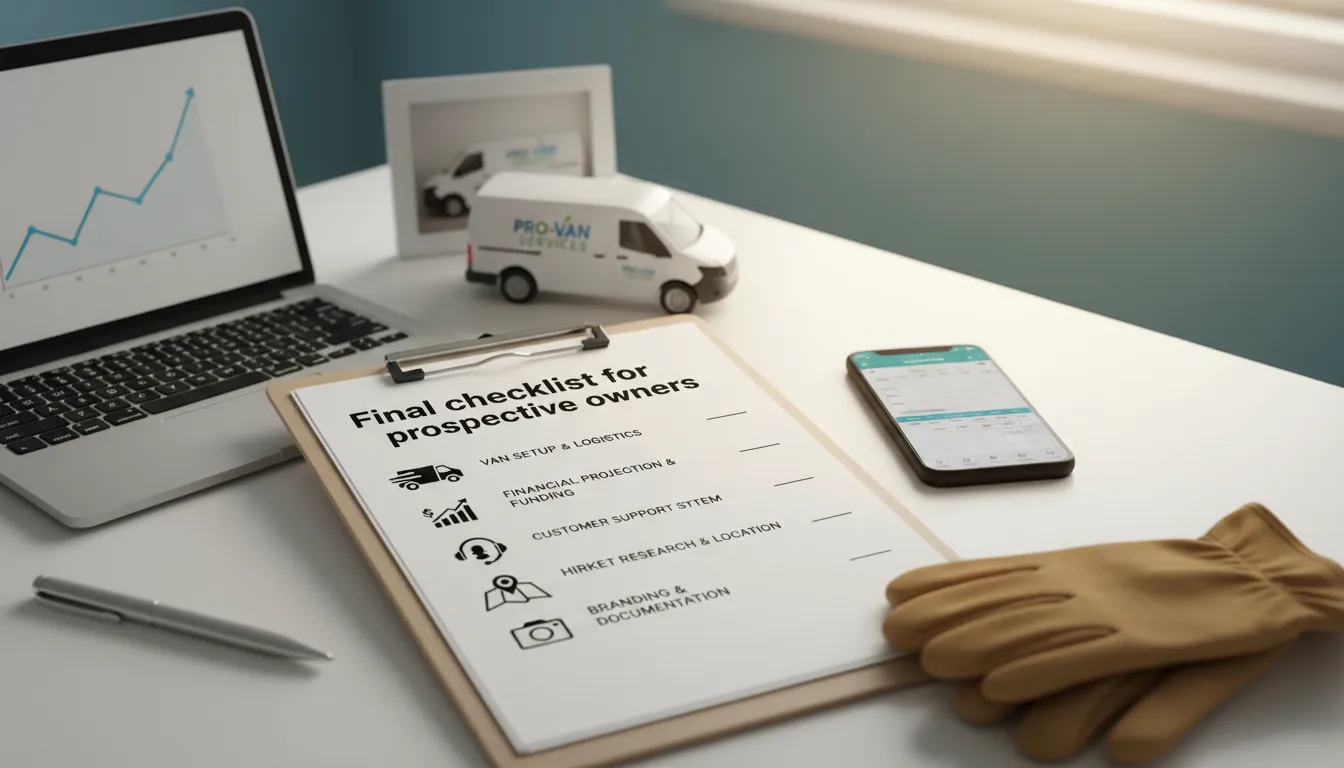
Final checklist for prospective owners
If you are evaluating this opportunity, use this checklist:
- Review unit economics for one van: projected revenue, gross margin, and breakeven timeline.
- Confirm corporate support levels for lead generation and market introductions.
- Plan the hiring cadence: technician hires, lead technician promotion, and ops manager timeline.
- Map target verticals in your market: property management density, affiliated brokerages, and commercial accounts.
- Ensure you understand documentation protocols and how service photos integrate into client records.
Keep in mind the phrase Business Ownership Coach | Investor Financing Podcast as you build your investment thesis. Repeatedly refer back to the unit economics and franchise support when comparing this option to other opportunities. That will keep your evaluation objective and financially grounded.
Bundled home services are a practical, recurring-revenue business that meets a real legal and maintenance need. With low startup capital, strong corporate playbooks, and multiple revenue verticals, this franchise model is a compelling path to scalable business ownership.