
Hi, I’m Beau Eckstein — franchise consultant, commercial mortgage advisor, and Business Ownership Coach | Investor Financing Podcast host. In this article I’ll walk you through why the restoration industry is one of the smartest bolt-on opportunities for contractors, plumbers, handymen, and service business owners. I’ll cover market size, the revenue streams you can add, how SBA financing supports franchise purchases, what franchise systems actually provide, licensing considerations, and a step-by-step path from discovery to your first profitable month. If you’ve been thinking about diversification, the guidance below from a Business Ownership Coach | Investor Financing Podcast perspective will help you evaluate whether a restoration franchise is right for you.
Market Overview: Why Restoration Is a Demand-Driven Industry

Photo by Mathias Reding on Unsplash
The restoration industry is sizable and growing: estimates put the market near $200 billion as of 2023, with a compound annual growth rate in the mid-single digits. Natural disasters, aging infrastructure, and everyday incidents like water leaks and fires keep demand steady. Unlike discretionary services, restoration is typically covered by insurance—making jobs larger-ticket and more consistent. From a Business Ownership Coach | Investor Financing Podcast standpoint, that predictability is attractive for contractors looking to add a recession-resistant revenue stream.
Why Restoration Is a Great Bolt-On for Contractors
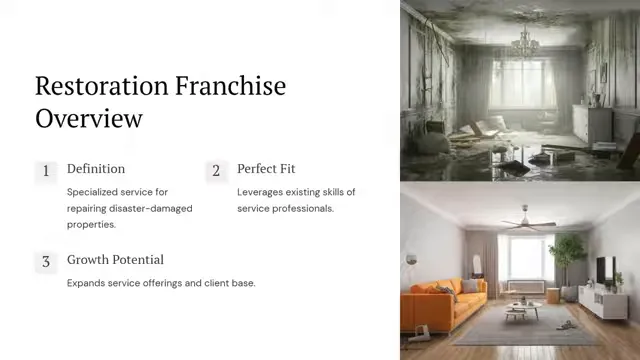
For many contractors, restoration is a logical extension. If you already have crews, a truck fleet, or relationships with insurance adjusters and property managers, restoration can feed your construction pipeline and increase average job sizes. Franchise models are especially helpful: they provide branding, marketing, call centers, lead generation, and proven systems so you can scale faster without learning everything from scratch. My role as a Business Ownership Coach | Investor Financing Podcast host is to help you evaluate how a franchise can turn your local reputation and trade skills into a turnkey business.
Core Revenue Streams in Restoration
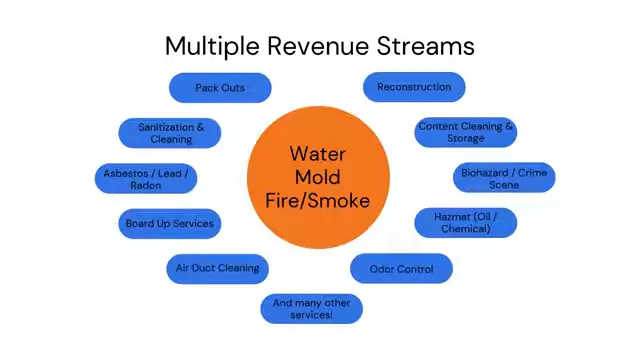
Restoration isn’t just one service. Key revenue streams include:
- Packout and content cleaning: Remove, sanitize, store, and return household contents—high-margin and insurance-covered.
- Water mitigation and structural drying: Often the bulk of restoration volume (water makes up roughly 30% of the market).
- Fire and smoke remediation: Complex jobs that command higher fees (about 20% of the market).
- Mold remediation, asbestos and lead abatement: Specialized, regulated services with strong pay.
- Biohazard and crime scene cleanup: A niche but lucrative segment requiring certification and careful processes.
- Board-up, odor control, duct cleaning, and Hazmat/oil cleanup: Add-on services that increase per-job revenue.
- Reconstruction/general contracting: When you can rebuild after mitigation, you capture more of the total project value.
Cross-selling these services—especially when you combine restoration with carpet/floor cleaning or commercial cleaning—creates steady revenue even when disaster work is intermittent.
Financing Your Restoration Franchise: SBA and Other Options
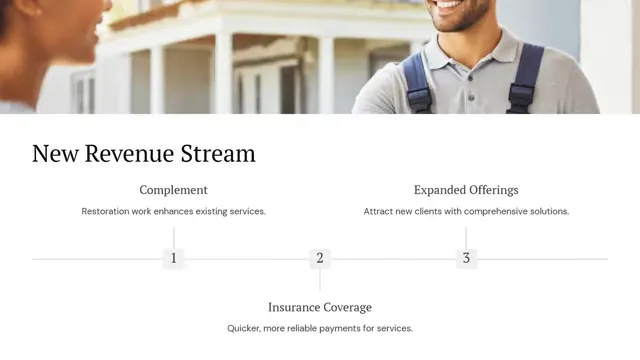
Financing is one of the most important parts of the equation. Most franchise startups fall into a common range of initial investment—commonly $150k–$250k for many home-service restoration models. Good news: SBA loans are an ideal fit. Typical benefits from a Business Ownership Coach | Investor Financing Podcast perspective:
- SBA guarantees allow banks to finance 80–90% of project costs; some lenders will go up to 90% for select startups, which can reduce out-of-pocket capital substantially.
- SBA Express loans (up to $150,000) close quickly and accept applicants with two years in business—even if net income shows losses—making them useful for working capital during ramp-up.
- The SBA 504 program supports larger real-estate purchases, often used when mature owners want to buy warehouses or facilities for scale.
- When acquiring a similar business (same NAICS code), roll-up strategies can enable up to 100% financing for expansions.
From an underwriting standpoint, banks require financial projections (monthly for years 1–2, annual for year 3) and may stress-test your revenue assumptions. As your Business Ownership Coach | Investor Financing Podcast advisor, I walk buyers through those projections and help craft realistic ramps to profitability with the right working capital cushion.
The Franchise Due Diligence Process
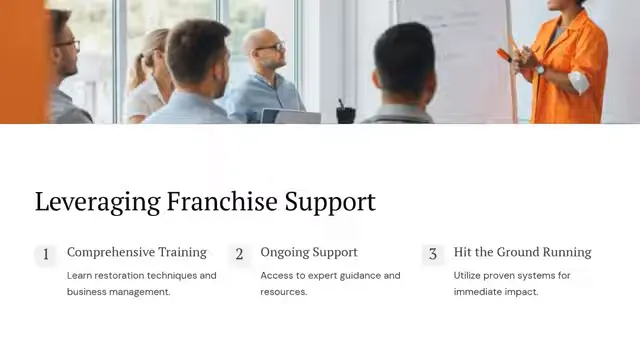
Buying into a franchise isn’t an impulse decision. The typical roadmap I follow with clients includes:
- Discovery call: Clarify your goals, current business situation, and financial capacity.
- Thesis & market check: I research franchise models that align with your objectives and perform territory availability checks.
- FDD review: The Franchise Disclosure Document lists costs (item 7) and historical earnings info (item 19).
- Validation: Speak to multiple franchise owners to understand ramp times, ticket sizes, and real unit economics.
- Financing prep: Build lender-ready projections (monthly year 1, year 2; annual year 3) and assemble SBA loan docs.
- Launch plan: Training, hiring a lead tech if running semi-absentee, and local marketing rollout.
Most businesses reach break-even and show profitable revenue within months four to six if projections and working capital are set realistically. A major failure mode I see is investors not following the franchisor playbook; the support systems exist, but you must implement them.
Marketing, Lead Generation, and Local Growth
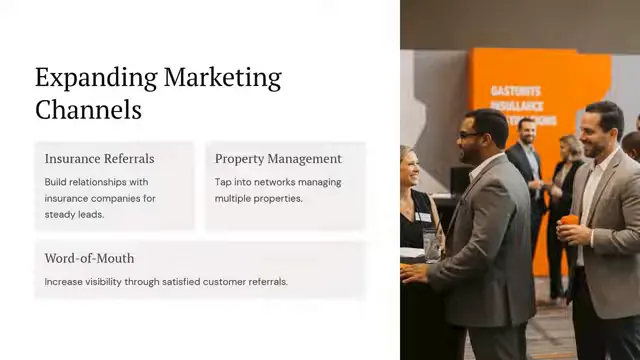
Franchises add value by centralizing costly functions: national digital marketing, pay-per-click management, brand reputation, and call centers for lead intake. But local marketing—door-knocking, business networking, property management relationships, and insurance adjuster introductions—remains crucial. The best approach is hybrid: let the brand drive inbound leads while you become the local face of the operation. If you want to scale faster, buying adjacent territories and adding trucks/techs is the common growth playbook.
Licensing, Certifications, and State Variations

Licensing requirements vary widely by state. Some markets are virtually unregulated for certain mitigation tasks, while others—California, Arizona, Nevada and similar—require contractor or specialty licenses. Franchises often provide pathways: master licenses, licensing partners, or guidance to get you compliant. As your Business Ownership Coach | Investor Financing Podcast guide, I recommend early clarification on licensing during due diligence so you can budget time and cost into your launch plan.
How a Typical Launch & Scale Timeline Looks
From first call to open door, a committed buyer should expect 60–90 days of due diligence, territory checks, FDD review, validation calls, and SBA application work. Launch typically starts lean: one service vehicle, a lead technician, and working capital to cover marketing and payroll. If you hit your ramp targets, adding one truck and two technicians at a time is a repeatable scaling method that keeps operations manageable and profitable.
Conclusion: Is Restoration Right for You?
Restoration is a resilient, high-ticket business that pairs naturally with many construction trades. When packaged inside the right franchise—backed by marketing, training, and systems—it becomes a turnkey revenue stream that can outpace your current line of work. If you want guidance to evaluate franchise fits, build lender-ready projections, and navigate SBA financing, connect with someone who specializes in bridging buyers to franchises. As a Business Ownership Coach | Investor Financing Podcast host, I’m committed to helping aspiring owners find the strategy that fits their lifestyle and financial goals.

Photo by Amina Atar on Unsplash
Ready to learn more? Book a discovery call, get a territory check, and begin building a projection that lenders can underwrite. Owning a business is one of the most powerful wealth-building strategies available—whether you run it hands-on or as a semi-absentee owner. The restoration sector offers a clear, practical way to expand.