
Are you a W2 employee feeling the pinch of heavy taxation and limited financial growth? Have you ever wondered how corporate workers can leverage franchise ownership to build wealth, enjoy tax benefits, and create a sellable asset—all while maintaining the security of a steady 9-to-5 job? In this comprehensive guide, Beau Eckstein, a seasoned Business Ownership Coach featured on the Investor Financing Podcast, shares invaluable tips and tricks on the top franchise models perfect for W2 employees. Drawing from over two decades of experience in lending and business ownership, Beau dives deep into how you can combine the reliability of a W2 income with the entrepreneurial freedom of franchise ownership.

Photo by Kate Trysh on Unsplash
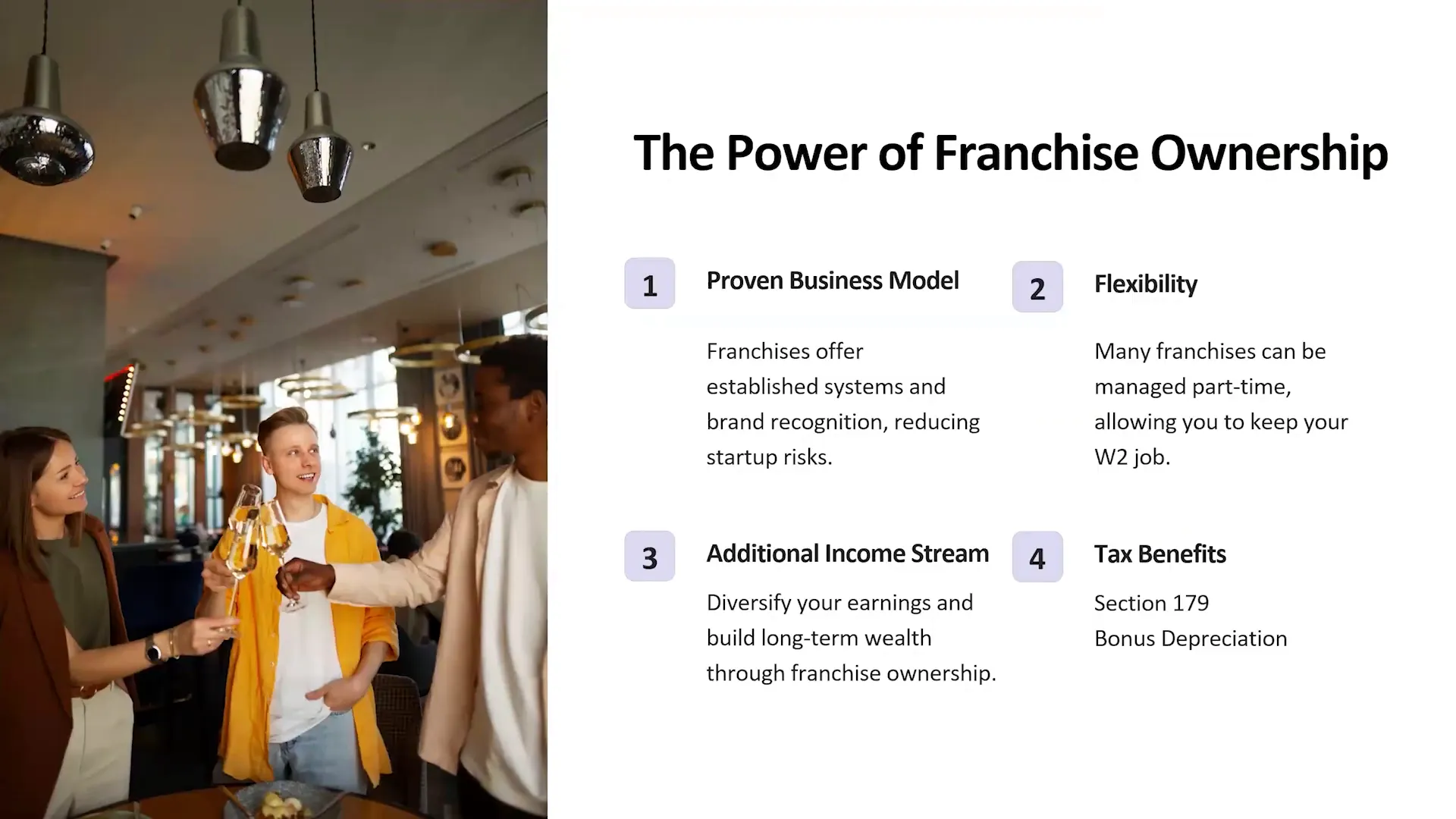
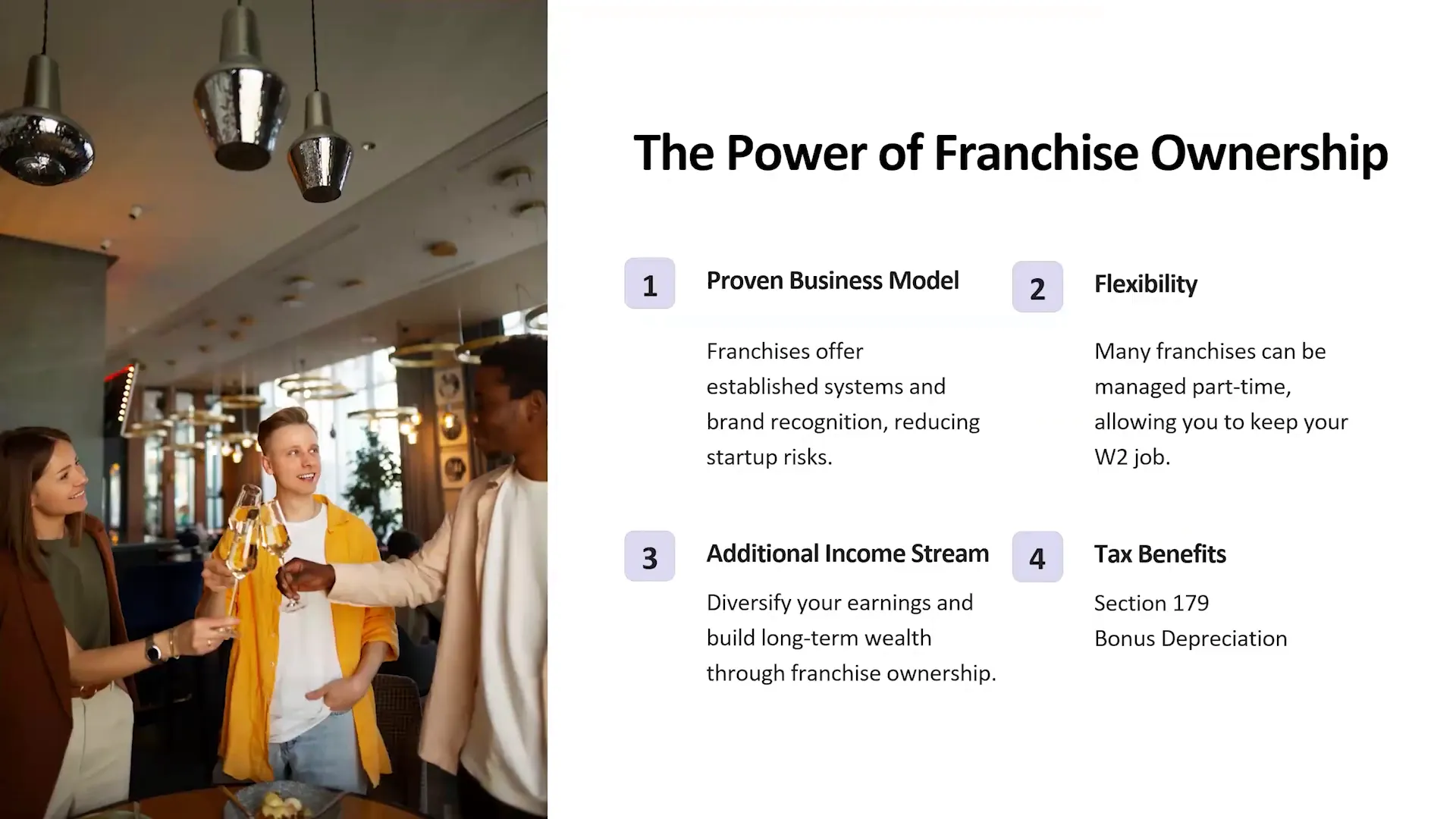
Why Franchise Ownership Makes Sense for W2 Employees
Corporate employees often face one of the harshest tax burdens, primarily because W2 income doesn’t offer many opportunities for deductions or tax write-offs. Beau Eckstein highlights that the tax code was fundamentally designed to favor small business owners rather than employees. This means owning a business offers a range of financial advantages that W2 workers simply don’t have access to.
Owning a franchise while keeping your day job can provide the best of both worlds:
- Tax Benefits: Franchise ownership opens doors to deductions and tax strategies unavailable to regular employees.
- Self-Directed Retirement Accounts: You gain the ability to set up retirement accounts that you control, potentially increasing your long-term financial security.
- Stable Income with Growth Potential: Maintain your steady W2 paycheck while building an additional income stream.
- Exit Strategy: Over time, your franchise can become a valuable asset that you can sell or pass on.
Whether you want to eventually leave the corporate world or simply diversify your income, franchise ownership is a powerful vehicle for financial growth.
Understanding Franchise Models: Established vs. Emerging
Franchises come in many shapes and sizes. Beau explains that some franchises are well-established, boasting hundreds or even thousands of locations nationwide. These proven business models offer a level of stability and brand recognition that can be very appealing.
On the other hand, emerging franchises might have only a handful of locations. While this could seem riskier, emerging franchises often provide unique opportunities for early adopters to grow with the brand and benefit from potentially lower initial investments.
Both established and emerging franchises have their pros and cons, and choosing the right fit depends on your goals, risk tolerance, and budget. Beau emphasizes the importance of evaluating the franchise’s systems, support, and growth trajectory before making a commitment.
Types of Franchise Ownership: Owner-Operator, Semi-Absentee, and Fully Absentee
Franchise ownership can vary significantly in terms of time commitment and involvement. Beau breaks this down into three main categories:
- Owner-Operator: You’re hands-on, involved daily in the business operations. While you might not perform every task yourself (for example, painting houses in a home service franchise), you’re actively managing and running the business.
- Semi-Absentee: You work on the business rather than in it, spending about 15 to 25 hours per week. This model suits those who want to maintain their W2 jobs but still have significant involvement in their franchise. Delegation and management skills are critical here.
- Fully Absentee: Although called absentee, Beau notes that no business is truly hands-off. Even with full absentee ownership, you must hire the right team, manage finances, and oversee overall business health.
For many W2 employees, semi-absentee ownership strikes the perfect balance—it allows for business growth without sacrificing your day job or personal time.
Finding the Ideal Franchise for Your Lifestyle
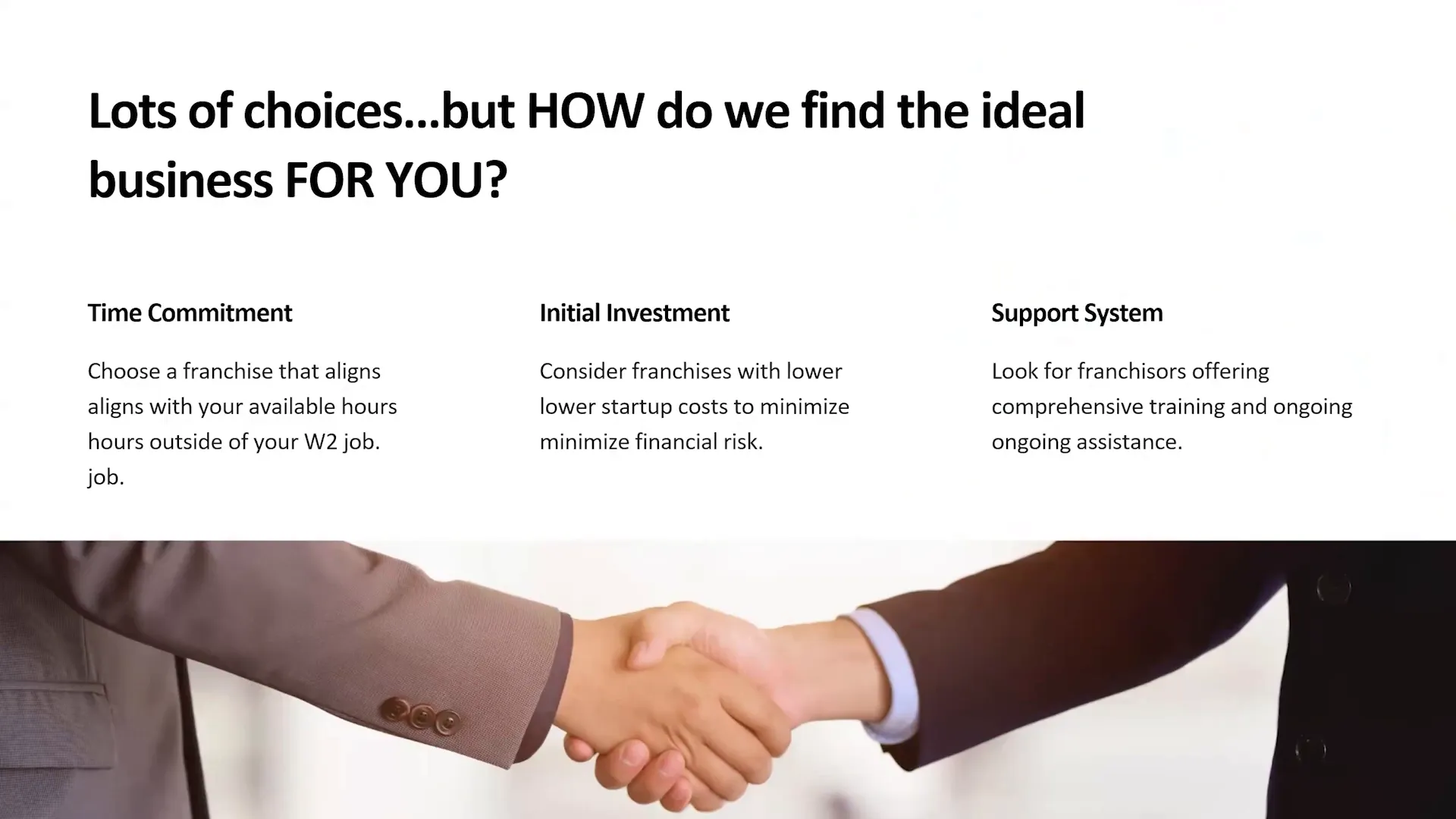
Choosing the right franchise is not just about the business model but also about aligning it with your personal lifestyle and goals. Beau stresses the importance of understanding:
- Time Commitment: How many hours per week can you realistically dedicate to your franchise?
- Initial Investment: What is your budget for buying into a franchise?
- Support Systems: Does the franchise provide marketing, training, and operational support?
- Marketing Strength: Are you comfortable handling marketing yourself, or do you need a franchise with a built-in lead generation system?
- Location Considerations: How does your geographic location affect the franchise’s success?
These factors help narrow down the franchise options that fit your unique situation. Beau’s team often starts with a detailed intake questionnaire and discovery call to tailor recommendations to each individual’s needs.
Funding Your Franchise: Leveraging Section 179 and Bonus Depreciation
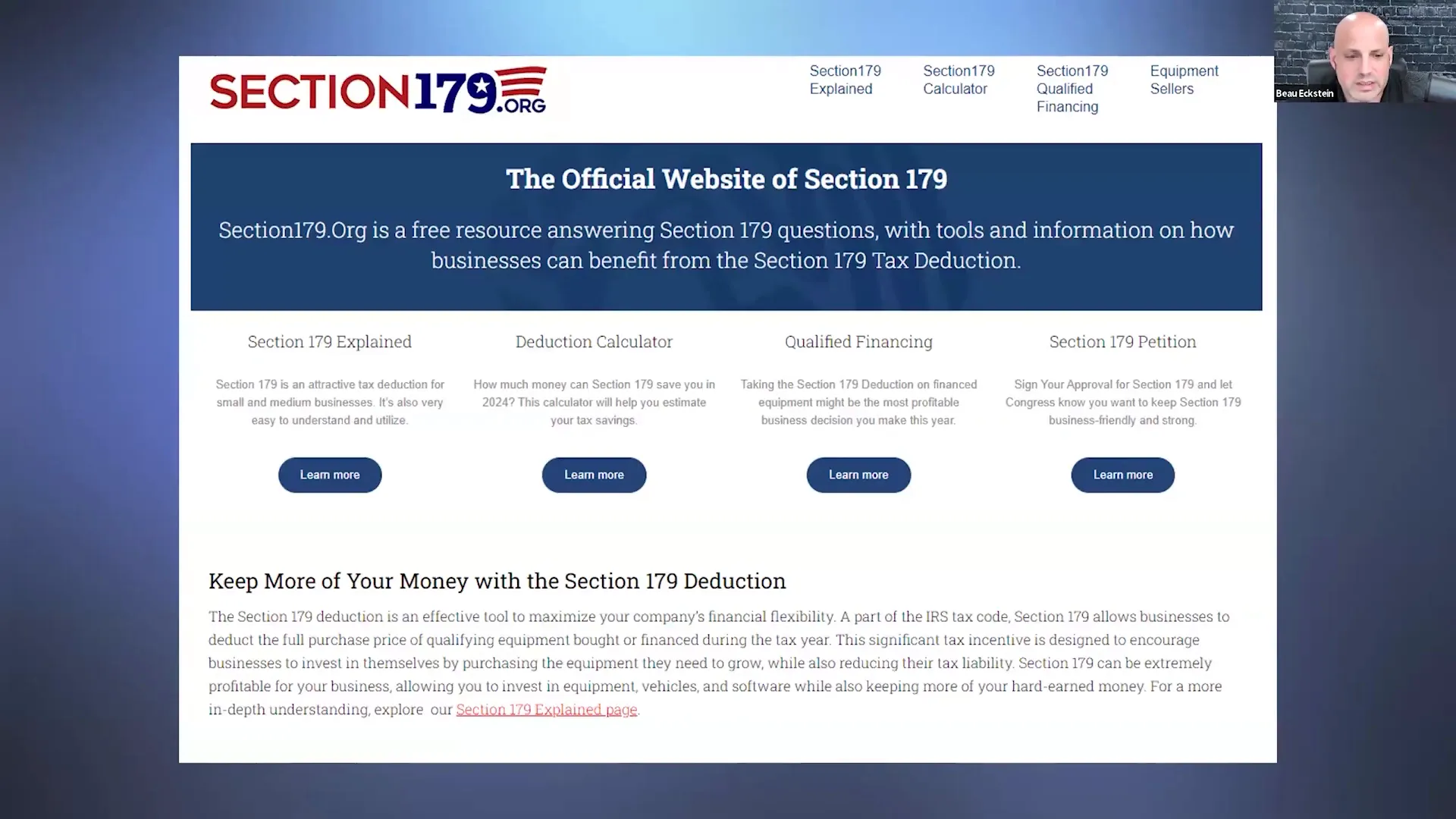
One of the most significant advantages of franchise ownership is the ability to leverage tax incentives such as Section 179 and bonus depreciation to reduce your taxable income. Beau encourages everyone considering franchise ownership to visit section179.org, where you can learn about these tax benefits and even use calculators to estimate your potential savings.
Section 179 allows business owners to deduct the full purchase price of qualifying equipment and software purchased or financed during the tax year. Bonus depreciation further enhances these deductions, allowing for accelerated write-offs that can significantly improve cash flow in the early years of business ownership.
For franchises requiring loans under $500,000, these tax incentives can make a substantial difference in affordability and financial planning. Beau’s channel also features interviews with CPAs who specialize in these tax strategies, providing deeper insights into how to maximize your benefits.
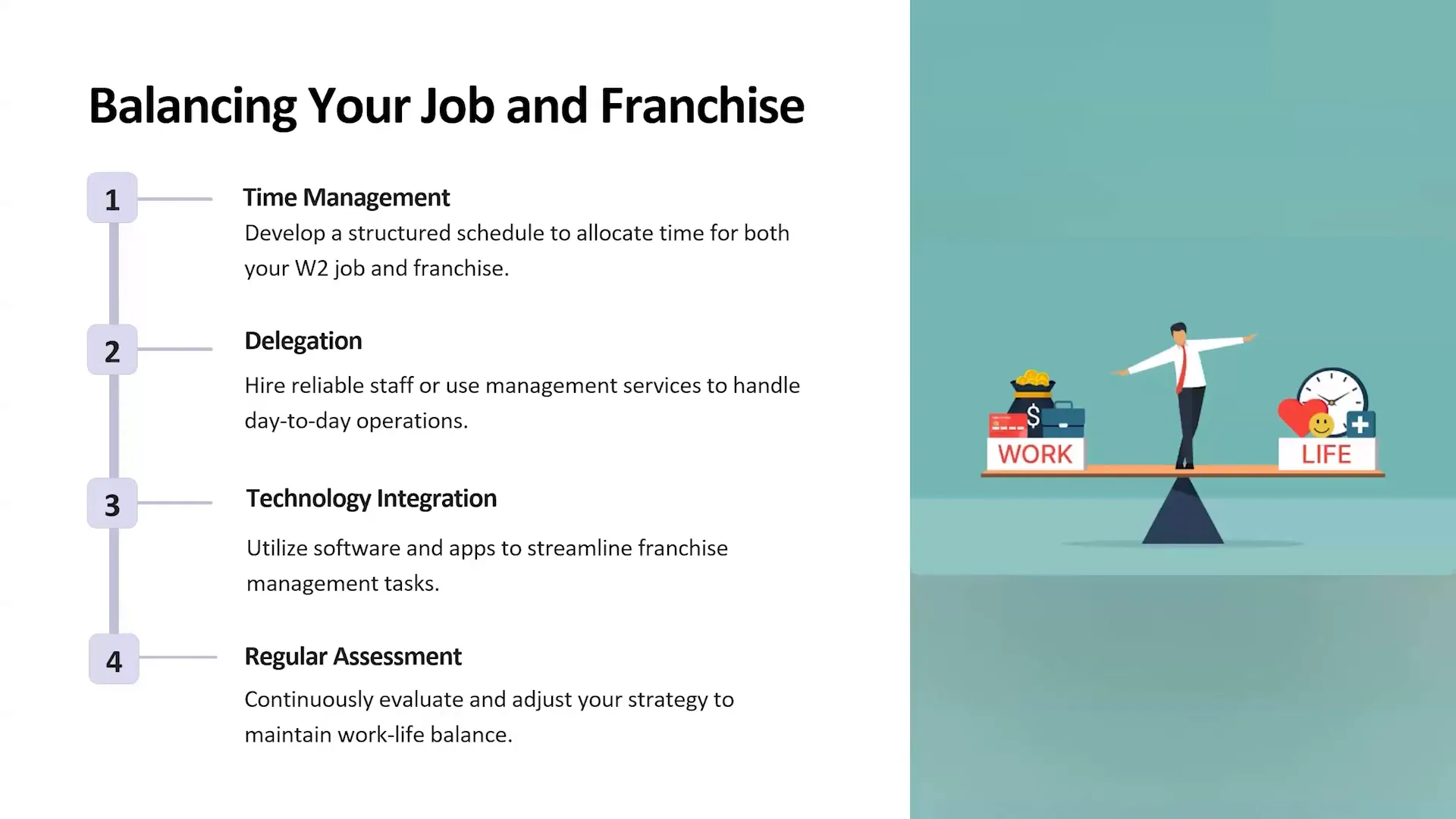
Balancing Your W2 Job and Franchise Ownership
Managing a franchise while holding down a full-time job can be challenging, especially if your current workweek already exceeds 40 hours. Beau emphasizes that effective delegation is the key to making this work. You must be able to hire, train, and trust staff to handle day-to-day operations so you can focus on strategic growth and your primary job.
For those working 80 to 100 hours a week, semi-absentee or absentee franchise models may be more suitable, but they still require a commitment to oversight and management. The good news is that with the right systems in place, you can scale your franchise alongside your W2 career without burning out.
Financial Benefits and Resilience of Franchise Models
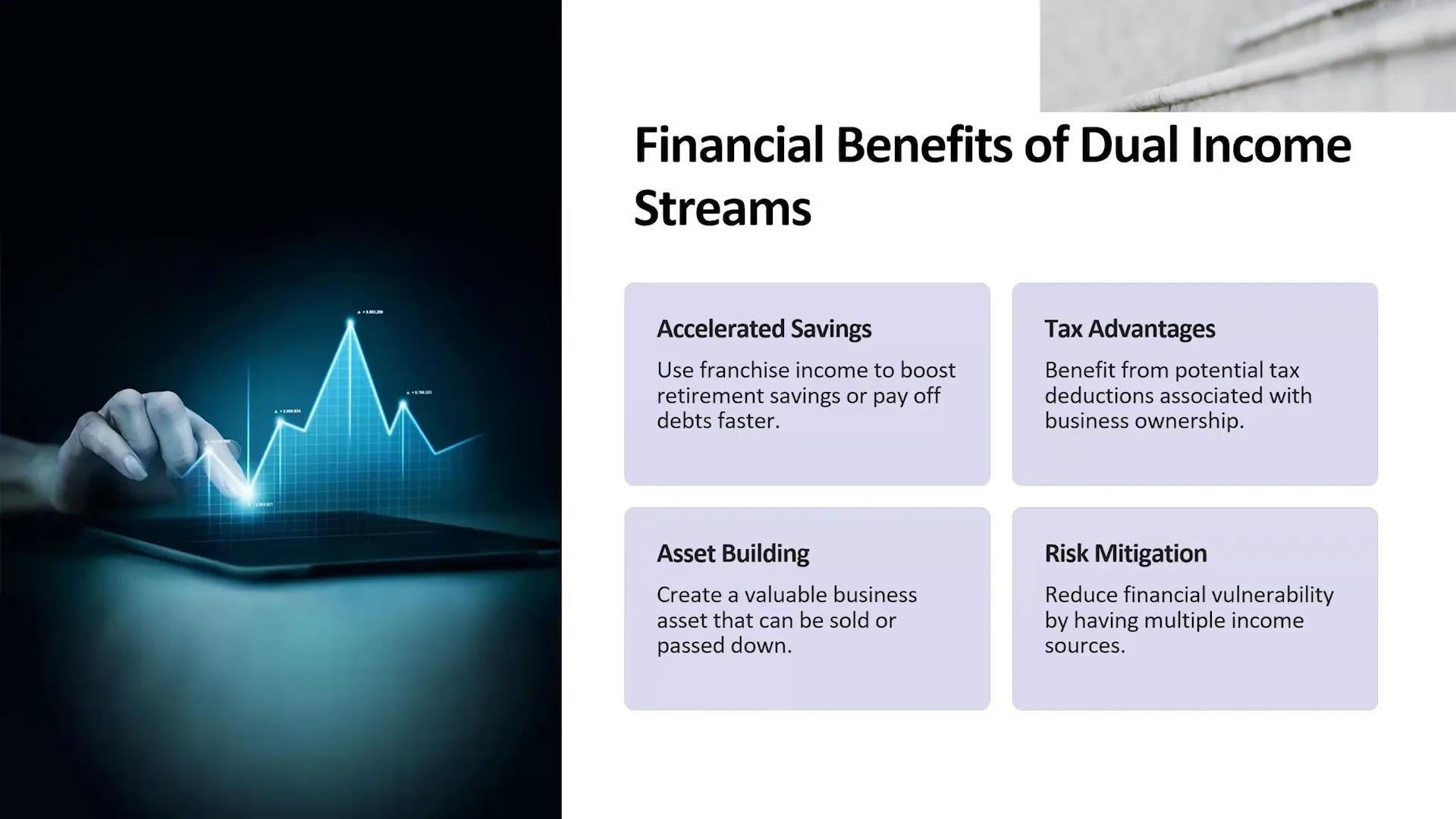
Owning a franchise offers several financial advantages beyond just tax write-offs. Beau points out that franchises can create additional cash flow, diversify your income streams, and provide a hedge against economic downturns—especially when you invest in recession-resilient or recession-proof business models.
These types of franchises offer services or products that remain in demand regardless of the economy’s state. This stability is crucial for W2 employees looking to supplement their income without taking on excessive risk.
Moreover, as your franchise grows, it becomes a sellable asset. Recurring revenue streams, national accounts, and strong brand recognition contribute to the franchise’s valuation, much like real estate appreciates over time. You also benefit from depreciation and loan pay-downs, adding layers of financial value to your investment.
Next Steps: How to Get Started with Franchise Ownership
If you’re ready to explore franchise ownership but aren’t sure where to start, Beau offers a simple and effective process:
- Visit businessownershipcoach.com/quiz to take a tailored franchise quiz that helps identify your ideal business model.
- After completing the quiz, you’ll receive a follow-up email with a calendar link to book a discovery call with Beau or his team.
- During the discovery call, you can discuss your goals, budget, and lifestyle to receive personalized franchise recommendations.
- Beau also encourages tuning into his podcast and YouTube channel, where you can find playlists on SBA loans, franchises, and business ownership strategies.
Taking these steps will empower you with knowledge and a clear path toward combining your W2 job with franchise ownership, unlocking financial freedom and business growth.
Conclusion: Why Now is the Time to Consider Franchise Ownership
For W2 employees looking to break free from the limitations of corporate taxation and income ceilings, franchise ownership presents a compelling opportunity. Beau Eckstein, the trusted Business Ownership Coach from the Investor Financing Podcast, underscores that the tax code favors entrepreneurs, and with the right franchise model, you can create additional cash flow, enjoy significant tax benefits, and build a valuable sellable asset.
Whether you choose to be an owner-operator, semi-absentee, or fully absentee franchisee, there is a model that can fit your lifestyle and goals. The key is to carefully evaluate franchises based on your time availability, financial capacity, and marketing strengths while leveraging tax incentives like Section 179 and bonus depreciation.
Remember, owning a franchise while keeping your W2 job is not only possible but a smart financial hedge against layoffs, economic downturns, and limited growth in traditional employment. Start your journey today by taking Beau’s franchise quiz and booking a discovery call to uncover the business ownership path that’s right for you.
Embrace the power of franchise ownership and take control of your financial future.